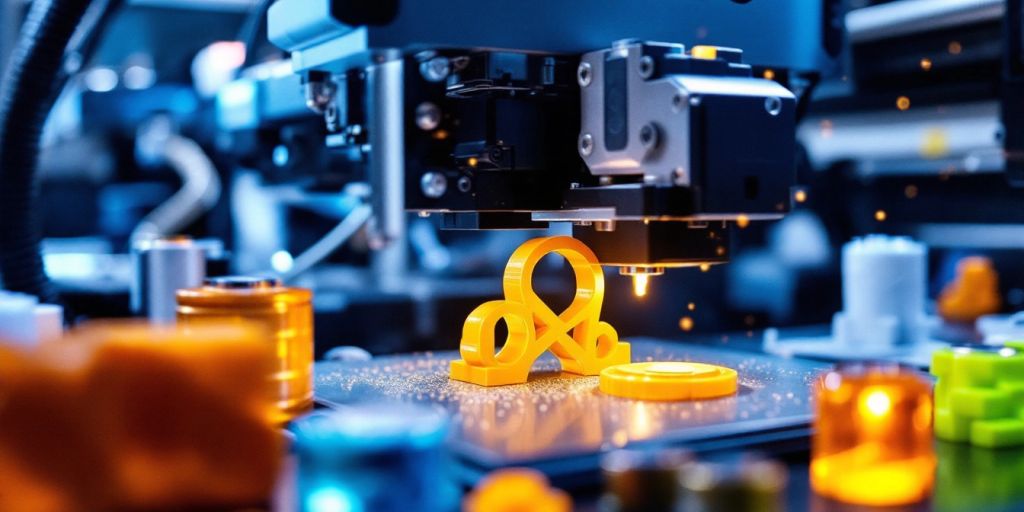
EOS, a leader in polymer additive manufacturing, is set to unveil groundbreaking technology at the upcoming Formnext event. This new polymer AM solution, powered by the innovative LaserProFusion technology, promises to revolutionize the 3D printing landscape by enhancing productivity and cost-effectiveness. Additionally, EOS is making strides in the energy sector by supplying zinc aqueous batteries for a significant utility storage project in Nebraska, showcasing its commitment to sustainable energy solutions.
Key Takeaways
- EOS will unveil a new polymer additive manufacturing technology at Formnext on November 19.
- The new system is expected to enhance productivity and reduce costs in 3D printing.
- EOS is supplying zinc aqueous batteries for a 3MW/12MWh energy storage project in Nebraska.
- The batteries are designed for long-duration, non-flammable energy storage, providing an alternative to lithium-ion technologies.
EOS's New Polymer Additive Manufacturing Technology
At the Formnext event, EOS will introduce a new polymer additive manufacturing (AM) technology that is anticipated to set new standards in the industry. This unveiling is particularly exciting as it may feature the first machine utilizing the long-awaited LaserProFusion technology.
LaserProFusion technology is a significant advancement in polymer 3D printing, utilizing nearly one million diode lasers to melt material layer by layer. This innovative approach allows for high productivity levels that can rival traditional injection molding, making it suitable for various applications.
Key features of the LaserProFusion technology include:
- High Productivity: Achieves a combined output of up to 5 kilowatts, significantly reducing exposure times per layer.
- Precision Control: Each diode laser is precisely controlled according to CAD data, ensuring pixel-level accuracy.
- Cost-Effectiveness: Designed to eliminate the trial and error often associated with 3D printing, providing top-quality results from the first print.
Dr. Tobias Abeln, EOS’s Chief Technical Officer, emphasized the potential of LaserProFusion to replace injection molding in many applications, thus expanding the reach of industrial 3D printing.
EOS's Commitment to Sustainable Energy Solutions
In addition to its advancements in additive manufacturing, EOS is also making significant contributions to the energy sector. The company has signed a deal to supply zinc aqueous batteries for a new energy storage project in Nebraska, which will support the local electric grid and a city microgrid powered by solar energy.
The project, developed in collaboration with Lincoln Electric Systems (LES) and other technology providers, will feature:
- 3 MW/12 MWh Capacity: This will be Lincoln’s first battery energy storage system (BESS).
- Zinc Aqueous Batteries: Made using EOS’s third-generation Eos Znyth technology, these batteries are designed for long-duration, non-flammable energy storage.
- Investment for Expansion: EOS recently secured a $315.5 million investment to expand its footprint in the long-duration energy storage market.
Conclusion
The upcoming unveiling of EOS's new polymer additive manufacturing technology at Formnext and its involvement in the Nebraska utility storage project highlight the company's dual commitment to innovation in both 3D printing and sustainable energy solutions. As EOS continues to push the boundaries of technology, industry professionals and consumers alike can look forward to a future where efficiency and sustainability go hand in hand.