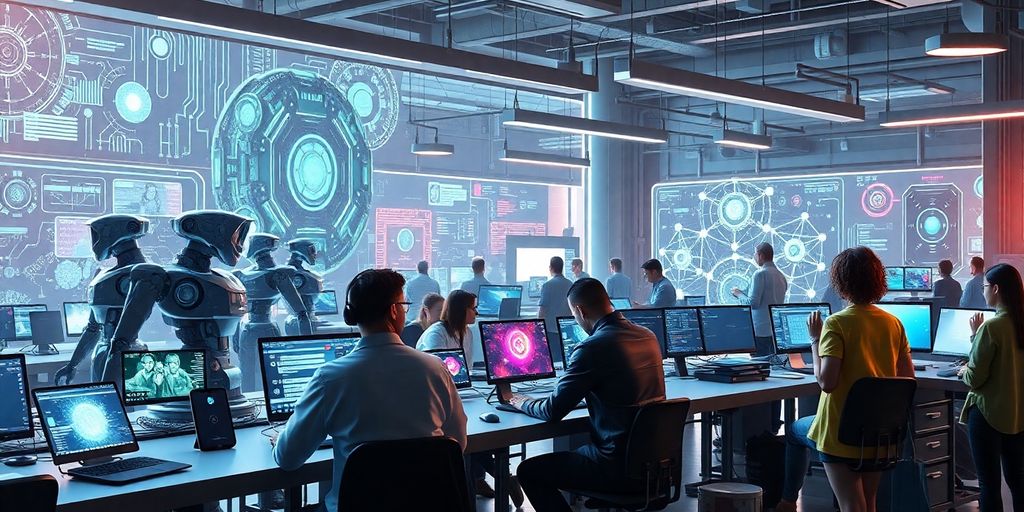
In a groundbreaking exploration of the intersection between technology and society, Jan Liphardt, founder of OpenMind, discusses how human-machine teams will increasingly rely on decentralized crypto networks. This evolution is set to transform sectors such as healthcare, education, manufacturing, and defense, enabling seamless collaboration between humans and autonomous machines.
Key Takeaways
-
Integration of Autonomous Machines: The rise of large language models and generative AI is paving the way for machines that can think, learn, and operate in both digital and physical realms.
-
Decentralized Infrastructure: Blockchain technology provides a secure and transparent framework for human-machine collaboration, essential for tasks requiring mutual trust and clear rules.
-
Addressing Workforce Shortages: Autonomous robots can help alleviate critical shortages in sectors like education and healthcare, enhancing productivity and care quality.
-
Global Standards and Regulations: Establishing uniform regulations is crucial for the safe and effective deployment of autonomous systems across borders.
The Rise of Autonomous Machines
Autonomous robots, once relegated to the realm of science fiction, are becoming a reality thanks to advancements in AI. These machines can now plan, learn, and interact with humans in meaningful ways. However, integrating these thinking machines into society presents unique challenges, particularly regarding regulation and societal acceptance.
The Role of Decentralized Crypto Networks
To facilitate the collaboration between humans and machines, a robust infrastructure is necessary. Decentralized crypto networks offer a solution by providing:
-
Secure Communication: Enabling machines to communicate and collaborate without centralized control.
-
Transparent Rules: Smart contracts can establish clear guidelines for interactions, ensuring accountability.
-
Economic Incentives: Crypto-economic models can motivate both humans and machines to work together effectively.
Overcoming Challenges
Despite the potential benefits, several hurdles must be addressed:
-
Seamless Collaboration: Ensuring smooth interactions between humans and machines, especially in high-stakes environments like healthcare and manufacturing.
-
Fragmented Regulations: Navigating the complex landscape of global regulations to create a unified framework for autonomous systems.
-
Funding and Development: Traditional funding models can slow innovation; decentralized autonomous organizations (DAOs) can provide faster, more flexible funding options.
Transforming Key Sectors
The implications of human-machine collaboration are profound, particularly in sectors facing workforce shortages:
-
Education: With a projected shortage of 44 million teachers by 2030, autonomous robots can assist in classrooms, providing personalized support to students.
-
Healthcare: The World Health Organization has highlighted a looming health workforce crisis, with millions of professionals needed. Robots can help monitor patients, assist in surgeries, and manage supplies, enhancing care quality.
-
Defense: Autonomous systems are already being utilized in defense, executing tasks that are dangerous or impossible for humans.
From Concept to Reality
The transition from theoretical applications to practical use is underway. Technologies like Ethereum are being employed to establish governance frameworks for AI and robotics, allowing for secure data sharing and collaboration. This decentralized approach not only fosters innovation but also builds public trust in autonomous systems.
As we move forward, the collaboration between humans and machines will redefine our workplaces and daily lives. By leveraging decentralized networks, we can create a future where technology enhances human capabilities, addressing critical challenges across various sectors. The journey has just begun, and the potential is limitless.