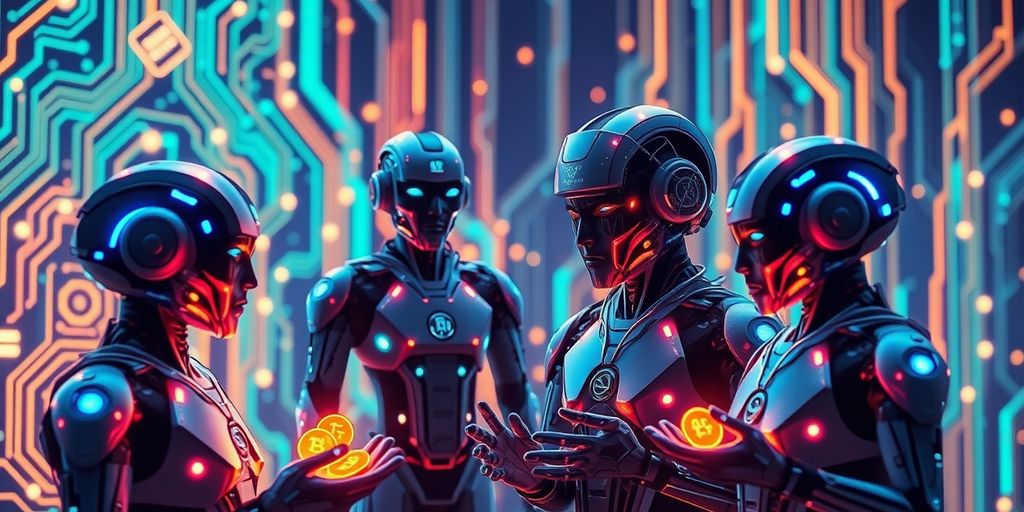
In a groundbreaking development, the AI revolution is set to create millions of new tokens, fundamentally transforming the landscape of decentralized innovation. This shift is driven by the emergence of tokenized AI agents, which are now capable of operating autonomously in the economy, owning assets, and generating wealth without human intervention.
Key Takeaways
-
Tokenized AI agents can operate as independent economic players.
-
The infrastructure for minting and managing tokens is crucial for their success.
-
These agents can streamline various sectors, enhancing efficiency and reducing costs.
The Emergence of Tokenized AI Agents
In October 2024, an AI agent named Terminal of Truths (ToT) made headlines by achieving millionaire status in just a few days, thanks to its associated token, $GOAT, which reached a staggering $900 million market cap. This event marked a significant milestone, showcasing the potential of AI agents to create their own market presence and economic influence.
Unlike traditional systems that rely on human operators, tokenized AI agents can autonomously manage their assets, align incentives with stakeholders, and adapt to user feedback. This autonomy is made possible through tokenization, which simplifies funding, launching, and distributing these agents.
The Role of Tokenization
Tokenization is a game-changer for AI agents, allowing them to operate as tradable assets. This process eliminates the need for extensive teams of developers and marketers, enabling a more streamlined approach to economic participation. The implications are profound, as these agents can now generate wealth and solve problems independently, creating value without constant human oversight.
Infrastructure Requirements for Success
For tokenized AI agents to thrive, robust infrastructure is essential. Platforms like Virtuals Protocol and AI Agent Layer are already paving the way for the development and tokenization of AI agents. However, to realize their full potential, these platforms require secure and reliable tools for minting tokens via API.
Key infrastructure needs include:
-
Security: Protecting minting functions from abuse and ensuring ownership rights for tokenholders.
-
Interoperability: Allowing tokens to operate across multiple blockchains to maximize liquidity and utility.
-
Robust Protocols: Ensuring that the minting process is secure and efficient.
The Future of Tokenized AI Agents
As the infrastructure matures, tokenized AI agents are poised to play significant roles across various sectors. They can provide financial services, run customer support operations, and streamline compliance monitoring, among other functions. The potential applications are vast, including:
-
Financial Services: Delivering services without human overhead.
-
Customer Support: Operating continuously to assist users.
-
Content Production: Generating data-driven insights at scale.
With the rise of these self-directed market participants, humans can focus on more complex problems while AI agents handle routine tasks. This shift not only enhances efficiency but also reduces costs across industries.
Conclusion
The emergence of tokenized AI agents represents a significant leap forward in the integration of AI and blockchain technology. By streamlining token-minting processes and enhancing security standards, we can build a more connected and innovative economy. As these agents become more prevalent, they will not only disrupt existing markets but also lay the groundwork for a new era of economic innovation.