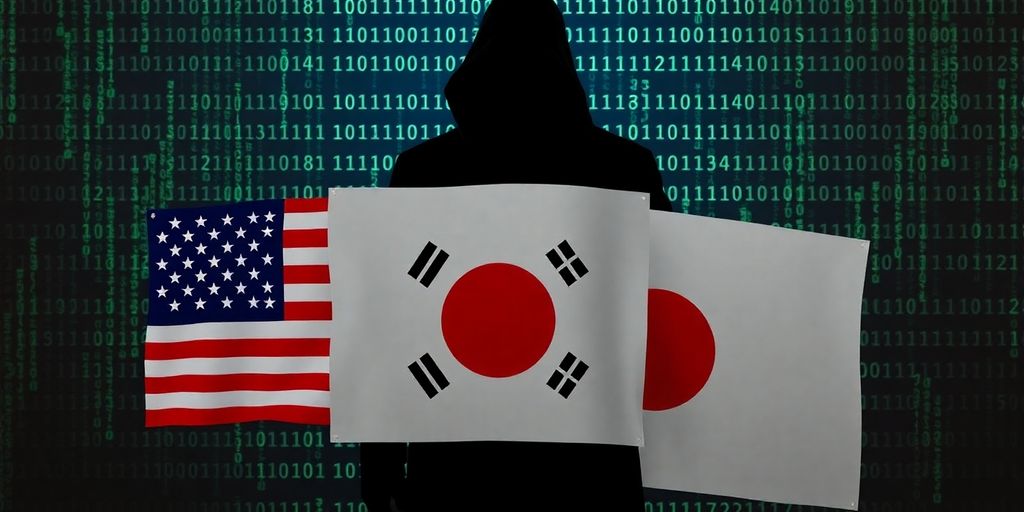
The United States, Japan, and South Korea have issued a joint warning regarding the escalating threat posed by North Korean hackers targeting the cryptocurrency sector. These cybercriminals, linked to the Democratic People’s Republic of Korea (DPRK), have been implicated in significant thefts, raising alarms about their potential impact on the global financial system.
Key Takeaways
-
North Korean hackers have stolen over $1.34 billion in digital assets in 2024 alone.
-
The notorious Lazarus Group is among the primary suspects behind major cyber thefts.
-
Governments are urging collaboration between public and private sectors to combat these threats.
Overview Of The Threat
In a statement released on January 14, 2025, the three nations highlighted the increasing sophistication of North Korean cyber operations. The DPRK has been linked to high-profile hacks, including the $600 million Ronin network breach and the $230 million theft from the WazirX exchange. The joint announcement emphasized that these activities threaten the integrity and stability of the international financial system.
Recent Incidents
The joint warning comes on the heels of several alarming incidents:
-
DMM Bitcoin Hack: $308 million stolen.
-
Upbit Exchange Attack: $50 million taken.
-
Radiant Capital Breach: $50 million lost.
-
Rain Management Hack: $16 million stolen.
These incidents are part of a broader trend, with North Korean hackers responsible for 61% of the total cryptocurrency value stolen in 2024, according to Chainalysis data.
Methods Employed By North Korean Hackers
North Korean cyber actors are employing increasingly sophisticated tactics to infiltrate systems and steal funds. Some of the methods include:
-
Social Engineering: Utilizing deceptive practices to manipulate individuals into divulging confidential information.
-
Malware Deployment: Tools like TraderTraitor and AppleJeus are being used to compromise systems.
Call For Action
The joint statement from the U.S., Japan, and South Korea urges web3 companies to be vigilant in their hiring practices, particularly regarding IT workers from North Korea. The governments recommend reviewing past advisories to prevent inadvertently employing individuals linked to the DPRK.
Conclusion
As North Korean hackers continue to pose a significant threat to the cryptocurrency landscape, the collaboration between the U.S., Japan, and South Korea is crucial. By sharing intelligence and resources, these nations aim to mitigate the risks associated with cybercrime and protect the integrity of the global financial system. The call for increased vigilance and cooperation among private and public sectors is more important than ever as the threat landscape evolves.