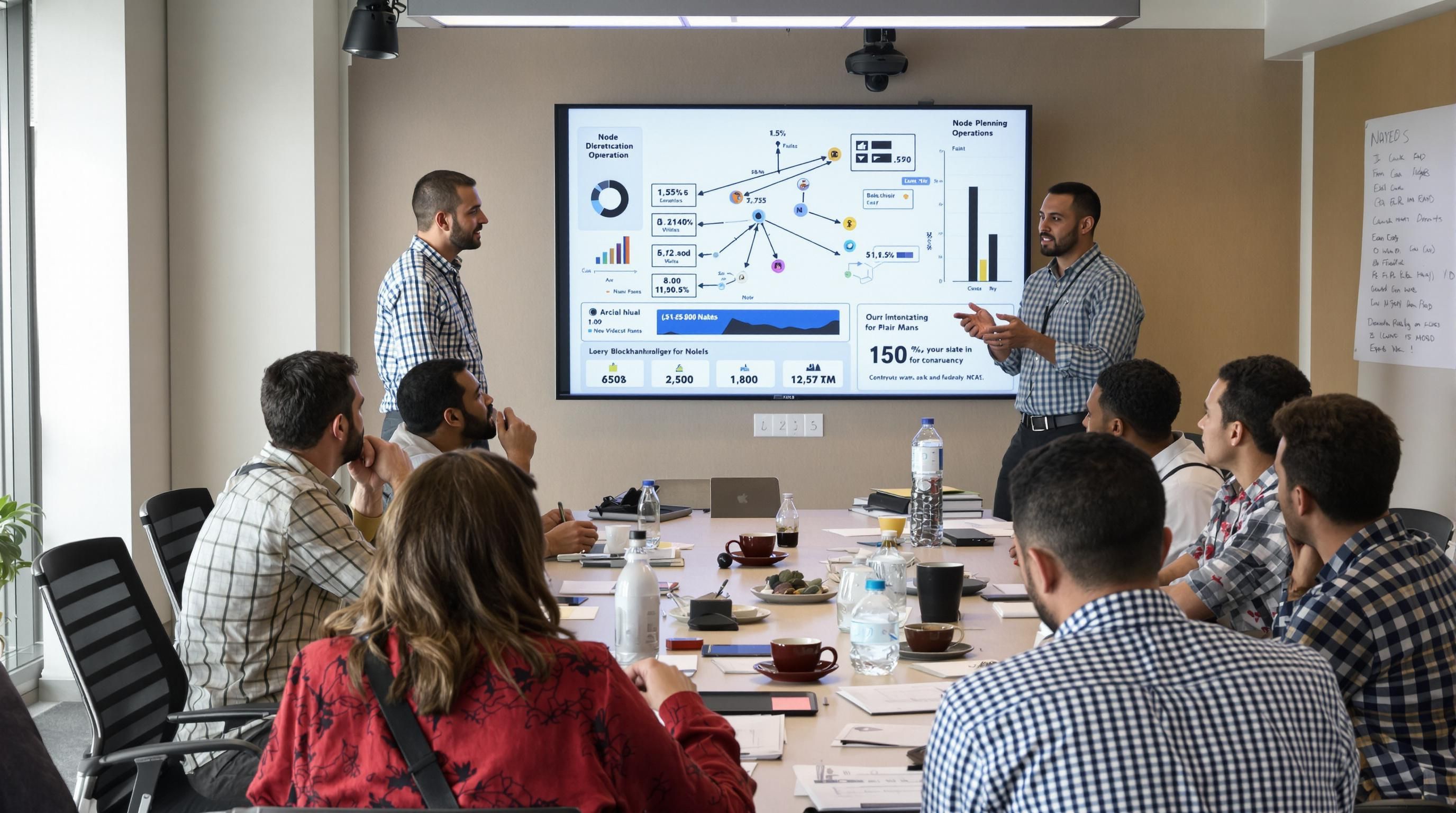
The EOS Node Operator Meeting on February 19, 2025, brought a lot of news for the community. The Spring 1.1 stable release is finally here, packed with updates that make running a node smoother and more efficient. They also gave us a sneak peek at what’s coming in Spring 1.2, with features that aim to make the network even more robust. Whether you're a seasoned operator or just getting started, these updates are worth paying attention to.
Key Takeaways
-
Spring 1.1 stable release is now available, with significant improvements to block propagation and processing.
-
The new "Pause at Specific Block" feature makes debugging and testing easier for developers.
-
EVM Optimized Compiler (OC) allows for faster and more secure contract execution.
-
Chain stability has been boosted with automatic recovery from potential halts.
-
Spring 1.2 will focus on smarter peer connections and evaluating network efficiency.
Spring 1.1 Stable Release Announced
The Spring 1.1 stable version has officially been released, marking a significant milestone for EOS node operators. After undergoing rigorous testing in both internal and live production settings, this release is now ready for widespread use. Node operators are strongly encouraged to upgrade their nodes to this version to benefit from its improved efficiency and performance.
This release follows two earlier release candidates and reflects the feedback and insights gathered during those stages. The stability and functionality of Spring 1.1 have been carefully validated, ensuring it meets the demands of modern blockchain environments. Additionally, the release notes have been made available to the community, offering a detailed breakdown of the updates and changes included in this version.
With its focus on enhanced block propagation, better transaction processing, and the ability to optimize specific contracts through the EVM Optimized Compiler, Spring 1.1 aims to set a new standard for blockchain performance and reliability. Operators can look forward to reduced network traffic, faster block handling, and a more robust system overall. This release is a crucial step forward for the EOS ecosystem, paving the way for future innovations.
Key Feature Updates in 1.1
Optimized P2P Block Propagation
The Spring 1.1 update introduces smarter block propagation for peer-to-peer (P2P) networks. Previously, nodes would send all blocks to every peer, which caused unnecessary network congestion. Now, nodes use a tracking system to monitor block propagation. This includes a Block NACK acknowledgment system that prevents redundant data from being sent. Additionally, dynamic adjustments have been implemented to reduce both outbound and inbound traffic. This change significantly cuts down bandwidth usage for node operators, with the benefits scaling as more nodes adopt the update. Full network efficiency will be achieved after the upcoming hard fork.
Enhanced Block Processing
Block processing has been overhauled to improve speed and resource efficiency. The threading architecture has been refined to reduce contention, while queue bottlenecks have been minimized to enhance synchronization. Validation processes for block headers and transactions have also been streamlined. These improvements mean that nodes can process blocks more quickly and with fewer system resources, ensuring smoother operations across the network.
Pause at Specific Block Feature
A new feature allows developers to pause node execution at a specific block. This is particularly useful for debugging and analyzing live or historical blocks without disrupting the network. The feature is accessible through an HTTP endpoint, making it a handy tool for developers working on blockchain projects.
EVM Optimized Compiler (OC) Execution
The update introduces an optimized execution path for Ethereum Virtual Machine (EVM) contracts. The exSat contract is now whitelisted by default for optimized execution. Node operators can configure additional contracts for optimization, but community coordination is recommended to manage potential risks. This feature is optional and can be enabled or disabled based on individual node configurations.
Chain Stability and Recovery Improvements
To prevent chain halts caused by malicious or infinite loop transactions, Spring 1.1 includes automatic recovery mechanisms. These ensure that block production resumes within six seconds, providing a more robust and secure foundation for the network. Additionally, the stability of whitelisted contract execution has been strengthened, further enhancing the network's reliability.
Looking Ahead: Spring 1.2 Release
Intelligent Peer Connection Selection
One of the major changes coming in Spring 1.2 is the introduction of intelligent peer connection selection. This feature aims to make the network more efficient by ensuring nodes connect to peers with the best latency. Instead of blindly connecting to any available peer, nodes will now maintain a large list of potential peers and dynamically choose the most optimal ones. This improvement is expected to simplify the initial setup for node operators, thanks to the availability of pre-published lists of recommended peers. Over time, this feature will also lay the groundwork for automated network discovery, making the system even more robust.
Evaluating P2P Efficiency Post-1.1 Release
With the rollout of Spring 1.1, the focus is now on assessing its impact on peer-to-peer (P2P) communication. The team plans to closely monitor whether the reduced bandwidth usage translates into better connectivity between nodes. This evaluation will also help in understanding any shifts in network topology or propagation behavior. Based on the real-world data collected, further adjustments and optimizations will likely follow, ensuring that the system continues to evolve in response to operator needs.
Call to Action
Node operators are strongly encouraged to take immediate steps to align with the latest updates. Upgrading to Spring 1.1 is essential for ensuring optimal performance and robust stability. The enhancements in block propagation, processing, and chain recovery mechanisms are designed to benefit the entire network, but their full potential can only be realized if a majority of nodes adopt the update.
Here’s what you can do now:
-
Upgrade Your Nodes: Transition both testnet and mainnet nodes to Spring 1.1 to leverage the latest features and efficiencies.
-
Share Observations: Participate in community discussions by providing feedback on bandwidth usage and node behavior post-upgrade. Insights can be shared via community platforms like Telegram.
-
Prepare for Spring 1.2: Stay informed about the upcoming release, which will include intelligent peer connection selection and further network optimizations. Begin planning for these changes to ensure a seamless transition.
Collaboration and active participation from the community are key to advancing the network's capabilities. Every node operator's contribution matters in shaping a more efficient and resilient ecosystem.
Conclusion
The February 19, 2025, EOS Node Operator Meeting highlighted significant advancements with the Spring 1.1 stable release, setting the stage for a more efficient and reliable blockchain network. With updates like improved P2P block propagation, enhanced block processing, and the introduction of the EVM Optimized Compiler, node operators now have tools to reduce bandwidth and improve overall performance. Looking ahead, the Spring 1.2 release promises even smarter peer connections and further refinements based on real-world feedback. These updates reflect a steady commitment to improving the ecosystem, and operators are encouraged to upgrade and share their experiences to help shape the network's future.
This article was written with the assistance of AI to gather information from multiple reputable sources. The content has been reviewed and edited by our editorial team to ensure accuracy and coherence. The views expressed are those of the author and do not necessarily reflect the views of EOS Support. Original reporting sources are credited whenever appropriate and as required. This article is for informational purposes only and does not constitute financial advice. Investing involves risk, and you should consult a qualified financial advisor before making any investment decisions.