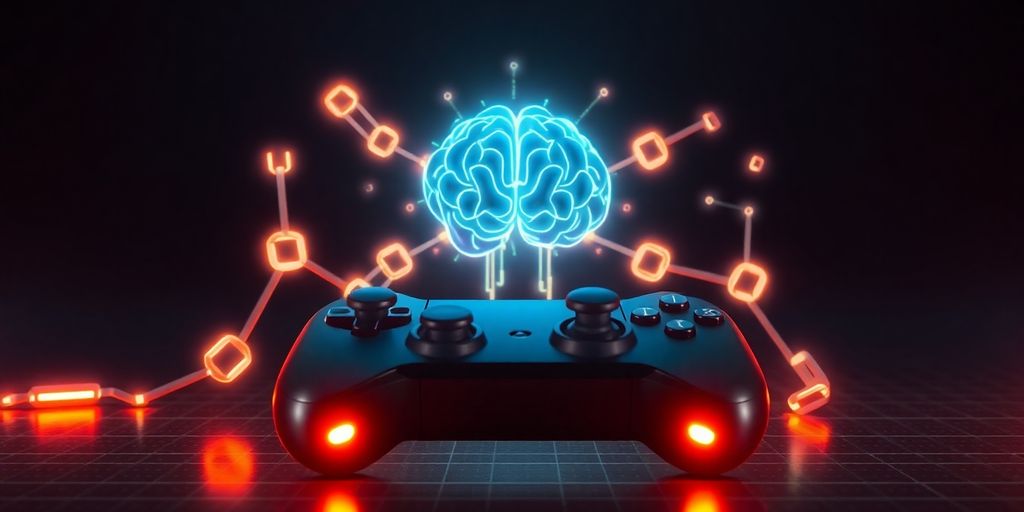
The gaming industry is on the cusp of a revolution, with artificial intelligence (AI) and blockchain technology emerging as pivotal forces. While AI promises dynamic and personalized gameplay, blockchain is increasingly recognized as the crucial element that addresses AI's inherent limitations, particularly concerning data persistence, ownership, and monetization within gaming ecosystems.
The AI-Blockchain Synergy in Gaming
Kin Wai Lau, CEO of ZKcandy, highlights that while AI can create incredibly personalized game flows, its creations often remain ephemeral and controlled by centralized entities. This leads to a significant problem: player contributions and AI-generated content are disposable, tied to the lifespan of a game session or corporate policy. If a server shuts down or a player restarts, progress, character evolution, and generated content can be lost. Blockchain, however, offers a solution by providing a decentralized infrastructure that ensures memory, ownership, and monetization.
Addressing AI's Limitations with Blockchain
-
Memory and Persistence: Traditional AI agents often operate within single sessions, forgetting past interactions. By recording game progress and AI's evolution on a distributed ledger, blockchain allows AI agents to learn and evolve consistently across sessions. This enables persistent narratives and character arcs, as player actions and achievements are immutably stored.
-
Player Ownership: In traditional gaming, players rent, not own, in-game assets. Blockchain allows AI-generated items to be minted as non-fungible tokens (NFTs) and stored in a player's wallet. This grants true ownership, meaning assets cannot be deleted or restricted by publishers and can even be transferred across different games and virtual worlds, fostering a unified social gaming ecosystem.
-
Monetization Opportunities: Blockchain facilitates new monetization models that enhance gameplay rather than replace it. AI agents can forge unique items and mint them as NFTs, creating in-game marketplaces. Players can license, rent, or sell their creations, turning their time and creativity into lasting value. This also benefits developers, who can earn from marketplace transactions, minting fees, and premium AI tools.
Key Takeaways
-
Blockchain is no longer just an add-on but a critical component for next-generation AI-driven gaming.
-
It solves the problem of disposable AI creations and temporary progress in centralized gaming environments.
-
Blockchain enables true player ownership of in-game assets and AI-generated content through NFTs.
-
It fosters consistent narratives and character evolution by providing persistent memory for AI agents.
-
New monetization opportunities emerge, benefiting both players and developers through open marketplaces and asset trading.
The Future of Gaming: A Connected Social Ecosystem
The integration of AI and blockchain transforms games into interconnected social ecosystems. Players can showcase their achievements, compare creations, and engage in social dynamics built around provable creativity and shared experiences. With advancements in Layer-2 and Layer-3 solutions, the cost and speed of blockchain transactions are no longer barriers to storing large amounts of AI data. This synergy ensures that next-gen games move beyond mere demos, realizing their full potential as truly social and persistent entertainment platforms.
Sources
-
Blockchain is the missing link for gaming., Cointelegraph.
This article was created with support from AI-driven technology, drawing on multiple reputable sources. The final content has been thoroughly reviewed and edited by BlockzHub's editorial team to ensure accuracy, clarity, and coherence. Original reporting sources are credited whenever appropriate and as required. The opinions expressed in this article do not necessarily represent the official views or positions of BlockzHub. This article is intended for informational purposes only and should not be considered financial or professional advice. Investing involves risk, and you should consult a qualified financial advisor before making any investment decisions.