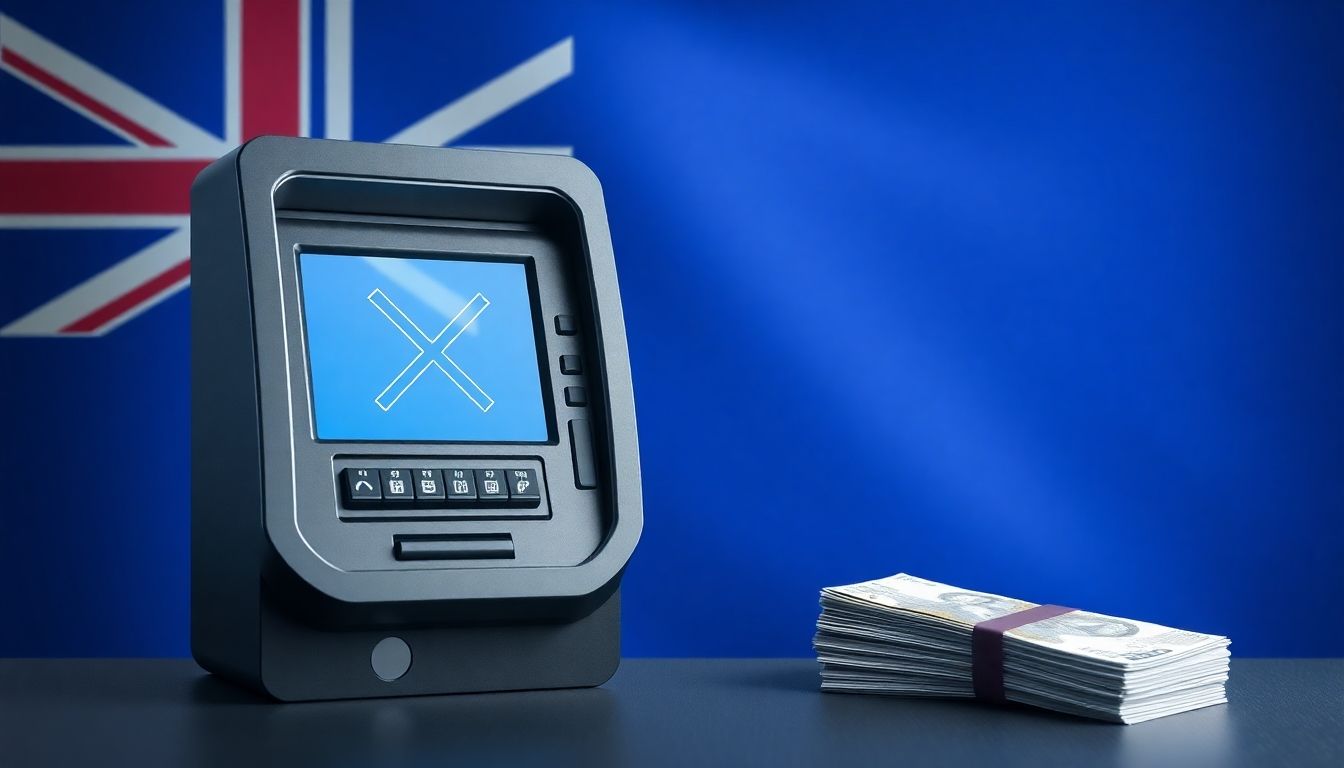
New Zealand is taking a firm stance against financial crime by implementing a comprehensive ban on cryptocurrency ATMs and capping international cash transfers at $5,000. These measures are part of a broader anti-money laundering (AML) and countering the financing of terrorism (CFT) reform, aiming to disrupt illicit activities, particularly those linked to drug sales and scams.
New Zealand's Bold Move Against Financial Crime
Associate Justice Minister Nicole McKee announced the significant overhaul of New Zealand's AML/CFT regime. The core of these reforms includes a complete prohibition of crypto ATMs and the introduction of a $5,000 limit on international cash transfers. These steps are designed to close loopholes exploited by criminals to convert illicit funds into cryptocurrencies, which can then be transferred anonymously or offshore.
Why the Ban on Crypto ATMs?
Crypto ATMs have been identified as a key mechanism for money laundering, allowing criminals to quickly convert cash from illegal activities, such as drug sales, into digital assets. An April report by the Ministerial Advisory Group on Transnational, Serious and Organised Crime highlighted that these ATMs enable criminals to "purchase crypto and transfer that crypto within minutes to offshore criminals to fund drug imports or to make payments associated with scams."
-
Disrupting Illicit Flows: The ban aims to disrupt a common method used by criminals to obscure money trails and facilitate cross-border transactions.
-
Preventing Anonymous Transfers: By eliminating these machines, the government seeks to prevent the anonymous transfer of illicit funds.
-
Industry Support: Despite the ban, industry leaders, such as Janine Grainger, co-founder of Easy Crypto, have largely welcomed the move, viewing it as a necessary step to legitimize the sector and enhance customer safety.
Capping International Cash Transfers
In addition to the ATM ban, a new upper limit of $5,000 will be imposed on international cash transfers. This measure directly targets the ability of criminal organizations to move large sums of money offshore, while still allowing legitimate transfers through electronic bank channels.
Enhanced Enforcement Powers
The reforms will also grant the Financial Intelligence Unit (FIU) expanded powers to gather broader financial data on persons of interest. This includes the ability to demand ongoing information from banks and other reporting entities regarding suspicious activities, enabling more effective development of financial intelligence to bring criminals to justice.
A Global Trend
New Zealand's crackdown on crypto ATMs aligns with a growing global trend. Other jurisdictions, including Australia and Spokane, Washington, have implemented similar stringent regulations or outright bans on crypto ATMs to mitigate fraud and money laundering risks. This coordinated international effort underscores a heightened regulatory focus on digital asset infrastructure that facilitates anonymous or rapid fund transfers.
Sources
-
New Zealand Bans Cryptocurrency ATMs to Combat Money Laundering, AInvest.
-
New Zealand to Ban Crypto ATMs, Cap Transfers in AML Regime Shake-Up, Decrypt.
-
New Zealand Bans Crypto ATMs to Curb Money Laundering, Cointelegraph.
-
New Zealand Bans Crypto ATMs, Limits Cash Transfers to $5,000 to Combat Financial Crime, AInvest.
-
Anti-money laundering crackdown: Cryptocurrency ATMs used to ‘launder cash from drug sales’ to be banned, NZ Herald.
This article was created with support from AI-driven technology, drawing on multiple reputable sources. The final content has been thoroughly reviewed and edited by BlockzHub's editorial team to ensure accuracy, clarity, and coherence. Original reporting sources are credited whenever appropriate and as required. The opinions expressed in this article do not necessarily represent the official views or positions of BlockzHub. This article is intended for informational purposes only and should not be considered financial or professional advice. Investing involves risk, and you should consult a qualified financial advisor before making any investment decisions.