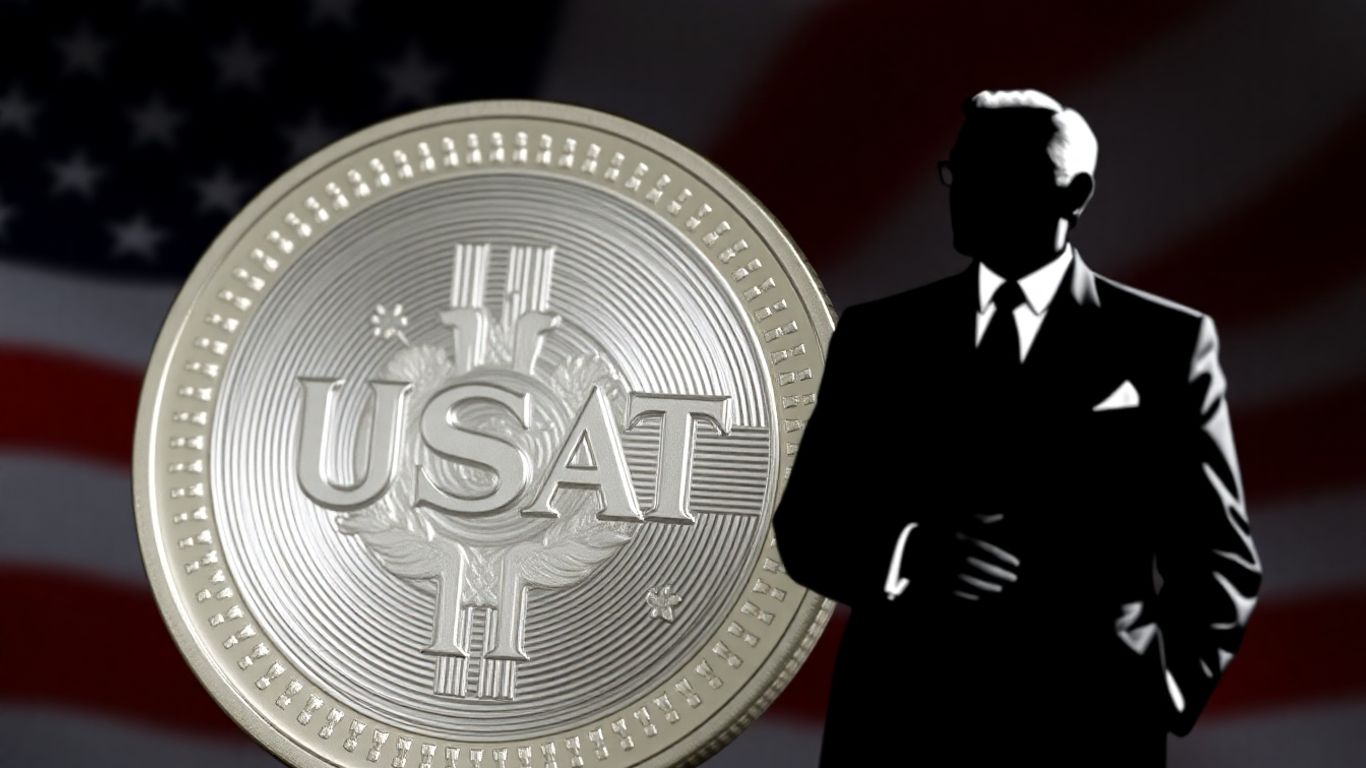
Tether, the issuer of the world's largest stablecoin, has announced the launch of its new U.S. dollar-backed stablecoin, USAT, and appointed former White House crypto advisor Bo Hines as the CEO of its new U.S. venture. This strategic move signals Tether's increased focus on the American market and regulatory engagement.
Key Takeaways
-
Tether launches USAT, a U.S.-regulated stablecoin.
-
Bo Hines, ex-Trump advisor, named CEO of Tether U.S.
-
USAT aims to comply with the GENIUS Act.
-
Anchorage Digital Bank to issue USAT, with Cantor Fitzgerald as custodian.
-
The move signifies Tether's commitment to the U.S. market and regulatory compliance.
Tether's U.S. Expansion and the USAT Stablecoin
Tether is launching USAT, a stablecoin specifically designed for U.S. businesses and institutions operating within the U.S. regulatory framework. This new token will complement Tether's global stablecoin, USDT, which currently has a market capitalization exceeding $169 billion. The USAT stablecoin is slated to be issued by Anchorage Digital Bank, a federally chartered digital asset bank, with Cantor Fitzgerald serving as the custodian and preferred primary dealer. The company aims to launch USAT by the end of the year.
Bo Hines Takes the Helm
Bo Hines, who previously served as the Executive Director of the White House Crypto Council under President Donald Trump, has been appointed CEO of Tether U.S. Hines, who also served as a strategic advisor to Tether, will oversee the rollout of USAT and lead Tether's expansion efforts in the United States. The U.S. team will be based in Charlotte, North Carolina, Hines' home state.
Regulatory Compliance and Market Strategy
The launch of USAT is designed to align with the recently passed GENIUS Act, which establishes a regulatory framework for stablecoins in the U.S. This act requires stablecoins to be backed by liquid assets, such as U.S. dollars and short-term Treasury bills, and mandates monthly disclosures of reserve composition. Tether CEO Paolo Ardoino stated that USAT's compliance with the GENIUS Act is a testament to Tether's commitment to transparency, strong governance, and American leadership.
Tether has been actively increasing its holdings of U.S. Treasuries, positioning itself as a significant holder of U.S. government debt. This strategy aligns with the U.S. Treasury's view that stablecoins can play a role in maintaining the dollar's dominance in the digital age. The company's move into the U.S. market follows a period of rebranding and increased engagement with American lawmakers and regulators, particularly since President Trump's return to the White House, which has been characterized by a more pro-crypto stance.
Market Context and Future Outlook
The stablecoin market has seen significant growth, with total market capitalization crossing the $270 billion milestone. Tether's expansion into the U.S. with a regulated stablecoin comes at a time when other major players, like Circle, have recently gone public in the U.S. Tether aims to capture a significant share of the U.S. market, with Hines projecting exorbitant expansion over the next 12 to 24 months. Despite past regulatory scrutiny, Tether is positioning itself as a key participant in the U.S. digital economy.
Sources
-
Bo Hines To Become CEO Of Tether’s Latest Dollar-Backed Stablecoin, Cointelegraph.
-
Tether reveals USAT stablecoin, appoints Bo Hines to lead U.S. business, CNBC.
-
Bo Hines named CEO of Tether's new US arm as company unveils USAT stablecoin, The Block.
-
Tether unveils USAT stablecoin to boost US market presence, Reuters.
This article was created with support from AI-driven technology, drawing on multiple reputable sources. The final content has been thoroughly reviewed and edited by BlockzHub's editorial team to ensure accuracy, clarity, and coherence. Original reporting sources are credited whenever appropriate and as required. The opinions expressed in this article do not necessarily represent the official views or positions of BlockzHub. This article is intended for informational purposes only and should not be considered financial or professional advice. Investing involves risk, and you should consult a qualified financial advisor before making any investment decisions.