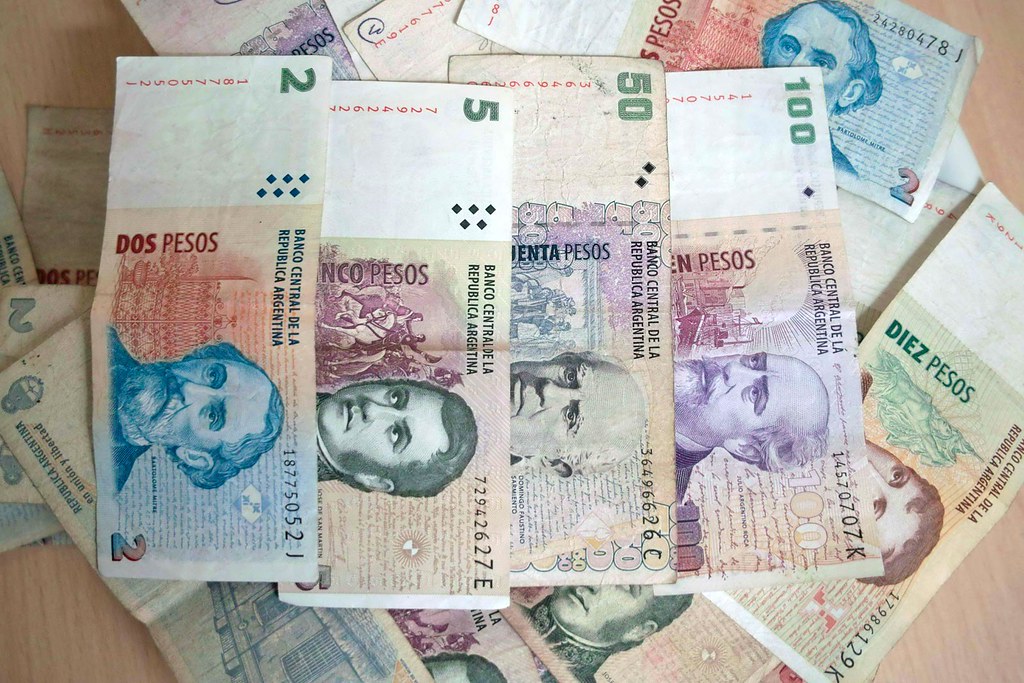
Argentina's peso continues to face significant downward pressure, exacerbated by recent election results and a corruption probe. Despite a promised financial lifeline from the United States, including potential swap lines and direct currency purchases, skepticism remains high, particularly within the Bitcoin community. This economic instability is driving Argentines towards digital alternatives like stablecoins and Bitcoin.
Key Takeaways:
-
Argentina's peso is under severe pressure due to political uncertainty and doubts about economic reforms.
-
The U.S. has offered a financial support package, including potential swap lines and debt purchases.
-
Bitcoin proponents remain skeptical of traditional financial interventions, advocating for digital assets.
-
Argentines are increasingly adopting stablecoins and Bitcoin as hedges against currency devaluation and economic instability.
Economic Turmoil and Political Uncertainty
The Argentine peso experienced a notable decline of approximately 4.5% last week. This depreciation was fueled by investor doubts regarding President Javier Milei's capacity to implement crucial fiscal and structural reforms, following a disappointing performance by his party in the Buenos Aires provincial elections. Adding to the political uncertainty, a corruption investigation involving a Milei family member further unsettled markets. The central bank has reportedly spent around $1.1 billion over three days to defend the peso, a substantial amount given the country's limited liquid foreign reserves of approximately $20 billion.
US Financial Lifeline
In response to the escalating crisis, U.S. Treasury Secretary Scott Bessent characterized Argentina as a "systemically important ally" and indicated that Washington is considering various stabilization measures. These options include swap lines, direct currency purchases, and the utilization of the Treasury's Exchange Stabilization Fund to acquire Argentine government debt. These remarks provided a temporary boost to investor confidence, with Argentina's Merval stock index surging over 9% in dollar terms on Monday, although it remains significantly down for the year. Dollar bonds also saw a sharp rebound.
Skepticism from Bitcoin Proponents
Despite the U.S. intervention, prominent figures in the Bitcoin community express skepticism about its long-term effectiveness. Saifedean Ammous, author of "The Bitcoin Standard," criticized Milei's economic policies, labeling them a "debt and inflation Ponzi." Ammous pointed to the high interest rates required for bond auctions and the expansion of the money supply as evidence that the libertarian experiment is faltering. For Bitcoiners, the ongoing cycle of debt monetization and foreign bailouts reinforces their belief in Bitcoin as a true escape from the traditional financial system.
Rise of Crypto Adoption
Amidst the economic and political volatility, Argentines are increasingly turning to digital assets as a hedge. Stablecoin purchases have surged on platforms like Lemon, with September 14 marking the highest daily volume of stablecoin purchases since the beginning of 2024. Ignacio Gimenez, a business manager at Lemon, noted that "Argentines continue to turn to stablecoins as a real-time hedge against the political and economic uncertainty that characterizes our country." Furthermore, Bitcoin has also gained traction as a store of value, with some Argentines now preferring it over the U.S. dollar.
Sources
-
US Lifeline, Milei’s Struggles and Crypto Adoption, Cointelegraph.
-
Peso in Freefall: U.S. Lifeline While Argentina Turns to Crypto, Brave New Coin.
This article was created with support from AI-driven technology, drawing on multiple reputable sources. The final content has been thoroughly reviewed and edited by BlockzHub's editorial team to ensure accuracy, clarity, and coherence. Original reporting sources are credited whenever appropriate and as required. The opinions expressed in this article do not necessarily represent the official views or positions of BlockzHub. This article is intended for informational purposes only and should not be considered financial or professional advice. Investing involves risk, and you should consult a qualified financial advisor before making any investment decisions.