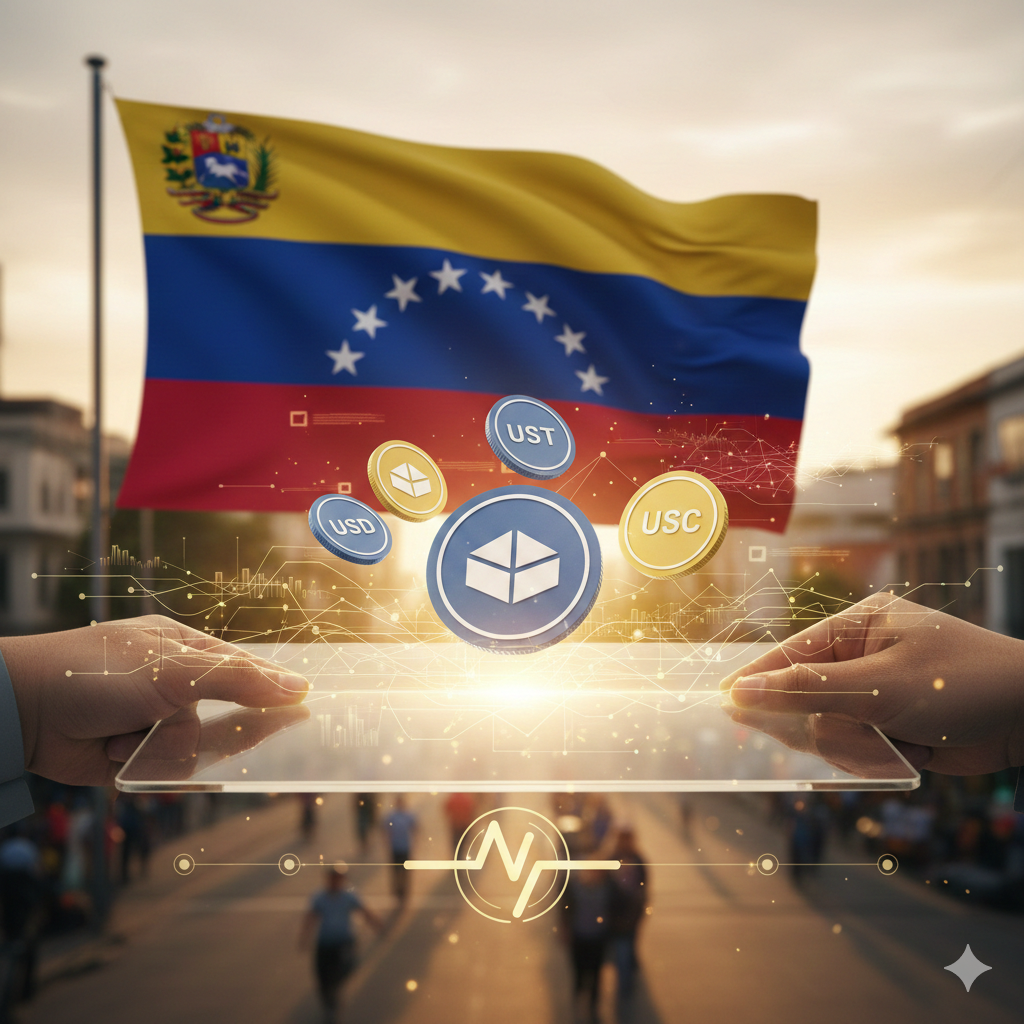
Venezuela is increasingly turning to US-dollar pegged stablecoins, such as Tether (USDT), as a critical tool to navigate hyperinflation, economic instability, and international sanctions. This shift sees both citizens and the government utilizing digital currencies for daily transactions, wealth preservation, and even international trade, marking a significant adaptation in the nation's financial strategy.
Key Takeaways
-
Venezuela is increasingly relying on US-dollar pegged stablecoins to combat hyperinflation and economic instability.
-
Stablecoins, particularly Tether (USDT), have become a primary tool for daily transactions and wealth preservation.
-
The Venezuelan government utilizes stablecoins for international trade, including oil deals.
-
Venezuela has become a leader in stablecoin adoption in Latin America.
Stablecoins as a Shield Against Inflation
The Venezuelan bolívar has been severely devalued by hyperinflation, prompting citizens to seek refuge in stablecoins. These digital assets, often referred to as "Binance dollars" by locals, maintain their value relative to the US dollar, offering a stable store of value and a reliable medium of exchange for everyday purchases, from groceries to rent. This reliance on stablecoins has grown as access to physical US dollars becomes more difficult.
Government Adoption for Trade and Finance
Beyond individual use, the Venezuelan government has integrated stablecoins into its economic operations. The nation has reportedly used these digital assets to facilitate international trade, notably in oil deals with allies like Russia. Reports suggest that stablecoins now account for a significant portion of the hard currency legally entering Venezuela, with some estimates placing it at up to half. This strategic use allows the government to circumvent traditional financial channels that may be restricted by sanctions.
Growing Crypto Adoption in Latin America
Venezuela has emerged as a significant player in cryptocurrency adoption within Latin America. It ranks fourth in the region for crypto adoption by value, receiving billions in digital assets annually. This widespread adoption is driven by necessity, with many Venezuelans, including prominent figures like former presidential candidate Maria Corina Machado, using cryptocurrencies like Bitcoin and stablecoins to protect their assets from potential seizure and to preserve their wealth.
Geopolitical Tensions and Economic Uncertainty
The adoption of stablecoins is occurring against a backdrop of heightened geopolitical tensions. The deployment of a US aircraft carrier near Venezuela and accusations of drug cartel involvement have increased economic and military uncertainty. In this volatile environment, stablecoins offer a degree of financial resilience and autonomy, providing a lifeline for both individuals and the state.
Sources
-
Venezuela Shifts to Stablecoins for Economic Stability Amid Sanctions, CoinCentral.
-
Stablecoin Adoption Grows in Venezuela Amid Mounting Tensions, Live Bitcoin News.
-
How Bitcoin, USDT and P2P Markets Became a Lifeline, CCN.com.
-
Venezuela’s stablecoin use grows following increasing tensions and economic crisis in the country, Trade Brains.
-
The Stablecoins Revolution is Changing the Finance of Latin America in Venezuela, Live Bitcoin News.
This article was created with support from AI-driven technology, drawing on multiple reputable sources. The final content has been thoroughly reviewed and edited by BlockzHub's editorial team to ensure accuracy, clarity, and coherence. Original reporting sources are credited whenever appropriate and as required. The opinions expressed in this article do not necessarily represent the official views or positions of BlockzHub. This article is intended for informational purposes only and should not be considered financial or professional advice. Investing involves risk, and you should consult a qualified financial advisor before making any investment decisions.