Crypto News
Written and ranked by the community. A manipulation-resistant algorithm surfaces what matters.
.jpeg)
Bitcoin Faces Potential Downturn Against Stocks as Market Cycle Nears End, Analyst Warns
Crypto analyst Benjamin Cowen predicts that Bitcoin may continue to underperform the stock market as the current market cycle concludes. This outlook challenges the widespread expectation of a significant rotation from traditional safe-haven assets like gold and silver into cryptocurrencies. Key Takeaways Analyst Benjamin Cowen suggests Bitcoin could continue to lose ground against the stock market. Expectations of a major shift from gold and silver into crypto may be premature. While gold and silver have reached new highs, Bitcoin's performance has lagged. Some analysts remain optimistic about a potential Bitcoin turnaround in the near future. Bitcoin's Underperformance Concerns Cowen expressed his view that Bitcoin's current price downtrend might be more persistent than many investors anticipate. He specifically noted that the strong belief in a "massive rotation" from precious metals like gold and silver into the crypto space could be misplaced. This comes at a time when gold and silver prices have recently surged to record highs, with silver, in particular, being projected by some institutions to climb further in the coming months due to factors like Chinese demand and a weakening US dollar. Despite these bullish signals in traditional safe-haven assets, Cowen emphasized that a significant rotation into Bitcoin is "probably not going to happen" in the immediate short term. Many in the crypto community have been looking at the all-time highs in gold and silver as historical indicators that Bitcoin would eventually follow suit. However, Bitcoin's recent performance has been lackluster, trading down significantly over the past week, contributing to a prevailing sentiment of "extreme fear" among crypto investors, as indicated by the Crypto Fear & Greed Index. Contrasting Optimistic Views While Cowen's analysis paints a cautious picture, other market observers offer a more optimistic outlook. Pav Hundal, lead analyst at Swyftx, suggested that the crypto market might be on the verge of a turning point. He pointed to historical patterns where Bitcoin's bottoming out typically lags behind gold's relative strength by approximately 14 months, anticipating this shift could occur in February or March. Hundal believes that if historical trends hold true, the gold-Bitcoin dynamic could signal a potential bottom for BTC within the next 40 days. He explained that gold often leads during periods of macroeconomic stress, with Bitcoin following once risk appetite is restored. According to this model, the market could appear less fragile by the end of the current quarter. Adding to the optimistic sentiment, Andre Dragosch, head of research at Bitwise Europe, noted on January 19th that Bitcoin is currently trading at a significant discount relative to gold. He described these "asymmetric setups" as rare and suggested that if market flows reverse, the first quarter of 2026 could represent an inflection point for Bitcoin. Sources Bitcoin ‘to keep bleeding against stock market’ as cycle wraps: Analyst — TradingView News, TradingView. Bitcoin ‘to keep bleeding against stock market’ as cycle wraps: Analyst, mx.advfn.com. This article was created with support from AI-driven technology, drawing on multiple reputable sources. The final content has been thoroughly reviewed and edited by BlockzHub's editorial team to ensure accuracy, clarity, and coherence. Original reporting sources are credited whenever appropriate and as required. The opinions expressed in this article do not necessarily represent the official views or positions of BlockzHub. This article is intended for informational purposes only and should not be considered financial or professional advice. Investing involves risk, and you should consult a qualified financial advisor before making any investment decisions.
 Finance
OSL Group Secures $200 Million to Fuel Global Stablecoin and Payments Expansion
OSL Group, a prominent digital asset company, has successfully raised $200 million in equity financing to significantly expand its stablecoin trading and digital payments businesses on a global scale. This substantial capital injection is poised to bolster the company's financial standing and accelerate its growth in regulated digital payment and settlement services. Key Takeaways OSL Group has raised $200 million in equity financing. The funds will be used for global expansion in stablecoin and payments. Strategic acquisitions, product development, and technology infrastructure are key investment areas. The company aims to enhance its institutional-grade payment solutions. Strategic Expansion and Investment The newly acquired capital will be strategically deployed across several key areas. OSL Group plans to pursue acquisitions of licensed trading and payment entities globally, aiming to broaden its regulated footprint. A significant portion of the funds will also fuel international expansion in both its stablecoin and payment services. Furthermore, the company intends to invest further in product development and bolster its technology infrastructure to support scaling operations across multiple jurisdictions. Strengthening Stablecoin and Payment Operations OSL Group has been actively building its presence in the stablecoin sector, having already launched its own U.S. dollar-backed stablecoin, USDGO. The company views stablecoins as a crucial component for lowering costs and speeding up cross-border transactions, making them ideal for both international payments and everyday business needs. This funding round will enable OSL to enhance its stablecoin infrastructure and extend its reach into new markets worldwide, solidifying its position as a leader in the sector. Institutional Focus and Market Validation In addition to its stablecoin ambitions, OSL Group is committed to expanding its digital payment services for corporate and institutional clients. Recent initiatives include the acquisition of Banxa, a Web3 payment firm, and the launch of OSL BizPay, a business-to-business payment platform. Chief Financial Officer Ivan Wong stated that the financing round reflects strong market validation of OSL Group's strategic positioning and will allow the company to welcome more like-minded strategic investors. This move underscores the growing interest in compliant, institution-grade digital asset services. Sources OSL Group raises $200M to expand stablecoin and payments business — TradingView News, TradingView. OSL Group Plans Global Expansion with $200 Million Investment Raise, CoinCentral. OSL Group Raises $200M to Expand Stablecoin Trading and Payments, Coinfomania. OSL Group Launches $200M Equity Raise for Stablecoin Push, Cryptonews. This article was created with support from AI-driven technology, drawing on multiple reputable sources. The final content has been thoroughly reviewed and edited by BlockzHub's editorial team to ensure accuracy, clarity, and coherence. Original reporting sources are credited whenever appropriate and as required. The opinions expressed in this article do not necessarily represent the official views or positions of BlockzHub. This article is intended for informational purposes only and should not be considered financial or professional advice. Investing involves risk, and you should consult a qualified financial advisor before making any investment decisions.
0 0.0 1by dAppConNewcomer Finance
Bitcoin's 'Death Cross' Returns: A Signal of Past Price Plunges
Bitcoin has recently formed a technical pattern known as a "death cross," where its 21-day Simple Moving Average (SMA) has fallen below its 50-day SMA. This specific crossover has historically preceded significant price drops for the cryptocurrency, raising concerns among investors about a potential downturn. Key Takeaways Bitcoin's 21-day SMA has crossed below its 50-day SMA, a pattern historically associated with price declines. Previous instances of this "death cross" have led to drawdowns ranging from 54% to 69%. The most recent occurrence in 2022 preceded a nearly 66% price drop. Analysts are monitoring Bitcoin's proximity to the Realized Price-to-Liveliness Ratio, a key on-chain indicator. Understanding the Death Cross A "death cross" is a technical analysis signal that occurs when a short-term moving average crosses below a long-term moving average. In this case, the 21-day SMA falling below the 50-day SMA is being closely watched. Simple Moving Averages (SMAs) are used to smooth out price data and identify long-term trends by averaging prices over a specified period. Historical Precedents According to cryptocurrency analyst Ali Martinez, this particular death cross formation has a history of preceding substantial price corrections for Bitcoin. Charts shared by Martinez highlight past instances where this crossover was followed by significant drawdowns, varying between 54% and 69%. The most notable recent example occurred in 2022, when this signal preceded a decline of approximately 66% to the bear market bottom. Potential Downside and On-Chain Indicators If historical patterns hold true, the current death cross could signal further bearish momentum for Bitcoin. Analysts are also observing Bitcoin's position relative to the Realized Price-to-Liveliness Ratio, an on-chain metric that combines the Realized Price (average investor cost basis) and Liveliness (long-term investor behavior). This ratio is currently around $87,500. Bitcoin briefly dipped below this level recently, and in the past, such breaches have led to price movements towards the Realized Price, which stands at $56,000. At the time of reporting, Bitcoin was trading around $89,500, showing a modest 2% increase over the past seven days. The market is now keenly observing whether this technical signal will indeed lead to another significant price correction. Sources Bitcoin Death Cross That Last Preceded A 66% Drop Is Back — TradingView News, TradingView. Bitcoin Death Cross That Last Preceded A 66% Drop Is Back, Bitge This article was created with support from AI-driven technology, drawing on multiple reputable sources. The final content has been thoroughly reviewed and edited by BlockzHub's editorial team to ensure accuracy, clarity, and coherence. Original reporting sources are credited whenever appropriate and as required. The opinions expressed in this article do not necessarily represent the official views or positions of BlockzHub. This article is intended for informational purposes only and should not be considered financial or professional advice. Investing involves risk, and you should consult a qualified financial advisor before making any investment decisions.
0 0.0 0by Mini maNewcomer Finance
Animoca Brands and Rootstock Labs Forge Alliance to Unlock Bitcoin DeFi for Japanese Institutions
Animoca Brands Japan and Rootstock Labs have announced a strategic partnership aimed at introducing Bitcoin-native decentralized finance (DeFi) solutions to Japanese corporations and institutions. This collaboration seeks to localize Rootstock's institutional program, enabling Japanese companies to integrate Bitcoin into their corporate treasury strategies while accessing on-chain financial tools secured by Bitcoin's proof-of-work. Key Takeaways Japanese companies are increasingly viewing Bitcoin as treasury infrastructure rather than a speculative asset. The partnership focuses on institutional, Bitcoin-native financial tools emphasizing security and regulatory compliance. The initiative aims to provide access to Bitcoin-backed borrowing and yield strategies within Japan's regulatory framework. Bridging Bitcoin and Institutional Finance in Japan The collaboration is set to localize Rootstock's institutional program for the Japanese market. This initiative will empower companies to manage Bitcoin (BTC) as part of their corporate treasury strategies, leveraging on-chain financial tools secured by Bitcoin's robust proof-of-work consensus mechanism. Kensuke Amo, CEO of Animoca Brands Japan, highlighted the growing trend of companies utilizing cryptoassets for financial and treasury strategies, emphasizing that this partnership will support corporate adoption in a manner compliant with Japan's regulatory environment. Rootstock's Secure Foundation Rootstock operates as a Bitcoin sidechain, secured by a significant portion of Bitcoin's total hash power through merged mining. This design allows it to inherit Bitcoin's security while supporting Ethereum-compatible smart contracts. Rootstock Labs, a core contributor to Rootstock, will work with Animoca Brands Japan to assess the use of Rootstock-based assets like Rootstock Bitcoin (rBTC), a Bitcoin-pegged token, and the Rootstock Infrastructure Framework (RIF) for scaling Bitcoin and enabling faster, cheaper decentralized applications (dApps). Tailored Treasury Solutions for Japanese Corporations The partnership will concentrate on assisting Japanese companies in managing Bitcoin within their treasury operations. This includes exploring Bitcoin-based financial tools and services built on Rootstock, aiming to enhance treasury efficiency while adhering to Japan's regulatory framework. Animoca Brands Japan may offer these services through its Digital Asset Treasury Management Support Service, which provides end-to-end assistance for listed companies developing digital asset strategies that align with internal governance standards and risk policies. Growing Corporate Interest in Bitcoin Japanese companies have demonstrated a growing interest in holding Bitcoin as a long-term strategic reserve. Prominent corporate adopters of Bitcoin treasury strategies include Metaplanet, NEXON Co., Ltd., Remixpoint, and Anap Holdings Inc. This partnership signifies a move beyond passive holdings, exploring active on-chain financial management anchored to Bitcoin's security. Sources Animoca, RootstockLabs partner to bring Bitcoin DeFi to Japanese institutions — TradingView News, TradingView. Animoca, Rootstock explore Bitcoin treasury tools in Japan, crypto.news. Animoca Brands, RootstockLabs to Build Bitcoin Treasury for Japan, CoinCentral. Animoca Brands Japan Announces Partnership to Expand Bitcoin DeFi, Coindoo. This article was created with support from AI-driven technology, drawing on multiple reputable sources. The final content has been thoroughly reviewed and edited by BlockzHub's editorial team to ensure accuracy, clarity, and coherence. Original reporting sources are credited whenever appropriate and as required. The opinions expressed in this article do not necessarily represent the official views or positions of BlockzHub. This article is intended for informational purposes only and should not be considered financial or professional advice. Investing involves risk, and you should consult a qualified financial advisor before making any investment decisions.
0 0.0 0by dAppConNewcomer Finance
Japan's FSA Tightens Grip on Yen Stablecoin Reserves with Strict Bond Rules
Japan's Financial Services Agency (FSA) has introduced stringent new regulations for yen-pegged stablecoin reserves, demanding that collateralized foreign bonds meet exceptionally high credit ratings and originate from issuers with at least 100 trillion yen in outstanding debt. This move is set to significantly reshape the landscape for stablecoin issuers and potentially impact demand for Japanese Government Bonds (JGBs). Key Takeaways New FSA rules require foreign bonds used as collateral for yen stablecoins to have top-tier credit ratings. Issuers of these bonds must have at least 100 trillion yen in outstanding debt. The regulations aim to enhance oversight of banks, intermediaries, and foreign stablecoin issuers. The Bank of Japan's tapering bond purchases could lead stablecoin issuers to become major JGB holders. Stricter Collateral Requirements The FSA's draft rules, open for public consultation until February 27, 2026, stipulate that eligible foreign bonds must achieve a credit risk rating of "1-2" or higher from designated agencies. Furthermore, the issuing entities must have a total bond issuance of at least 100 trillion yen. This dual criterion is expected to limit the pool of qualifying bonds significantly, favoring only the world's largest sovereign and corporate issuers. Enhanced Oversight and Warnings Beyond collateral standards, the new supervisory guidelines extend to banks and insurance subsidiaries involved in cryptocurrency intermediation. These institutions will be required to explicitly warn customers against underestimating digital asset risks, even when associated with traditional banking brands. The FSA is also implementing screening requirements for businesses handling foreign stablecoins, ensuring overseas issuers do not directly solicit Japanese retail customers. Cross-border coordination with foreign authorities is planned for monitoring these instruments. Stablecoins and the JGB Market The evolving stablecoin sector in Japan is poised to influence the country's substantial $9 trillion Japanese government bond (JGB) market. With the Bank of Japan reducing its bond purchases, stablecoin issuers like JPYC are positioning themselves to become significant holders of JGBs. JPYC, for instance, plans to allocate 80% of its proceeds to JGBs and 20% to bank deposits. This shift could see stablecoin issuers filling a void traditionally occupied by the central bank. Major Banks' Stablecoin Initiatives Despite the stringent regulations, Japan's three largest financial institutions – Mitsubishi UFJ Financial Group, Sumitomo Mitsui Financial Group, and Mizuho Financial Group – are collaborating on a joint venture to launch yen-backed stablecoins for domestic users. This initiative aims to promote settlements using these pegged cryptocurrencies, challenging the dominance of dollar-denominated stablecoins. The banks plan to build infrastructure for corporate clients to transfer stablecoins, initially focusing on yen-pegged tokens with potential for dollar-pegged versions in the future. These developments are part of Japan's broader digital finance transformation, which has seen a surge in cashless payment adoption. Additionally, reports suggest the financial watchdog is considering allowing banks to hold digital assets like Bitcoin for investment purposes before 2028. Sources Japan FSA sets tough bond rules for yen stablecoin reserves, crypto.news. Japan Proposes Strict Bond Standards for Stablecoin Collateral, Cryptonews. This article was created with support from AI-driven technology, drawing on multiple reputable sources. The final content has been thoroughly reviewed and edited by BlockzHub's editorial team to ensure accuracy, clarity, and coherence. Original reporting sources are credited whenever appropriate and as required. The opinions expressed in this article do not necessarily represent the official views or positions of BlockzHub. This article is intended for informational purposes only and should not be considered financial or professional advice. Investing involves risk, and you should consult a qualified financial advisor before making any investment decisions.
0 0.0 0by dAppConNewcomer.jpeg) Finance
FinanceBitcoin's 'Most Accurate' Bullish Signal Emerges, Hinting at Potential Price Reversal Amidst Mixed Market Signals
Bitcoin (BTC) traders are closely watching a potentially significant bullish signal that has historically preceded major price rallies. While this indicator suggests a "massive" price upswing could be on the horizon, on-chain data reveals persistent selling pressure, indicating that a recovery might be delayed as market participants adopt a more defensive stance. Key Takeaways Bitcoin experienced a remarkable 600% surge in 2021 following a similar key bullish cross. Current on-chain data points to ongoing sell-side pressure, suggesting a BTC price recovery may take time. A Bullish Cross Signals Potential Upswing Analyst Coinvo Trading has identified the appearance of a bullish cross involving the Stochastic RSI of the United States 10-Year Treasury Yield (US10Y) and China 10-Year Government Bond Yield (CN10Y) against Bitcoin's weekly chart. This specific signal, described as "Bitcoin's most accurate bull run signal," has occurred only four times previously, each time preceding substantial price rallies. The last instance of this Stoch RSI cross between US10Y and CN10Y was in October 2020, which accurately signaled the beginning of Bitcoin's impressive 600% rally, culminating in its all-time high of $69,000 in 2021. Further bolstering the bullish outlook, analyst Matthew Hyland anticipates a potential BTC price breakout based on the performance of the U.S. Dollar Strength Index (DXY). He suggests that the BTC/USD pair could rally once the DXY falls below 96, a pattern observed in both 2017 and 2022. Meanwhile, gold has reached record highs above $5,000, while Bitcoin has remained range-bound, widening the divergence between the two assets. Analysts at Swan advise against excessive worry regarding this divergence, noting that gold often leads the way, with Bitcoin consolidating for months before experiencing a "violent" breakout. Fragile Market Conditions Persist Despite the optimistic bullish signal, Bitcoin's capacity for a sustained recovery above critical levels appears constrained by a lack of robust buying interest. The spot cumulative volume delta (CVD) metric, which tracks the net difference between buying and selling volumes, has turned sharply negative. This indicates a clear dominance of selling pressure. Glassnode's latest Weekly Market Impulse report highlights a significant drop in the CVD metric to -$194.2 million last week, down from $54.2 million the previous week. This shift suggests that "trader behavior has turned meaningfully risk-off, and reflects fading confidence in near-term upside price continuation." Furthermore, spot Bitcoin ETF weekly net flows have reversed from a $1.6 billion inflow to a $1.7 billion outflow. This indicates "cooling institutional demand and increasing near-term downside pressure," according to the on-chain data provider. The overall market conditions are described as having shifted to a more defensive posture, with persistent sell-side pressure and rising hedging demand contributing to a fragile market environment. Previous reports have also suggested that Bitcoin could face another extended period of consolidation due to significant overhead resistance, selling pressure from spot BTC ETFs, and growing macroeconomic uncertainties. Sources Bitcoin‘s ‘most accurate’ bullish signal hints at BTC price reversal — TradingView News, TradingView. Bitcoin‘s ‘most accurate’ bullish signal hints at BTC price reversal, mx.advfn.com. This article was created with support from AI-driven technology, drawing on multiple reputable sources. The final content has been thoroughly reviewed and edited by BlockzHub's editorial team to ensure accuracy, clarity, and coherence. Original reporting sources are credited whenever appropriate and as required. The opinions expressed in this article do not necessarily represent the official views or positions of BlockzHub. This article is intended for informational purposes only and should not be considered financial or professional advice. Investing involves risk, and you should consult a qualified financial advisor before making any investment decisions.
0 0.0 0by Mini maNewcomer Finance
BitGo's Massive IPO Fuels Crypto VC Funding Surge
The week of January 18-24, 2026, saw a significant influx of capital into the cryptocurrency space, with a total of $381.79 million raised across 13 projects. Leading the charge was digital asset security company BitGo, which successfully closed an Initial Public Offering (IPO) of $212.8 million, dominating the funding landscape for the period. Key Takeaways Crypto VC funding reached $381.79 million from 13 deals between January 18-24, 2026. BitGo's $212.8 million IPO represented over half of the total funding for the week. Superstate and ZBD also secured substantial investments, raising $82.5 million and $40 million, respectively. BitGo's Dominant IPO BitGo, a prominent player in digital asset security, spearheaded the week's funding activities with its impressive $212.8 million IPO. This single event accounted for more than half of the total capital raised in the crypto venture funding space during that week. To date, BitGo has amassed a total of $382.3 million in funding. Superstate Secures Series B Funding Asset management firm Superstate successfully raised $82.5 million in a Series B funding round. The round saw participation from notable investors including Bain Capital Crypto, Schonfeld Global, and Haun Ventures. This latest investment brings Superstate's total funding to $100.5 million. ZBD Powers Up Gaming Payments ZBD, a global Web3 payment service provider focused on the gaming industry, announced a $40 million Series C funding round. The round was backed by Blockstream. This funding will enable ZBD to enhance its game-native tools, aiming to increase player lifetime value without disrupting the gaming experience. ZBD has now raised a total of $87.3 million. Other Notable Funding Rounds Several other projects also secured significant investments during the week: River (formerly Satoshi Protocol): Raised $12 million in a strategic round for its chain-abstraction stablecoin system. Investors included Tron and Justin Sun. Total funding now stands at $14 million. Finst: A Netherlands-based cryptocurrency exchange, secured $9.35 million in a Series A round, backed by Endeit. Cork Protocol: Closed a $5.50 million seed round with investments from Road Capital, CSX, and Collab. Smaller rounds included Akedo ($5 million seed), Bitway ($4.44 million seed), Warden ($4 million strategic), Immunefi ($2.50 million public sale), HyperLend ($1.70 million), Pan Network ($1 million), and another $1 million public sale for Bitway. Sources Crypto VC Funding: BitGo leads with $212.8m IPO, Superstate bags $82.5m, crypto.news. This article was created with support from AI-driven technology, drawing on multiple reputable sources. The final content has been thoroughly reviewed and edited by BlockzHub's editorial team to ensure accuracy, clarity, and coherence. Original reporting sources are credited whenever appropriate and as required. The opinions expressed in this article do not necessarily represent the official views or positions of BlockzHub. This article is intended for informational purposes only and should not be considered financial or professional advice. Investing involves risk, and you should consult a qualified financial advisor before making any investment decisions.
0 0.0 0by BishopNewcomer Finance
Stablecoin Surge Predicted for Enterprise Payments by Agora's Nick van Eck
Nick van Eck, founder of Agora and heir to the VanEck fortune, is forecasting a significant expansion of stablecoins beyond their current crypto-native applications, particularly within the enterprise payments sector. While Agora has seen growth in decentralized finance, van Eck's long-term vision centers on stablecoins revolutionizing how businesses handle transactions. Key Takeaways Agora's founder, Nick van Eck, predicts a major shift towards stablecoins in enterprise payments. Adoption by traditional firms is expected but will be gradual due to infrastructure and knowledge gaps. Multinational corporations with extensive vendor networks are likely early adopters. Consolidation is anticipated on a few major corporate blockchains. The Enterprise Payment Opportunity Van Eck highlighted that Agora is actively exploring applications for stablecoins in areas such as payroll, business-to-business (B2B) transactions, and cross-border payments. He believes that traditional companies are facing real problems that stablecoins can solve, despite the slow pace of adoption. This delay is attributed to unfamiliar infrastructure, a lack of internal policies, and significant educational gaps regarding stablecoin technology. "If stablecoin knowledge in the crypto world is a hundred," van Eck stated, "then outside of it is a five." This disparity underscores the educational challenge ahead for widespread enterprise adoption. Agora's Stablecoin Strategy Agora currently issues its own U.S. dollar-backed stablecoin, AUSD, and offers stablecoin-as-a-service for other crypto projects. However, van Eck advises caution, suggesting that minting a proprietary stablecoin only makes sense within a closed-loop ecosystem. For most others, he recommends utilizing established, major stablecoins. The more substantial opportunity, according to van Eck, lies in replacing inefficient cross-border payment systems. These traditional systems often involve pre-funding and high transaction costs that erode corporate profit margins. He noted that even a small percentage saving on revenue can translate to a significant boost in EBITDA for businesses. Future Landscape and Agora's Ambition Looking ahead, van Eck anticipates a consolidation of activity onto a select few corporate blockchains, such as Circle's Arc, Coinbase's Base, and Stripe's Tempo. He predicts that major corporations will bring substantial financial resources and distribution networks to these platforms, leading to this consolidation. In this evolving and competitive environment, Agora aims to establish itself as one of the top five global stablecoin issuers. Their strategy focuses on developing user-friendly tools that resonate with businesses, aiming to provide an experience that feels familiar, akin to a bank account, but with enhanced capabilities. "They don’t want crypto," van Eck emphasized. "They want something that feels like a bank account, but better." Sources Agora's Nick van Eck bets on stablecoin boom in enterprise payments, CoinDesk. This article was created with support from AI-driven technology, drawing on multiple reputable sources. The final content has been thoroughly reviewed and edited by BlockzHub's editorial team to ensure accuracy, clarity, and coherence. Original reporting sources are credited whenever appropriate and as required. The opinions expressed in this article do not necessarily represent the official views or positions of BlockzHub. This article is intended for informational purposes only and should not be considered financial or professional advice. Investing involves risk, and you should consult a qualified financial advisor before making any investment decisions.
0 0.0 0by dAppConNewcomer Finance
21Shares Launches First Dogecoin Spot ETF
21Shares has launched the first spot Dogecoin exchange-traded fund (ETF) in the United States, marking a significant milestone for the popular meme coin. This new ETF, trading under the ticker TDOG on the Nasdaq, offers both retail and institutional investors a regulated avenue to gain exposure to Dogecoin without the need to directly hold the cryptocurrency. Key Takeaways 21Shares has launched the first U.S. spot Dogecoin ETF, TDOG, on Nasdaq. The ETF is officially backed by the Dogecoin Foundation, distinguishing it from previous launches. This marks the SEC's first explicit approval of a meme coin-based ETF, signaling increased regulatory acceptance. The product allows investors direct Dogecoin exposure through traditional brokerage accounts. Institutional Access and Regulatory Approval The launch of the TDOG ETF represents a major step for Dogecoin into traditional financial markets. Developed in collaboration with House of Doge, the ETF is fully backed by Dogecoin held in institutional-grade custody on a 1:1 basis. This provides investors with direct exposure to the cryptocurrency's price movements through familiar brokerage accounts, bypassing the complexities of managing crypto wallets and exchanges. The Securities and Exchange Commission (SEC) has approved the 21Shares Dogecoin ETF, a move that effectively signifies the agency's position that Dogecoin is not classified as a security. This approval follows earlier spot ETF approvals for Bitcoin and Ethereum, indicating a broader trend of regulatory acceptance for cryptocurrency investment products in the U.S. A Unique Endorsement While other spot Dogecoin ETFs from Grayscale and Bitwise launched in November, the 21Shares ETF is the first to receive official endorsement from the Dogecoin Foundation. This backing provides an added layer of credibility and legitimacy, differentiating TDOG from its predecessors. The foundation, a non-profit organization supporting Dogecoin's open-source development and community since 2014, has partnered with 21Shares to make Dogecoin more accessible within established financial structures. Market Reaction and Future Outlook Despite the significant development, Dogecoin's price has shown muted reaction to the ETF launch, continuing a recent downtrend. Analysts suggest this may be due to the launch being priced in or a shift in market dynamics where speculative hype plays a lesser role. However, proponents like Duncain Moir, president of 21Shares, are optimistic, expecting Dogecoin to follow the path of Bitcoin and Ethereum in traditional markets, citing its large online following, substantial market value, and engaged community. The TDOG ETF charges a 0.50% annual management fee. The infrastructure supporting the ETF includes Bank of New York Mellon as administrator and custodian, with digital asset custody split among Coinbase Custody Trust, Anchorage Digital Bank, and BitGo, aiming to reduce counterparty risk. This launch is part of a broader effort to evolve Dogecoin from a meme coin into a more widely accepted payment rail. Sources 21Shares launches first Dogecoin Spot ETF in US, crypto.news. Dogecoin Foundation Launches First U.S. Spot 21Shares Dogecoin ETF on NASDAQ After SEC Approval — Noticias de TradingView, TradingView: siga todos los mercados. Dogecoin Foundation-Backed 21Shares DOGE ETF Launches on Nasdaq, Decrypt. 21Shares Launches First Dogecoin ETF on Nasdaq, SQ Magazine. 21Shares Launches Dogecoin ETF With Foundation Backing, Yellow.com. This article was created with support from AI-driven technology, drawing on multiple reputable sources. The final content has been thoroughly reviewed and edited by BlockzHub's editorial team to ensure accuracy, clarity, and coherence. Original reporting sources are credited whenever appropriate and as required. The opinions expressed in this article do not necessarily represent the official views or positions of BlockzHub. This article is intended for informational purposes only and should not be considered financial or professional advice. Investing involves risk, and you should consult a qualified financial advisor before making any investment decisions.
0 0.0 0by BishopNewcomer Finance
Grayscale Files for Spot BNB ETF, Igniting Speculation
Crypto asset manager Grayscale has officially filed for a spot Binance Coin (BNB) Exchange Traded Fund (ETF) with the Securities and Exchange Commission (SEC). This move positions Grayscale as the second major financial institution, following VanEck, to pursue a BNB-backed ETF, potentially opening new avenues for institutional investment in the cryptocurrency. Key Takeaways Grayscale has submitted an S-1 filing for a spot BNB ETF. This follows a similar filing by VanEck, indicating growing institutional interest in BNB. Analysts are divided, with some predicting a price surge for BNB, while others note bearish technical patterns. Grayscale's Strategic Move Grayscale, a prominent player in digital asset management with billions in assets under management, has taken a significant step by filing its S-1 registration statement for a spot BNB ETF. This filing is a preliminary step before a formal application to the SEC. The company has been actively expanding its ETF offerings, with existing products for Solana, Chainlink, and XRP, and has also explored converting its ZCash Trust into an ETF. The decision by Grayscale to pursue a BNB ETF comes despite the historical association of Binance Coin with Binance, a company that faced legal challenges and a guilty plea in 2024. However, the SEC has previously approved ETFs for other cryptocurrencies, such as XRP and Solana, which have seen substantial inflows, suggesting a potential for similar success with a BNB ETF. Market Reaction and Price Predictions Following the news of Grayscale's filing, the price of Binance Coin (BNB) has experienced modest gains, attempting to break key resistance levels around the $900 mark. However, market sentiment remains mixed. Some analysts point to bullish technical indicators, such as a double-bottom pattern forming above the $850 level, suggesting a potential rally towards $1,000. Long-term projections from analysts like Crypto Patel are even more optimistic, with targets ranging from $3,000 in the next bull phase to as high as $10,000-$20,000 in a macro-cycle scenario, provided bullish momentum continues. These predictions are bolstered by BNB's strong market capitalization, its deflationary tokenomics through coin burns, and the high activity on the Binance Smart Chain (BSC). Conversely, other analyses highlight bearish chart patterns, such as a bearish flag formation, which could indicate further downside. Technical indicators show BNB price retreating from its recent highs and trading below key moving averages, with potential support levels identified around $812. The current trading range has been narrow, with BNB hovering around the $880-$890 mark for several days. The Road Ahead The SEC's approval of a spot BNB ETF would be a significant development for the cryptocurrency market, potentially increasing liquidity and accessibility for institutional investors. The market will be closely watching the SEC's decision and its impact on BNB's price, balancing the potential for growth against existing technical and regulatory considerations. Sources Binance Coin price forms a risky pattern as Grayscale files S-1 for BNB ETF, crypto.news. Grayscale Files for Spot BNB ETF, Will BNB Price Rally Past $1K?, Coinspeaker. This article was created with support from AI-driven technology, drawing on multiple reputable sources. The final content has been thoroughly reviewed and edited by BlockzHub's editorial team to ensure accuracy, clarity, and coherence. Original reporting sources are credited whenever appropriate and as required. The opinions expressed in this article do not necessarily represent the official views or positions of BlockzHub. This article is intended for informational purposes only and should not be considered financial or professional advice. Investing involves risk, and you should consult a qualified financial advisor before making any investment decisions.
0 0.0 0by BishopNewcomer Finance
Thailand Gears Up for Crypto ETF Launch by Early 2026
Thailand's Securities and Exchange Commission (SEC) is on the verge of finalizing regulations for cryptocurrency exchange-traded funds (ETFs), with a target launch date in early 2026. This move signifies a significant step in the country's efforts to integrate digital assets into its mainstream financial market, offering investors easier access and enhanced security. Key Takeaways Thailand's SEC aims to issue formal crypto ETF guidelines early this year, targeting a 2026 launch. The initiative seeks to provide investors with easier access to crypto assets while mitigating risks associated with wallet security and hacking. Regulations will also extend to crypto futures trading and the tokenization of assets. The SEC views digital assets as a distinct asset class, suggesting a portfolio allocation of up to 5% for diversified investments. Streamlining Crypto Investment The Thai SEC is actively working on detailed investment and operational rules for crypto ETFs. Deputy Secretary-General Jomkwan Kongsakul confirmed that the regulator has already approved the concept of crypto ETFs in principle. The goal is to offer investors a more accessible and secure way to gain exposure to digital assets, bypassing the complexities and risks of direct cryptocurrency ownership, such as managing private keys and wallet security. Expanding Beyond Bitcoin While initial approvals have focused on Bitcoin ETFs, Thailand is looking to broaden its offerings. The SEC is drafting rules to allow for ETFs that track other digital assets, potentially including Ethereum, Solana, or even baskets of various cryptocurrencies. This expansion aims to cater to a wider range of investor interests and promote innovation within the digital asset space. Regulatory Framework and Future Outlook In addition to ETFs, the SEC is also developing regulations for crypto futures trading on the Thailand Futures Exchange, recognizing digital assets as a legitimate underlying asset class under the Derivatives Act. Furthermore, a regulatory sandbox for tokenized assets is being developed in collaboration with the Bank of Thailand, starting with bond tokens. This comprehensive approach underscores Thailand's commitment to becoming a global digital asset hub, aligning with its previous measures like a five-year capital gains tax exemption for crypto transactions. Sources Thailand SEC moves to finalize crypto ETF rules as it eyes 2026 launch, crypto.news. Thailand Targets Early 2026 for Crypto ETF Regulations, Cryptonews. This article was created with support from AI-driven technology, drawing on multiple reputable sources. The final content has been thoroughly reviewed and edited by BlockzHub's editorial team to ensure accuracy, clarity, and coherence. Original reporting sources are credited whenever appropriate and as required. The opinions expressed in this article do not necessarily represent the official views or positions of BlockzHub. This article is intended for informational purposes only and should not be considered financial or professional advice. Investing involves risk, and you should consult a qualified financial advisor before making any investment decisions.
0 0.0 0by BishopNewcomer Finance
Steak 'n Shake's Bitcoin Bonus Sparks Outrage: A Small Reward or a Crypto Gamble?
Steak 'n Shake has announced a new incentive program for its hourly employees, offering a small Bitcoin bonus tied to hours worked. This move, intended to reward loyalty, has ignited a firestorm of criticism online, with many questioning the value and practicality of the crypto-based perk. Key Takeaways Steak 'n Shake will pay employees $0.21 in Bitcoin for every hour worked, starting March 1. The Bitcoin bonus has a two-year vesting period. Critics argue the bonus is a meager substitute for a meaningful wage increase and is unlikely to benefit employees due to high turnover. The company has also invested $10 million in Bitcoin and accepts Bitcoin payments. A Controversial Crypto Perk Beginning March 1, Steak 'n Shake will implement a new bonus structure for employees at its company-operated restaurants. For every hour worked, staff will receive $0.21 worth of Bitcoin. However, this digital currency bonus comes with a significant caveat: a two-year vesting period, meaning employees will only be able to access their Bitcoin after completing two years of service. The fast-food chain, in partnership with the Bitcoin-focused finance app Fold, pitched the incentive as a way to foster employee loyalty. "We take care of our employees; they, in turn, take care of customers; and the results take care of themselves," the company stated on X. Online Backlash and Skepticism The announcement was met with immediate and widespread criticism on social media. Many commentators derided the Bitcoin bonus as a "crypto-flavored" attempt to avoid providing actual wage increases. Concerns were raised about the high turnover rate common in the fast-food industry, suggesting that many employees might not remain with the company long enough to benefit from the two-year vesting period. Furthermore, the modest payout amount drew ridicule. For a full-time employee working 40 hours a week, the bonus would amount to less than $900 over two years. Online reactions ranged from calling the move a "Big L" to suggesting that a packet of ramen noodles per hour would have been a more tangible reward. Steak 'n Shake's Broader Bitcoin Strategy This Bitcoin bonus is part of a larger strategy by Steak 'n Shake to integrate digital assets into its operations. The company has already added $10 million worth of Bitcoin to its balance sheet. In 2025, it began accepting Bitcoin payments globally through the Lightning Network, a move that reportedly reduced transaction fees by nearly 50% compared to traditional credit card processing. Steak 'n Shake has committed to channeling all Bitcoin sales into a "Strategic Bitcoin Reserve," signaling a belief that digital assets can enhance profit margins. Despite these broader initiatives, the latest employee perk appears to have left both staff and the public unconvinced of its benefits. Sources Steak ’n Shake serves Bitcoin bonuses—Internet delivers side eye, crypto.news. This article was created with support from AI-driven technology, drawing on multiple reputable sources. The final content has been thoroughly reviewed and edited by BlockzHub's editorial team to ensure accuracy, clarity, and coherence. Original reporting sources are credited whenever appropriate and as required. The opinions expressed in this article do not necessarily represent the official views or positions of BlockzHub. This article is intended for informational purposes only and should not be considered financial or professional advice. Investing involves risk, and you should consult a qualified financial advisor before making any investment decisions.
0 0.0 0by dAppConNewcomer Finance
Solana Mobile Ignites Ecosystem with Massive SKR Token Airdrop for Seeker Phone Users
Solana Mobile is set to distribute nearly 2 billion SKR tokens to holders of its Seeker smartphone and app developers starting January 21, 2025. This significant airdrop marks a pivotal moment in integrating cryptocurrency rewards directly with hardware ownership and fostering the Solana Mobile ecosystem. Key Takeaways Solana Mobile is airdropping 1.96 billion SKR tokens on January 21, 2025. The distribution targets 100,908 Seeker smartphone users and 188 approved developers. SKR tokens function as both utility and governance assets within the Solana Mobile ecosystem. The airdrop rewards are tiered based on user engagement and on-chain activity. A Groundbreaking Token Distribution Solana Mobile has announced a substantial airdrop of its native SKR token, allocating 1.96 billion tokens, representing 20% of the total 10 billion supply. This initiative, commencing on January 21, 2025, is designed to reward early adopters and developers within its mobile ecosystem. The distribution is split between 1.82 billion SKR for 100,908 verified Seeker smartphone holders and 141 million SKR for 188 approved application developers. Seeker Phone User Rewards Seeker phone owners are categorized into five tiers: Scout, Prospector, Vanguard, Luminary, and Sovereign, with the highest tier, Sovereign, receiving up to 750,000 SKR tokens. Eligibility and reward amounts are determined by engagement with the Seeker phone, the Solana decentralized app store, and on-chain activity during Season 1 of the airdrop. This tiered system incentivizes active participation and loyalty within the Solana Mobile community. Developer Ecosystem Incentives The allocation of 141 million SKR tokens to developers underscores Solana Mobile's commitment to nurturing its application ecosystem. This distribution provides developers with immediate asset value and governance influence, encouraging the creation of specialized applications that leverage the unique hardware capabilities of Solana Mobile devices. This strategic investment aims to foster a robust and innovative dApp store. SKR Token Utility and Governance The SKR token is designed with dual functionality, serving as both a utility asset and a governance instrument. Holders can utilize SKR for transaction fee discounts, access to premium features, and exclusive application privileges. Furthermore, SKR holders will have voting rights on platform development decisions, feature implementations, and future airdrop parameters, empowering the community to shape the ecosystem's future. Staking and Future Growth Following the airdrop, Seeker phone users will be able to stake their SKR tokens directly through the Seed Vault Wallet or via a web interface. Staking allows users to earn rewards and delegate tokens to Guardians, who are responsible for device verification, app curation, and rule enforcement. Solana Mobile plans a gradual release of the remaining 80% of SKR tokens through staking rewards, developer grants, and future ecosystem incentives, ensuring sustainable growth and preventing market volatility. A New Paradigm for Mobile Crypto Solana Mobile's approach distinguishes itself from previous mobile cryptocurrency initiatives by focusing on deep ecosystem integration and ongoing utility rather than one-time promotional airdrops. By directly linking hardware ownership with tangible digital asset rewards and governance rights, Solana Mobile aims to accelerate mainstream adoption of Web3 technologies and establish a new standard for blockchain-integrated consumer electronics. Sources Revolutionary Token Distribution for Seeker Phone Holders Begins January 21, CryptoRank. Solana Mobile to airdrop 1.8B SKR tokens to users, 141M to devs — TradingView News, TradingView — Track All Markets. Solana Mobile confirms 1.8 billion SKR token airdrop for Seeker phone users, crypto.news. Solana Mobile Airdropping 1.8B SKR Tokens to Users, CoinMarketCap. This article was created with support from AI-driven technology, drawing on multiple reputable sources. The final content has been thoroughly reviewed and edited by BlockzHub's editorial team to ensure accuracy, clarity, and coherence. Original reporting sources are credited whenever appropriate and as required. The opinions expressed in this article do not necessarily represent the official views or positions of BlockzHub. This article is intended for informational purposes only and should not be considered financial or professional advice. Investing involves risk, and you should consult a qualified financial advisor before making any investment decisions.
0 0.0 0by dAppConNewcomer Finance
Trove Markets Faces Investor Fury After $9.4M ICO Fund Retention and Solana Pivot
Trove Markets is under fire from investors after confirming it will retain approximately $9.4 million from a recent token sale. The funds were initially raised for integration with the Hyperliquid platform, but the project has since pivoted to the Solana blockchain just days before its token launch, leading to significant backlash and a dramatic crash in its new token's value. Key Takeaways Trove Markets retained $9.4 million from an $11.5 million token sale originally intended for Hyperliquid integration. The project abruptly pivoted to the Solana blockchain days before its token launch. The TROVE token plummeted by approximately 95% shortly after its debut. Investors are demanding refunds, citing a breach of trust and altered investment thesis. The team attributes the pivot to the withdrawal of a key liquidity partner. Investor Backlash and Token Collapse The controversy erupted when Trove Markets announced its decision to shift its perpetual decentralized exchange (DEX) from Hyperliquid to Solana. This pivot occurred mere days before the scheduled launch of its TROVE token. Consequently, the TROVE token experienced a staggering 95% drop in value within minutes of trading, plummeting from an expected market capitalization of around $20 million to under $2 million. Investors who contributed to the token sale expressed outrage, arguing that the funds were raised under the premise of building on Hyperliquid's infrastructure. The decision to retain the majority of the funds for development on Solana has been widely criticized as a breach of trust and a deviation from the original investment proposition. Reasons for the Pivot One of Trove's builders, known as "Unwise," explained that the abrupt pivot was necessitated by the withdrawal of a crucial liquidity partner. This partner had previously committed a significant position of 500,000 HYPE tokens to support the Hyperliquid integration. Without this support, the team deemed continuing development on Hyperliquid unfeasible and opted to rebuild the perpetual exchange from scratch on Solana, citing its established ecosystem and liquidity as more viable for the project's survival. Fund Allocation and Refunds Trove Markets has stated that the retained $9.4 million will be allocated towards ongoing development, salaries for developers, infrastructure, marketing, and operational costs. The company has also initiated a refund process, returning approximately $2.44 million to some participants and planning additional automatic refunds totaling $100,000. However, critics argue that these refunds are insufficient and that funds raised specifically for Hyperliquid should be returned entirely. Scrutiny and On-Chain Analysis Adding to the controversy, on-chain analysis has raised questions about presale activity. Reports indicate that a single entity may control a significant portion of the TROVE token supply, distributed across multiple wallets funded through the same exchange within concentrated timeframes. While no direct link to the Trove team has been established, these patterns have drawn scrutiny from blockchain analysts. Broader Implications The Trove Markets incident highlights the inherent risks in the rapidly evolving cryptocurrency space. It underscores the importance of clear communication, transparency, and adherence to investor expectations, especially when significant capital is involved. The project's ability to regain trust and execute its vision on Solana will be closely watched by the community and the broader market. Sources Trove Markets retains $9.4m ICO funds after platform pivot, crypto.news. Trove Crashes 95% After $9.4M Retained in Solana Pivot, Cryptonews. Trove Investor Backlash Erupts After Shocking Pivot from Hyperliquid to Solana, CryptoRank. Trove backlash grows after team retains $9.4M, new token drops 95% post-launch — TradingView News, TradingView — Track All Markets. Backers Seek Refunds as Trove Abandons Hyperliquid Integration for Solana, CryptoRank. This article was created with support from AI-driven technology, drawing on multiple reputable sources. The final content has been thoroughly reviewed and edited by BlockzHub's editorial team to ensure accuracy, clarity, and coherence. Original reporting sources are credited whenever appropriate and as required. The opinions expressed in this article do not necessarily represent the official views or positions of BlockzHub. This article is intended for informational purposes only and should not be considered financial or professional advice. Investing involves risk, and you should consult a qualified financial advisor before making any investment decisions.
0 0.0 0by dAppConNewcomer.jpeg) Finance
FinanceBitcoin's Institutional Appeal Unwavering Amidst Market Swings
Despite recent market volatility, institutional investors continue to demonstrate robust demand for Bitcoin. Analysis of U.S. custody wallets reveals a significant net inflow of Bitcoin over the past year, suggesting sustained confidence in the cryptocurrency's long-term value proposition. Key Takeaways Institutions added approximately 577,000 BTC, valued at $53 billion, in the last year. This trend is observed in U.S. custody wallets holding between 100 to 1,000 BTC. The inflows include holdings from U.S. spot Bitcoin ETFs. Continued institutional demand is seen as a positive indicator for Bitcoin's medium- to long-term supply-demand dynamics. Sustained Institutional Inflows Ki Young Ju, CEO of CryptoQuant, highlighted that institutional demand for Bitcoin remains strong. His analysis, based on U.S. custody wallets excluding exchange and miner addresses, indicates that these wallets typically hold between 100 to 1,000 BTC. Over the past year, these addresses have seen a net increase of about 577,000 BTC, which translates to approximately $53 billion at current prices. This consistent capital inflow underscores a persistent institutional interest in Bitcoin. ETF Holdings Contribute to Demand The analysis also accounts for holdings within U.S. spot Bitcoin Exchange-Traded Funds (ETFs). The significant accumulation of Bitcoin by institutions, including those channeled through ETFs, suggests a growing integration of Bitcoin into traditional investment portfolios. This trend is viewed by market participants as a crucial factor supporting Bitcoin's fundamental supply-demand structure, even in the face of short-term price fluctuations. Market Outlook While the sustained institutional demand is a positive sign for Bitcoin's medium- to long-term outlook, market observers note that macroeconomic variables and geopolitical risks continue to influence short-term price action. Further confirmation may be needed to determine if this institutional interest will directly translate into an immediate price rebound. However, the underlying strength of institutional conviction in Bitcoin appears to be a significant stabilizing force in the current market environment. Sources 크립토퀀트 CEO: 기관 비트코인 수요 강세, Phemex. Institutional Bitcoin Demand Adds $53 Billion in Past Year, Phemex. “Bitcoin institutional demand still strong… net inflows of 577,000 BTC over the past year”, bloomingbit. This article was created with support from AI-driven technology, drawing on multiple reputable sources. The final content has been thoroughly reviewed and edited by BlockzHub's editorial team to ensure accuracy, clarity, and coherence. Original reporting sources are credited whenever appropriate and as required. The opinions expressed in this article do not necessarily represent the official views or positions of BlockzHub. This article is intended for informational purposes only and should not be considered financial or professional advice. Investing involves risk, and you should consult a qualified financial advisor before making any investment decisions.
0 0.0 0by Mini maNewcomer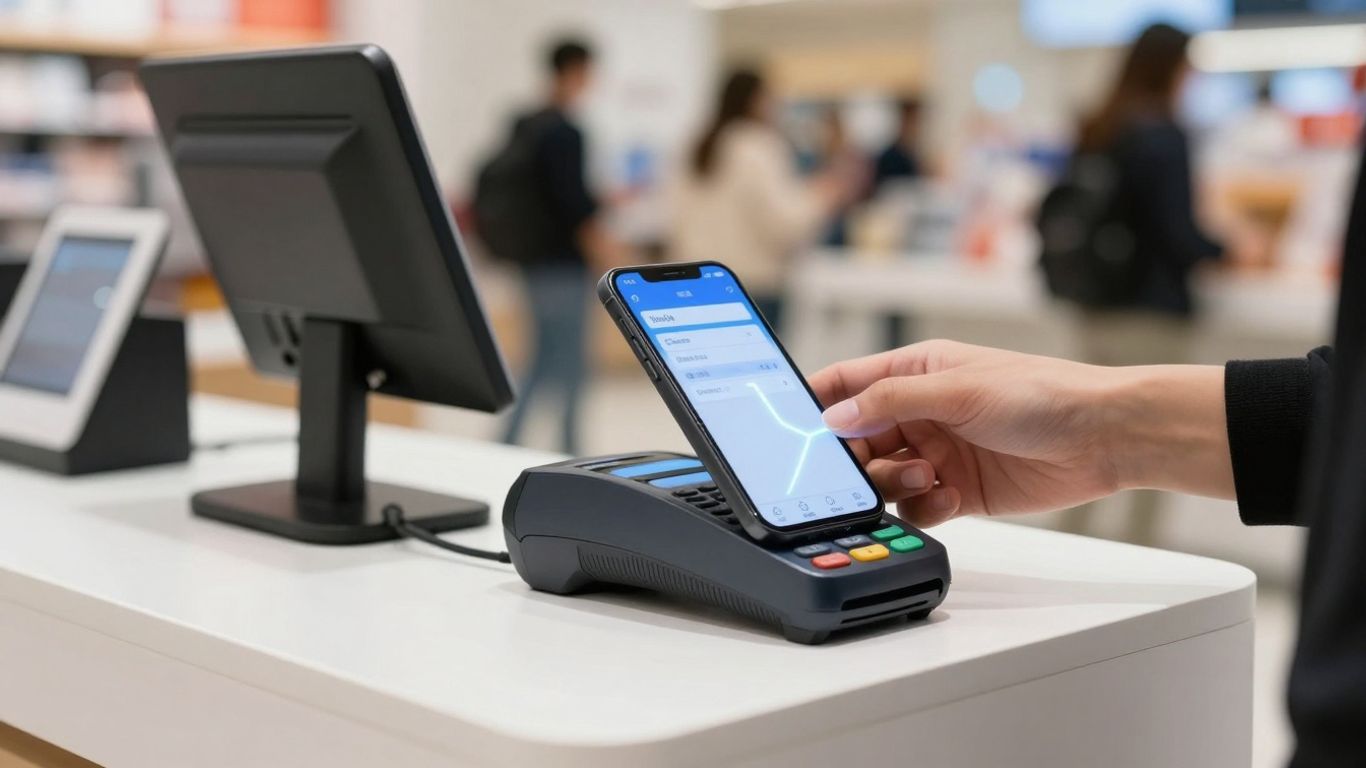 Finance
Ingenico and WalletConnect Revolutionize Retail with Stablecoin Payments at Physical Checkouts
Ingenico, a global leader in payment acceptance, has partnered with WalletConnect Pay to enable stablecoin payments directly at physical point-of-sale terminals. This collaboration aims to bring digital currencies into mainstream retail by allowing customers to pay using stablecoins like USDC directly from their Web3 wallets, bypassing traditional card networks. Key Takeaways Merchants using Ingenico terminals can now accept stablecoin payments. Customers can pay using supported stablecoins from any WalletConnect-compatible wallet. Transactions settle directly on-chain, moving funds from the customer's wallet to the merchant's payment provider. The integration targets a wide range of sectors, including retail, hospitality, and transportation. Availability for acquirers and payment service providers is scheduled for January 2026. Bridging Web3 and Mainstream Retail This partnership connects Ingenico's extensive merchant network with WalletConnect's multichain payment infrastructure. Customers will be able to make purchases using stablecoins such as USDC across various EVM-compatible networks like Polygon, Base, and Arbitrum. The solution is designed to be seamless, requiring no additional hardware for merchants and offering a familiar checkout experience for consumers. How WalletConnect Pay Enhances the Checkout Under the new integration, consumers can utilize any WalletConnect-compatible wallet, including popular options like MetaMask, Trust, and Safe, to make payments. Transactions are settled directly on the blockchain, with funds transferred from the customer's wallet to the merchant's payment provider. This approach offers faster settlement times and reduces reliance on traditional payment networks. WalletConnect reports significant network volume, with stablecoins representing a substantial portion of its activity. This integration leverages existing Web3 user behavior, presenting a user-friendly payment flow at physical terminals. Strategic Importance and Future Outlook Ingenico, with its decades of experience in payment acceptance and a vast global presence, is well-positioned to drive the adoption of stablecoin payments. The company's CEO, Floris de Kort, emphasized that the partnership allows merchants to accept digital currencies as easily as traditional cards, without added friction or the need to hold cryptocurrency balances. Jess Houlgrave, CEO of WalletConnect, highlighted stablecoins as a practical tool for efficient value transfer, stating that the collaboration extends stablecoin payments into real-world retail environments in a way that is practical, familiar, and easy for both merchants and consumers. The integration is slated for availability to acquirers and payment service providers in January 2026, paving the way for broader merchant adoption of stablecoin payments through existing, secure payment infrastructure. Sources WalletConnect Pay Integrates Ingenico Terminals to Expand Real‑World Stablecoin Usage, Yahoo Finance. Ingenico, WalletConnect Launch Stablecoin Payments Partnership, PYMNTS.com. Ingenico teams up with WalletConnect Pay on stablecoin checkout solution, Electronic Payments International. Ingenico launches digital currency solution, enabling stablecoin payments at physical checkouts, in partnership with WalletConnect Pay, PR Newswire. Ingenico Partners with WalletConnect for Stablecoin Checkout Revolution, CryptoCoin.News. This article was created with support from AI-driven technology, drawing on multiple reputable sources. The final content has been thoroughly reviewed and edited by BlockzHub's editorial team to ensure accuracy, clarity, and coherence. Original reporting sources are credited whenever appropriate and as required. The opinions expressed in this article do not necessarily represent the official views or positions of BlockzHub. This article is intended for informational purposes only and should not be considered financial or professional advice. Investing involves risk, and you should consult a qualified financial advisor before making any investment decisions.
0 0.0 0by dAppConNewcomer Finance
Bitcoin ETFs Rally: $1.42 Billion Inflows Mark Strongest Week Since October Amid Market Rebound
Spot Bitcoin ETFs have experienced their most robust week of inflows since early October, attracting a total of $1.42 billion. This surge in investment follows a period of significant outflows and coincides with Bitcoin's price climbing back above $92,000, signaling a potential shift in investor sentiment amidst ongoing macroeconomic uncertainty. Key Takeaways U.S. spot Bitcoin ETFs saw $75.4 million in inflows on November 20th, with the sector attracting $1.42 billion for the week. This marks the strongest inflow week for Bitcoin ETFs since October. Ethereum ETFs, however, continued to face outflows, losing $1.42 billion since November. Institutional confidence is growing, with Harvard's endowment investing $443 million in BlackRock's IBIT. Market sentiment remains mixed, with the Crypto Fear and Greed Index indicating "extreme fear." Bitcoin ETF Inflows Resume After several weeks of substantial withdrawals, U.S. spot Bitcoin ETFs have witnessed a notable resurgence in investor capital. The recent inflow of $75.4 million on November 20th, part of a broader weekly total of $1.42 billion, indicates a cautious return of confidence. This positive trend aligns with Bitcoin's price recovery above the $92,000 mark, a level not seen since late October. This turnaround contrasts sharply with the previous month, where Bitcoin ETFs recorded a historic net outflow of $1.26 billion in November. BlackRock's iShares Bitcoin Trust (IBIT) was among those experiencing significant redemptions during that period. Ethereum ETFs Face Continued Pressure In stark contrast to Bitcoin's performance, Ethereum ETFs have continued to struggle, accumulating $1.42 billion in net outflows since the beginning of November. BlackRock's ETHA and Grayscale's ETHE have been particularly affected, leading the outflows within the Ethereum ETF market. This divergence highlights shifting investor preferences and concerns surrounding the broader macroeconomic landscape. Institutional Confidence and Market Sentiment Despite the recent volatility, institutional interest in Bitcoin remains evident. Harvard University's endowment has made a significant investment of $443 million in BlackRock's IBIT, underscoring growing institutional trust in Bitcoin as a digital asset. Concurrently, MicroStrategy has expanded its holdings by acquiring an additional 884 BTC. However, overall market sentiment remains cautious. The Crypto Fear and Greed Index has dipped into "extreme fear" territory, a level that has historically preceded market bottoms. Analysts are divided on the future trajectory, with some predicting a potential "supercycle" for Ethereum while others question its ability to differentiate itself in a competitive market. Sources Bitcoin Updates Today: Bitcoin ETFs Show Resilience Amid Market Downturn as Inflows Resume, While Ethereum Faces Challenges, Bitget. This article was created with support from AI-driven technology, drawing on multiple reputable sources. The final content has been thoroughly reviewed and edited by BlockzHub's editorial team to ensure accuracy, clarity, and coherence. Original reporting sources are credited whenever appropriate and as required. The opinions expressed in this article do not necessarily represent the official views or positions of BlockzHub. This article is intended for informational purposes only and should not be considered financial or professional advice. Investing involves risk, and you should consult a qualified financial advisor before making any investment decisions.
0 0.0 0by dAppConNewcomer Finance
Crypto Funding Surge: Alpaca and LMAX Group Each Secure $150 Million
The crypto market saw a significant influx of capital in the week of January 11-17, 2026, with a total of $513.4 million raised across 15 projects. Leading the charge were Alpaca and LMAX Group, each successfully closing funding rounds worth $150 million, signaling strong investor confidence in core crypto infrastructure, exchanges, and payment solutions. Key Takeaways Alpaca and LMAX Group each raised $150 million, dominating the week's funding activity. Infrastructure, exchanges, and payments were the dominant sectors attracting investment. Notable projects like Project Eleven, ICEx, and VelaFi also secured substantial funding. Alpaca's Series D Success Alpaca, a prominent API platform enabling trading for stocks, options, and cryptocurrencies, announced a successful $150 million Series D funding round. This investment propels the company's fully diluted valuation to $1.15 billion. The round was led by DRIVE Capital and included participation from Haun Ventures and Opera Tech Ventures. This funding will be instrumental in strengthening Alpaca's global investment infrastructure and expanding its product offerings. Alpaca has now raised a total of $288.8 million to date. The company also secured a $40 million line of credit. Alpaca is a critical provider of tokenization infrastructure, powering 94% of all tokenized U.S. equities and ETFs, and serves approximately 300 organizations, including the Kraken crypto exchange. LMAX Group's Strategic Investment LMAX Group also secured $150 million in an undisclosed funding round. The investment was backed by Ripple, indicating a strategic partnership or endorsement within the digital asset space. Other Notable Funding Rounds Beyond the two major rounds, several other projects attracted significant investment: ICEx: An Indonesia-based crypto exchange, raised $70 million. Upexi: Secured $36 million, bringing its total funding to $136 million. Project Eleven: A Bitcoin infrastructure and security platform focused on quantum-era readiness, raised $20 million in a Series A round, achieving a $120 million valuation. Investors included Coinbase Ventures and Castle Island Ventures. VelaFi: A stablecoin payment infrastructure provider, secured $20 million in a Series B round. Several smaller rounds also contributed to the week's total, with projects like Konnex, XMAQUINA, Veera, TBook, Noise, Meld, Neuramint, TROVE, and Saturn Labs collectively raising over $50 million. Sources Alpaca, LMAX Raise $150M Each, crypto.news. Critical tokenization infrastructure provider Alpaca raises $150 million Series D, pushing valuation to $1.15 billion, The Block. This article was created with support from AI-driven technology, drawing on multiple reputable sources. The final content has been thoroughly reviewed and edited by BlockzHub's editorial team to ensure accuracy, clarity, and coherence. Original reporting sources are credited whenever appropriate and as required. The opinions expressed in this article do not necessarily represent the official views or positions of BlockzHub. This article is intended for informational purposes only and should not be considered financial or professional advice. Investing involves risk, and you should consult a qualified financial advisor before making any investment decisions.
0 0.0 0by dAppConNewcomer.jpg) Finance
FinanceCoinbase Stock Faces Turbulence Despite Analyst Optimism
Coinbase's stock is experiencing significant headwinds, trading down approximately 45% from its 2025 peak, even as Wall Street analysts maintain a generally bullish outlook. This divergence highlights the challenges the cryptocurrency exchange faces in a volatile market, contrasting with the strong performance of broader market indices. Key Takeaways Coinbase stock has fallen significantly from its 2025 high, underperforming major market indices. Despite technical bearish signals like a "death cross," many analysts remain optimistic due to Coinbase's strategic shifts and market position. The company faces increasing competition and regulatory uncertainties, impacting its profitability projections. Bullish Analyst Forecasts Amidst Market Weakness Despite a notable decline in its stock price, Coinbase has received positive ratings from several key Wall Street analysts. Bank of America upgraded its rating to 'buy' with a $340 target, while Goldman Sachs raised its target to $303. Oppenheimer maintained its 'outperform' rating. The average analyst target, tracked by MarketBeat, stands at $362, suggesting a potential 51% upside from current levels. This optimism stems from Coinbase's strong U.S. market share and new initiatives like a predictions platform and plans for tokenized stock offerings. Mounting Headwinds for Coinbase However, Coinbase is contending with several significant challenges. Competition is intensifying as traditional financial firms like SoFi, Vanguard, and Charles Schwab introduce crypto trading. Furthermore, the company's withdrawal of support for the CLARITY Act, citing concerns over stablecoin yield provisions, has added to market pressure. Trading volumes on both centralized and decentralized exchanges have remained subdued, impacting Coinbase's profitability. Analysts anticipate continued pressure on earnings, with projected earnings per share expected to decline from $9.48 in 2024 to $6.67 in the current year. Technical Indicators Signal Caution Technical analysis of Coinbase's stock (COIN) reveals a bearish trend. The stock has fallen from a high of $443 to around $240. A "death cross" pattern has formed, with the 50-day Exponential Moving Average falling below the 200-day moving average, a classic bearish reversal signal. The stock is also trading below key Fibonacci retracement levels and the Supertrend indicator. Analysts suggest a potential target of $100, though this outlook could change if Bitcoin and other cryptocurrencies experience a significant rebound. Strategic Shifts and Regulatory Concerns Coinbase is actively pursuing a strategy to diversify its revenue streams beyond trading fees, focusing on subscription and services which now account for about 40% of sales. Acquisitions, such as The Clearing Company and Vector.fun, are aimed at expanding its offerings into areas like prediction markets and tokenization. However, regulatory hurdles persist, as seen in the suspension of USDC trading against the Argentine peso. The company's high beta of 3.71 underscores its volatility and sensitivity to crypto price movements and regulatory news. Sources Coinbase stock faces headwinds despite bullish forecasts, crypto.news. Coinbase Shares Face Technical Headwinds Amid Strategic Shifts, AD HOC NEWS. Coinbase Shares Face Headwinds as New Year Begins, AD HOC NEWS. Coinbase Shares Face Mounting Challenges Amid Divergent Analyst Views, AD HOC NEWS. Coinbase Shares Face Mounting Headwinds Amid Expansion Drive, AD HOC NEWS. This article was created with support from AI-driven technology, drawing on multiple reputable sources. The final content has been thoroughly reviewed and edited by BlockzHub's editorial team to ensure accuracy, clarity, and coherence. Original reporting sources are credited whenever appropriate and as required. The opinions expressed in this article do not necessarily represent the official views or positions of BlockzHub. This article is intended for informational purposes only and should not be considered financial or professional advice. Investing involves risk, and you should consult a qualified financial advisor before making any investment decisions.
0 0.0 0by BishopNewcomer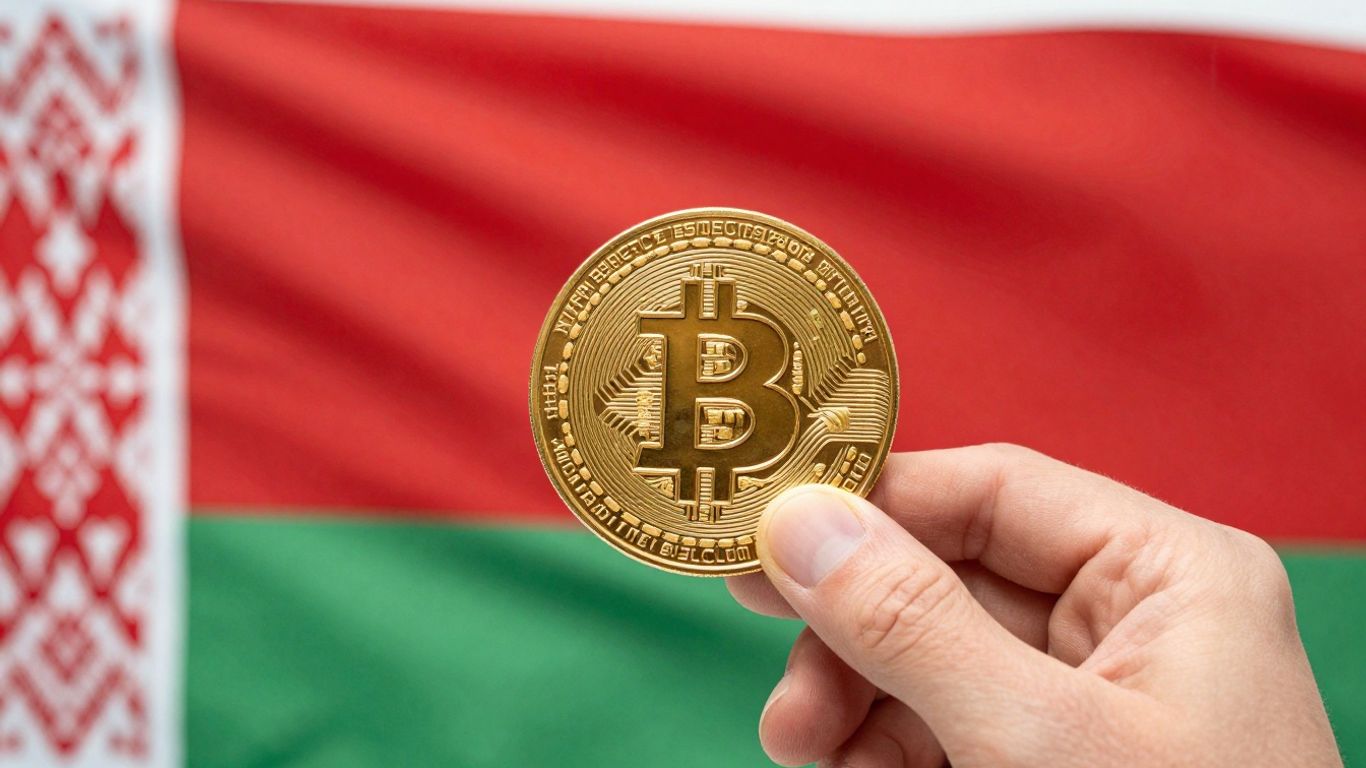 Finance
Belarus Embraces Digital Assets: New Decree Legalizes Crypto Banks
Belarus has officially entered the digital asset era by establishing a legal framework for "cryptobanks" through a new presidential decree. This move integrates cryptocurrency operations into the regulated banking system under state oversight, aiming to foster innovation while maintaining control. Key Takeaways Belarusian President Alexander Lukashenko signed Decree No. 19, creating a legal pathway for crypto banks. Cryptobanks must be joint-stock companies and residents of the Hi-Tech Park. These institutions will operate under dual oversight from the National Bank and the Hi-Tech Park Supervisory Board. The framework allows for hybrid financial products combining traditional banking with digital token services. Establishing the Regulatory Framework President Alexander Lukashenko's signing of Decree No. 19 on January 16, 2026, marks a significant step in Belarus's approach to digital assets. The decree defines "cryptobanks" as joint-stock companies authorized to merge token-based operations with traditional banking, payment, and related financial services. This initiative aims to integrate digital asset activity into the existing financial infrastructure rather than creating a separate sector. Market Entry and Oversight Requirements To operate as a cryptobank, companies must meet specific criteria. Firstly, they need to obtain resident status within Belarus's Hi-Tech Park, a state-backed technology zone. Secondly, they must be registered in a dedicated registry maintained by the country's central bank. This dual approval process ensures that entities are vetted by both technology sector authorities and traditional financial regulators. Cryptobanks will be subject to regulations governing non-bank credit and financial institutions, alongside decisions from the Hi-Tech Park's Supervisory Board, creating a layered oversight model. Dual Regulation for Innovation and Stability The dual oversight mechanism is designed to balance innovation with financial stability. By combining financial regulation with technological supervision, Belarus aims to enable cryptobanks to offer innovative products that leverage the efficiencies of token-based transactions while maintaining the security and compliance standards of traditional banking. This approach allows for the delivery of crypto services through licensed entities already embedded within the financial system, ensuring that digital asset activity operates within clearly defined, state-approved channels. A Controlled Approach to Digital Assets This decree builds upon Belarus's consistent policy of controlled engagement with the cryptocurrency market. Previous directives from President Lukashenko have called for clear rules and state control mechanisms for the digital asset market. The country has also taken steps to curb unregulated crypto activity, including blocking access to offshore exchanges. The introduction of cryptobanks signifies a move towards formalizing and regulating crypto services within the established financial system, reinforcing Belarus's image as a financial IT hub while maintaining strict state supervision. Sources Belarus creates legal framework for ‘cryptobanks’ in new presidential decree — TradingView News, TradingView — Track All Markets. Belarus Launches Crypto Bank Framework Through New Presidential Decree, Blockonomi. Belarus Creates Framework for Bitcoin-Handling Banks, Bitbo. Belarus establishes rules for ‘crypto banks’: check out the details, Bitget. This article was created with support from AI-driven technology, drawing on multiple reputable sources. The final content has been thoroughly reviewed and edited by BlockzHub's editorial team to ensure accuracy, clarity, and coherence. Original reporting sources are credited whenever appropriate and as required. The opinions expressed in this article do not necessarily represent the official views or positions of BlockzHub. This article is intended for informational purposes only and should not be considered financial or professional advice. Investing involves risk, and you should consult a qualified financial advisor before making any investment decisions.
0 0.0 0by dAppConNewcomer Finance
State Street Embraces Digital Assets: New Platform and Tokenized Fund Launch
State Street, a titan of traditional finance, is making a significant leap into the digital asset space with the launch of a new platform and a tokenized fund. This strategic move signals a broader trend of major financial institutions integrating blockchain technology into their core services, aiming to offer institutional clients secure and regulated access to digital assets. Key Takeaways State Street is launching a new platform to support tokenized deposits, stablecoins, and crypto-backed funds. The firm has partnered with Galaxy Digital to launch a tokenized private liquidity fund, the State Street Galaxy Onchain Liquidity Sweep Fund (SWEEP). Ondo Finance is expected to invest $200 million in seed capital for the SWEEP fund. The initiative aims to enhance efficiency, transparency, and accessibility in financial markets. State Street's Digital Asset Platform State Street is developing and managing a suite of digital asset products, including money-market and exchange-traded funds, alongside cash products like tokenized deposits and stablecoins. This platform is designed to meet the growing institutional demand for regulated access to digital assets, moving beyond back-office services to offer direct engagement with the digital asset ecosystem. The move follows similar initiatives from other major financial players like Bank of New York Mellon, Fidelity, and JPMorgan, underscoring a significant shift in Wall Street's approach to cryptocurrencies. The State Street Galaxy Onchain Liquidity Sweep Fund (SWEEP) In a landmark partnership with Galaxy Digital, State Street Investment Management is set to launch the State Street Galaxy Onchain Liquidity Sweep Fund (SWEEP). This tokenized private liquidity fund aims to provide 24/7 onchain liquidity using PYUSD stablecoins for subscriptions and redemptions. Ondo Finance is anticipated to provide approximately $200 million in seed capital for the fund. SWEEP is expected to debut on the Solana blockchain in early 2026, with plans for integration with other blockchains like Stellar and Ethereum. The fund combines State Street's expertise in cash and liquidity management with Galaxy's blockchain infrastructure capabilities, offering a novel onchain cash management solution for eligible investors. Driving Forces and Market Impact The increasing interest in tokenization is driven by surging client demand, evolving regulatory clarity, and the proven resilience of blockchain networks. Analysts view State Street's entry as a validation for the asset tokenization sector, potentially paving the way for broader industry adoption. This move is expected to foster collaboration between traditional finance (TradFi) and decentralized finance (DeFi) sectors, accelerating the integration of blockchain technology into mainstream financial systems. The tokenized asset market is projected to reach $16 trillion by 2030, highlighting the strategic importance of these initiatives. Navigating the Future of Finance State Street's expansion into digital assets signifies a commitment to modernizing financial market infrastructure. By offering tokenized deposits, stablecoins, and funds, the company is addressing key institutional demands for efficiency and transparency. The success of these ventures will hinge on regulatory collaboration, technical execution, and market acceptance, positioning State Street as a key architect in the evolving financial landscape. Sources State Street introduces a new digital-asset platform, crypto.news. Plans To Launch Revolutionary Tokenized Financial Products, Bitcoin world. State Street Investment Management and Galaxy Digital Partner to Tokenize Private Liquidity Fund, With Planned Seed Investment from Ondo, Business Wire. Ondo Finance to invest $200M in seed capital for tokenized liquidity fund, TheStreet. XRP Gains Institutional Spotlight as State Street Joins JP Morgan’s Tokenized Debt Platform, Analytics Insight. This article was created with support from AI-driven technology, drawing on multiple reputable sources. The final content has been thoroughly reviewed and edited by BlockzHub's editorial team to ensure accuracy, clarity, and coherence. Original reporting sources are credited whenever appropriate and as required. The opinions expressed in this article do not necessarily represent the official views or positions of BlockzHub. This article is intended for informational purposes only and should not be considered financial or professional advice. Investing involves risk, and you should consult a qualified financial advisor before making any investment decisions.
0 0.0 0by dAppConNewcomer.jpeg) Finance
FinanceBitcoin Faces Headwinds due to Trump's Iran Tariffs
Bitcoin and Ethereum experienced a downturn following U.S. President Donald Trump's announcement of a 25% tariff on nations trading with Iran. This geopolitical development has coincided with Bitcoin encountering a significant resistance level, leading to market stagnation and a cautious sentiment among investors. Key Takeaways Bitcoin and Ethereum saw declines after new tariffs were imposed on Iran. Privacy-focused cryptocurrencies like Dash and Monero outperformed. Bitcoin faces a strong resistance zone, limiting upward potential in the short term. Macroeconomic volatility is expected to influence the cryptocurrency market. Market Reaction to Tariffs President Trump's decision to impose a 25% tariff on countries engaging in trade with Iran sent ripples through global markets, impacting major cryptocurrencies like Bitcoin (BTC) and Ethereum (ETH). While these leading digital assets experienced modest losses, privacy-centric coins such as Dash and Monero demonstrated notable gains, defying a ban on such assets in Dubai, a prominent digital asset hub. Bitcoin's Resistance and Investor Sentiment Analysts from Bitfinex have observed that despite a generally positive long-term outlook for Bitcoin, short-term investor sentiment has shifted towards caution. The cryptocurrency's ascent has been hampered by a dense supply zone, a level at which it has faced multiple rejections in recent weeks. This resistance band is characterized by substantial recent buyer activity and a broad cost base, suggesting that Bitcoin may remain range-bound until this zone is successfully overcome. The derivatives market also reflects this cautious optimism. Open options positions have decreased significantly, indicating a clearer picture in the options market. However, data suggests investors are increasing their long-term bullish positions, particularly through call options, signaling an expectation of future price appreciation. Macroeconomic Factors at Play Joel Kruger, a strategist at LMAX, has cautioned that elevated macroeconomic volatility is likely to persist. He pointed to a packed economic calendar, including U.S. inflation data, corporate earnings reports from major banks, Federal Reserve pronouncements, ongoing geopolitical tensions, and a Justice Department investigation concerning the Federal Reserve chair. These factors are expected to play a crucial role in determining whether Bitcoin and Ethereum can break out of their current consolidation phase and initiate a new uptrend. Sources Bitcoin dips as Trump’s Iran tariff shock hits key resistance band, crypto.news. This article was created with support from AI-driven technology, drawing on multiple reputable sources. The final content has been thoroughly reviewed and edited by BlockzHub's editorial team to ensure accuracy, clarity, and coherence. Original reporting sources are credited whenever appropriate and as required. The opinions expressed in this article do not necessarily represent the official views or positions of BlockzHub. This article is intended for informational purposes only and should not be considered financial or professional advice. Investing involves risk, and you should consult a qualified financial advisor before making any investment decisions.
0 0.0 0by BishopNewcomer.jpeg) Finance
FinanceUK Lawmakers Demand Ban on Crypto Political Donations Amid Foreign Interference Fears
Seven senior UK Labour lawmakers are urging Prime Minister Keir Starmer to prohibit political donations made using cryptocurrency. They argue that digital assets can obscure the origin of funds, facilitate numerous small, undeclared donations, and open the door to foreign interference in British politics. The call comes as the government prepares to introduce an elections bill, though officials reportedly view a crypto ban as too complex for inclusion at this time. Key Takeaways Senior UK Labour MPs are advocating for a ban on cryptocurrency political donations. Concerns center on the potential for obscured foreign interference and difficulty in tracing funds. The Electoral Commission has previously warned about the challenges in managing these risks. A ban could impact parties like Reform UK, which has previously accepted crypto donations. Protecting Democracy Through Transparency Liam Byrne, chair of the Business and Trade Committee and one of the signatories to the letter, emphasized the need for transparency, traceability, and enforceability in political financing. He stated that cryptocurrency, by its nature, fails to meet these criteria. "Crypto can obscure the true source of funds, enable thousands of micro donations below disclosure thresholds, and expose UK politics to foreign interference," Byrne explained, citing the Electoral Commission's concerns about the difficulty of managing such risks with current technology. A Precedent for Action Byrne pointed to other democracies that have already implemented similar measures, stressing that the UK should not wait for a scandal to act. He clarified that the proposal is not an opposition to innovation but a measure to safeguard democracy with practical, real-world rules. The push for a ban is particularly relevant ahead of upcoming local elections in May. Impact on Political Parties The proposed ban could present a challenge for parties like Reform UK, which announced its intention to accept crypto donations in the past. The party's leader, Nigel Farage, had championed a pro-crypto stance, including advocating for a Bitcoin reserve. While Reform UK's website states it does not permit anonymous crypto donations, the party did receive a substantial £9 million ($12 million) cash donation from an early crypto investor in December, reportedly the largest single political gift from a living person in Britain. Broader Support for a Ban Senior Labour MP Pat McFadden had previously raised the issue of a crypto donation ban in July, highlighting the importance of knowing the identity and bona fides of donors. Advocacy groups, such as the UK Anti-Corruption Coalition, have also voiced support for a ban, noting that allowing crypto donations is inconsistent with government warnings about foreign interference, illicit finance, and hostile actors attempting to exploit democratic systems. Sources Top UK lawmakers push to ban political donations made in crypto — TradingView News, TradingView — Track All Markets. This article was created with support from AI-driven technology, drawing on multiple reputable sources. The final content has been thoroughly reviewed and edited by BlockzHub's editorial team to ensure accuracy, clarity, and coherence. Original reporting sources are credited whenever appropriate and as required. The opinions expressed in this article do not necessarily represent the official views or positions of BlockzHub. This article is intended for informational purposes only and should not be considered financial or professional advice. Investing involves risk, and you should consult a qualified financial advisor before making any investment decisions.
0 0.0 0by Mini maNewcomer Finance
Crypto's European Foothold: Wealthy Investors Embrace Digital Assets for Property Purchases
A growing number of affluent individuals are leveraging their cryptocurrency holdings to acquire real estate across Europe. This trend signifies a maturing digital asset market and a new avenue for high-net-worth investors seeking tangible assets. The ease of cross-border transactions and the potential for diversification are key drivers behind this shift. Key Takeaways Wealthy investors are increasingly using cryptocurrencies to purchase European real estate. This trend highlights the growing acceptance and utility of digital assets in traditional markets. Factors like transaction efficiency and diversification are fueling this adoption. The Rise of Crypto in Real Estate Traditionally, real estate transactions have been complex, involving significant paperwork and lengthy settlement periods. However, the integration of cryptocurrency is streamlining this process. Investors can now convert their digital assets into fiat currency or directly use them to purchase properties, often bypassing traditional banking intermediaries. This offers a faster and potentially more private way to invest in the European property market. European Markets Leading the Charge Several European countries are becoming hotspots for these crypto-powered real estate deals. While specific locations are not always disclosed due to the private nature of these transactions, reports suggest interest spans from luxury apartments in major cities to vacation homes in scenic regions. The regulatory landscape in some European nations is proving more accommodating to digital asset integration, further encouraging this trend. Motivations for Adopters The primary motivations for wealthy investors using crypto for real estate purchases appear to be twofold. Firstly, it offers a way to diversify their investment portfolios beyond traditional stocks and bonds. Secondly, the inherent volatility of cryptocurrencies can be mitigated by converting them into stable, physical assets like property. For some, it also represents a way to access liquidity from their digital holdings without triggering immediate tax liabilities in certain jurisdictions. Challenges and Future Outlook Despite the growing momentum, challenges remain. Regulatory clarity surrounding crypto-to-real-estate transactions is still evolving globally. Ensuring compliance with anti-money laundering (AML) and know-your-customer (KYC) regulations is paramount for all parties involved. Nevertheless, as the digital asset space matures and more platforms facilitate these transactions, the use of crypto for property acquisition is likely to become more mainstream. Sources Hundreds of wealthy investors are using crypto to buy real estate in Europe, CoinDesk. This article was created with support from AI-driven technology, drawing on multiple reputable sources. The final content has been thoroughly reviewed and edited by BlockzHub's editorial team to ensure accuracy, clarity, and coherence. Original reporting sources are credited whenever appropriate and as required. The opinions expressed in this article do not necessarily represent the official views or positions of BlockzHub. This article is intended for informational purposes only and should not be considered financial or professional advice. Investing involves risk, and you should consult a qualified financial advisor before making any investment decisions.
0 0.0 0by dAppConNewcomer