Community ranked
Crypto News
Written and ranked by the community. A manipulation-resistant algorithm surfaces what matters.
FeaturedGaming
Stablecoins Emerge as Top 3 Growth Drivers for Web3 Gaming in 2025, BGA Report Reveals
The Web3 gaming industry is undergoing a significant shift, moving away from speculative growth cycles towards a focus on fundamentals and sustainable business models. A new report from the Blockchain Gaming Alliance (BGA) identifies stablecoin adoption as a key catalyst, placing it among the top three growth drivers for 2025. This marks a maturation of the sector, prioritizing player experience and commercial viability. Key Takeaways Stablecoin adoption is now a top-three growth driver for Web3 gaming. High-quality game launches and revenue-driven business models also rank high. The influence of traditional Web2 gaming giants has significantly decreased. The industry is prioritizing stability, predictability, and player value. A Shift Towards Stability and Fundamentals The BGA's 2025 State of the Industry Report indicates a clear pivot in developer priorities. For the first time, stablecoin adoption in payments has entered the top three growth drivers, cited by 27.3% of respondents. This is closely followed by high-quality game launches (29.5%) and revenue-driven business models (27.5%). This data suggests a move away from reliance on hype and external validation towards building commercially sound games on robust Web3 infrastructure. Sebastien Borget, co-president of the BGA and co-founder of The Sandbox, commented on the findings, stating, "What we’re seeing in the data is an industry becoming more global, more disciplined, and more focused on building great games for real players." This reflects a broader trend of maturing the Web3 gaming ecosystem. Evolution of Growth Drivers Over the past five years, the perceived drivers of success in blockchain gaming have evolved considerably. Between 2021 and 2023, the industry was heavily influenced by the play-to-earn (P2E) craze and the anticipation of major Web2 publishers entering the space. By 2024, the focus shifted to improving user experience, accessibility, and onboarding processes, addressing friction points that hindered adoption. The 2025 report signifies further maturity, with developers now tying success to polished gameplay, sustainable monetization, and infrastructure that supports seamless transactions. Stablecoins, long a staple in decentralized finance, are now recognized for their potential to create stable in-game economies and facilitate frictionless payment experiences akin to traditional fiat transactions. Declining Influence of Web2 Giants Another significant finding is the waning dependence on traditional gaming giants. In 2024, 35.8% of respondents viewed legacy publishers as key growth catalysts. However, this figure has dropped to just 17.2% in 2025. Instead, developers are increasingly looking towards other factors for growth, including interoperability (26.1%), artificial intelligence integration (25.9%), and player-driven creator economies (25.5%). Regulatory Momentum and Future Outlook The growing focus on stablecoin rails aligns with global regulatory advancements. Frameworks like the GENIUS Act in the United States and Europe's Markets in Crypto-Assets (MiCA) are providing clearer guidelines for stablecoin usage. This regulatory clarity is expected to further bolster the integration of stablecoins into Web3 gaming ecosystems, paving the way for more efficient payment systems, improved treasury management, and enhanced secondary markets. The BGA report emphasizes that stablecoins can operate effectively behind the scenes, enhancing game economies without requiring players to be blockchain experts, thus facilitating broader mainstream adoption. Sources Stablecoins break into top 3 growth drivers for Web3 gaming: BGA 2025 report — TradingView News, TradingView. Stablecoins Now Among Top 3 Growth Drivers for Web3 Gaming in 2025, CoinCentral. Stablecoins and the Future of Gaming, GAM3S.GG. Stablecoins Enter Top 3 Growth Drivers for Web3 Gaming: Report, StartupNews.fyi. This article was created with support from AI-driven technology, drawing on multiple reputable sources. The final content has been thoroughly reviewed and edited by BlockzHub's editorial team to ensure accuracy, clarity, and coherence. Original reporting sources are credited whenever appropriate and as required. The opinions expressed in this article do not necessarily represent the official views or positions of BlockzHub. This article is intended for informational purposes only and should not be considered financial or professional advice. Investing involves risk, and you should consult a qualified financial advisor before making any investment decisions.
0 0.0 16by dAppConNewcomer
.jpg) Gaming
Counter-Strike 2 Update Triggers $5.8 Billion Skin Market Crash, Reignites NFT Debate
A recent update to the popular first-person shooter game Counter-Strike 2 has sent shockwaves through its massive virtual economy, causing a significant crash in the value of in-game cosmetic items. The market, which had previously reached nearly $5.78 billion, saw approximately $2 billion liquidated following changes to the game's trade-up system. This event has reignited discussions about the potential of blockchain technology and non-fungible tokens (NFTs) to provide more stable and transparent digital economies. Key Takeaways A Counter-Strike 2 update drastically altered the trade-up system, increasing the supply of rare items like knives and gloves. This change led to a sharp decrease in the value of these high-tier items and a spike in demand for lower-tier skins. The event has prompted renewed debate about the benefits of blockchain and NFTs for in-game economies. The Trade-Up System Shake-Up Valve, the developer behind Counter-Strike 2, modified the game's trade-up system, allowing players to convert five low-rarity "covert level" skins into a chance for a knife or gloves. Previously, these items were exceptionally rare and commanded high prices. The update effectively flooded the market with these coveted items, causing their prices to plummet. Conversely, the demand for the lower-tier skins used in the trade-up process surged, increasing their value. Echoes of Centralized Control This sudden shift in value has drawn parallels to the early motivations behind the creation of blockchain technology. Ethereum co-founder Vitalik Buterin famously cited an instance in World of Warcraft where a developer's unilateral decision to alter game mechanics led him to realize the potential dangers of centralized control over digital assets. The Counter-Strike 2 situation highlights how a single entity's decisions can have profound and immediate financial consequences for a vast player base. Blockchain and NFTs as Potential Solutions While NFTs and blockchain technology often face skepticism within the gaming community, proponents argue they could offer solutions to such market volatility. NFTs, as unique digital assets recorded on a blockchain, could provide verifiable ownership and scarcity. Smart contracts, the underlying technology for NFTs, could enforce predefined rules, limiting the number of items issued or dictating conversion mechanics, thereby preventing sudden, developer-driven market crashes. However, experts caution that NFTs alone are not a panacea. Martin Kupka, a general partner at crypto gaming advisory firm Win Win, stated that even if all items were NFTs, the market could still crash if the game developer retains complete control over item features and utility. He suggests that for large games, establishing community councils and transparent decision-making processes could benefit all stakeholders. The Promise of "Fully On-Chain" Games Kori Leon, co-founder of crypto gaming infrastructure Pixelverse, and others believe that smart contracts could have established clear, immutable rules from the outset, making any changes predictable and transparent. The concept of "fully on-chain" games, where core game rules are encoded on a blockchain, aims to provide players with confidence that the fundamental mechanics of the game will not change unexpectedly. Centralization vs. Decentralization Industry figures like Catie Romero-Finger, CEO of crypto services agency Babs, and Nokkvi Dan Ellidason, CEO at Gaimin, have pointed to the Counter-Strike 2 incident as evidence of the inherent risks in centralized digital economies. They argue that such systems are built on "borrowed trust" and that a company's control over digital assets can be arbitrary. The crash, they contend, exposed that players' "assets" are merely entries in a private database, subject to alteration at any time. Joana Barros, CMO at My Neighbor Alice, emphasized that as gaming economies grow, transparency and immutability, often associated with Web3 technologies, are becoming essential consumer rights. Sources Valve’s Counter-Strike 2 update crashes $5.8B economy, revives NFT debate — TradingView News, TradingView. Valve’s Counter-Strike 2 update crashes $5.8B economy, revives NFT debate, Cointelegraph This article was created with support from AI-driven technology, drawing on multiple reputable sources. The final content has been thoroughly reviewed and edited by BlockzHub's editorial team to ensure accuracy, clarity, and coherence. Original reporting sources are credited whenever appropriate and as required. The opinions expressed in this article do not necessarily represent the official views or positions of BlockzHub. This article is intended for informational purposes only and should not be considered financial or professional advice. Investing involves risk, and you should consult a qualified financial advisor before making any investment decisions.
0 0.0 26by ToTo BugelmanNewcomer Gaming
Crypto Gaming's Downfall: Why So Many Projects Are Shutting Down
The crypto gaming industry is facing a significant downturn, with numerous projects shutting down despite initial hype and substantial investment. Experts point to inherent challenges in game development, the flawed system of gaming tokens, and a shift in investor sentiment as primary reasons for this widespread failure. The public nature of these failures, often involving player investments, distinguishes them from traditional game development setbacks. The Crypto Gaming Exodus: Why Projects Are Crashing Numerous blockchain games, some with considerable buzz, have ceased operations this year. Notable examples include Deadrop, once led by streamer Dr. Disrespect, and Solana's Nyan Heroes, which shut down due to funding issues. Other titles like Raini: The Lords of Light, MetalCore, and Blast Royale have also closed, with The Walking Dead: Empires and Symbiogenesis slated to follow. Key Takeaways High Failure Rate: Similar to traditional gaming, 90% of crypto games fail, but these failures are more public due to early player investment. Flawed Token System: Gaming tokens create immense pressure on developers, diverting focus from core game development to token price speculation. Funding Challenges: The initial ease of securing funding has diminished, with investors now scrutinizing sustainability and revenue models more closely. Narrowed Audience: Many crypto games alienate traditional gamers, significantly limiting their potential player base. Premature Tokenization: Projects often issue tokens and NFTs before the game is ready, leading to investor losses when projects collapse. The Pressure Cooker of Gaming Tokens Experts highlight gaming tokens as a major contributing factor to project failures. Krypticrooks, co-founder of Fractional Uprising, described the experience of juggling game development with token support as a "nightmare," working 18-hour days to appease investors focused solely on token price. This pressure often leads to projects being abandoned when funding dries up. John Linden, CEO of Mythical Games, agrees that tokens tied to small projects are unsustainable due to fluctuating demand. He advocates against "single-game tokens" and issuing assets before a game is ready, a stark contrast to many failed projects that released tokenized assets prematurely. Shifting Investment Landscape and Audience Engagement Keith Kim of Nexpace notes a significant change in the investment climate. Previously, funding was readily available for blockchain games, with investors expecting quick, massive returns. Now, a more cautious approach prevails, with sustainability and revenue models being key considerations. This shift means securing additional funding is increasingly difficult, leading to many closures. Veteran game maker John Smedley emphasizes the importance of attracting traditional gamers. He argues that by ignoring this audience, crypto games severely limit their reach. Projects like his upcoming Reaper Actual and Off the Grid are adopting strategies to appeal to both crypto and traditional gamers, including offering in-game items as NFTs or traditional purchases and launching on non-crypto-friendly platforms like Steam, PlayStation, and Xbox. The Long Road of Game Development Game development is a lengthy process, often taking years. Many failed crypto games, however, rushed to market, releasing tokenized assets long before the game was playable. This contrasts sharply with successful titles that undergo extensive, often secretive, development cycles. The rush to monetize through tokens, rather than focusing on a polished product, has proven detrimental to the longevity of many crypto gaming ventures. Sources Why Are So Many Crypto Games Shutting Down? Experts Weigh In, Decrypt. This article was created with support from AI-driven technology, drawing on multiple reputable sources. The final content has been thoroughly reviewed and edited by BlockzHub's editorial team to ensure accuracy, clarity, and coherence. Original reporting sources are credited whenever appropriate and as required. The opinions expressed in this article do not necessarily represent the official views or positions of BlockzHub. This article is intended for informational purposes only and should not be considered financial or professional advice. Investing involves risk, and you should consult a qualified financial advisor before making any investment decisions.
0 0.0 38by Clara ClearwaterNewcomer Gaming
Crypto Gaming Heats Up: 'Reaper Actual' and 'MapleStory Universe' Lead The Charge
The crypto gaming landscape continues its rapid evolution, with significant developments highlighted this week. John Smedley, a veteran game developer, unveiled his new blockchain-integrated FPS, 'Reaper Actual,' while Nexon's 'MapleStory Universe' detailed its ambitious plans for integrating NFTs and expanding its beloved MMORPG franchise. These announcements underscore the growing intersection of traditional gaming and Web3 technologies. Game-Changing Reveals In Crypto Gaming This week saw two major announcements poised to reshape the crypto gaming sector. John Smedley, known for his work on EverQuest and PlanetSide, launched Distinct Possibility Studios with Reaper Actual, a blockchain-integrated first-person shooter. Simultaneously, Nexon provided further insights into MapleStory Universe, the Web3 evolution of its popular MMORPG. Reaper Actual: A New Frontier In FPS John Smedley's Reaper Actual is set to redefine the FPS genre with its ambitious scale and blockchain integration. Key features include: Massive Open World: The game boasts the largest FPS map ever created, four times the size of Call of Duty: Warzone's Al Mazrah. Dynamic Gameplay: Players, known as "Reapers," will upgrade and defend bases amidst conflicts between five AI-controlled factions on the war-torn island of Marova. Hybrid Model: It combines elements from Call of Duty: DMZ, Escape from Tarkov, and Rainbow Six Siege. Funding and Access: Following a $30.5 million funding round, the pre-alpha Foundation version will require the purchase of limited-edition bases (NFTs on Tezos Etherlink or Web2 platforms). The full release early next year will follow a similar access scheme before transitioning to free-to-play approximately six months later. Items will be tradable across both Web3 and Web2 marketplaces. Smedley expressed confidence that Reaper Actual could attract millions of players, demonstrating "Web3 done right." MapleStory Universe: Evolving A Classic MapleStory Universe represents the crypto-powered evolution of the 20-year-old MapleStory franchise. Its core, MapleStory N, is a PC-based game recreating the original side-scrolling experience, with in-game items as NFTs on the Avalanche-based Henesys L1 network. Expanded Ecosystem: Developer Nexpace plans to release over a dozen mobile and web experiences by Q1 2026. Player Convenience: These lighter applications will allow players to grind, level up, and enhance items on the go, catering to the original fanbase's busy schedules. Development Strategy: The vision mirrors EA FC's Ultimate Team model, with mobile apps supporting core gameplay. A web app for item enhancement is expected in late July/August, followed by a character rental system by Q1 2026. Third-party developers will contribute via API keys, with eventual transition to a permissionless system and NXPC token rewards. Key Takeaways The crypto gaming space is seeing significant investment and innovation from established industry figures. Games are increasingly adopting hybrid models, blending Web2 accessibility with Web3 ownership and tradability. Developers are focusing on creating comprehensive ecosystems that cater to diverse player needs and lifestyles. Other Notable Developments Beyond the headlines, the crypto gaming world saw several other interesting updates: Ubisoft integrated AI agents into its Arbitrum-based game Captain Laserhawk: The G.A.M.E., allowing NFT-tied agents to vote on governance matters. Esports team Ninjas in Pyjamas established a Bitcoin mining unit, projecting $6.5 million in monthly BTC mining. Bitcoin layer-2 network Botanix launched its mainnet and an educational game, Bitcoin 2100, offering real BTC rewards. Token Yugijo, a coin-flipping betting game, launched on Optimism, featuring an AI companion. Scor on Sweet, a Telegram gaming app, released Flappy Racquet, a tennis game with real-world stars. The Ronin game Realms of Alurya shut down due to funding issues. Meme coin project Floki launched its Valhalla metaverse game on opBNB mainnet. Off the Grid released a Fourth of July-themed battle pass expansion and announced its Steam launch on the GUNZ testnet. FIFA Rivals surpassed 500K Android downloads since its June release. Moonray is set to hold an invitational tournament. Frontiers, an MMORPG on Hytopia, launched its alpha. Endless Clouds initiated its END token airdrop for Treeverse. The Xai gaming network distributed approximately $1.25 million in XAI tokens to NFT holders. The Echelon Foundation burned 11 million PRIME tokens (approx. $26 million) to rebalance the Parallel card game ecosystem. Sources This Week in Crypto Games: Planetside Dev's 'Reaper Actual', What's Next for 'MapleStory Universe', Decrypt. This article was created with support from AI-driven technology, drawing on multiple reputable sources. The final content has been thoroughly reviewed and edited by BlockzHub's editorial team to ensure accuracy, clarity, and coherence. Original reporting sources are credited whenever appropriate and as required. The opinions expressed in this article do not necessarily represent the official views or positions of BlockzHub. This article is intended for informational purposes only and should not be considered financial or professional advice. Investing involves risk, and you should consult a qualified financial advisor before making any investment decisions.
0 0.0 29by DarshitaNewcomer Gaming
MapleStory N Fights Back: A Comprehensive Look at the Battle Against Thousands of Hackers
MapleStory N, the blockchain-powered MMORPG, has been battling a significant influx of hackers and bots since its May launch. Developer Nexpace, the blockchain arm of Nexon, is implementing aggressive measures, including daily account bans, enhanced cheat detection, and innovative financial deterrents, to safeguard fair gameplay and the integrity of its in-game economy. The Hacker Onslaught Since its highly anticipated launch, MapleStory N has faced an unprecedented wave of malicious activity. The game, which allows players to earn real cryptocurrency, became a prime target for exploiters due to the real-world value of its in-game assets. Keith Kim, head of strategy at Nexpace, revealed that the scale of these attacks far surpasses anything the broader Nexon ecosystem has ever experienced. Key Takeaways MapleStory N has seen a massive surge in hacking and botting since its launch. The game's play-to-earn model makes it a lucrative target for exploiters. Nexpace is implementing multi-faceted strategies to combat these threats. Nexpace's Counter-Offensive Nexpace has deployed a multi-pronged strategy to combat the rampant hacking: Daily Bans: Thousands of accounts linked to hackers, botters, and abusers are being banned daily. Enhanced Detection: Security systems and abnormal play detection mechanisms have been significantly improved. Cash-Out Delay: A 30-hour delay has been imposed on cashing out assets. This timeframe is designed to exceed the average time it takes for an abuser to be identified and banned, rendering their illicit gains useless. Restricted Off-Ramps: Off-ramps from the dedicated Avalanche L1 gaming network, Henesys, have been restricted. This isolates any damage caused by bad actors to Henesys, preventing them from fully cashing out. Clawback Function: In extreme cases where a significant portion of an asset's supply is held by banned wallets, Nexpace possesses a "clawback function." This allows developers to reclaim assets tied to banned accounts, though it is a measure reserved for severe situations and would only be triggered after community consultation. The Stakes Are High Unlike traditional games, the stakes in MapleStory N are considerably higher due to its blockchain integration. Malicious actors can acquire items and tokens with real-world value. The low barrier to entry, where hackers can easily create new wallets after being banned, has exacerbated the problem. Nexpace is actively seeking the "right hurdle" to deter hackers without alienating legitimate players. Despite the challenges, Nexpace reports that the net inflow of legitimate player earnings significantly outweighs the losses incurred from exploitative activities, indicating that the current measures are proving effective in mitigating financial damage. Sources How 'MapleStory N' Is Fighting Back Against Thousands of Hackers, Decrypt. This article was created with support from AI-driven technology, drawing on multiple reputable sources. The final content has been thoroughly reviewed and edited by BlockzHub's editorial team to ensure accuracy, clarity, and coherence. Original reporting sources are credited whenever appropriate and as required. The opinions expressed in this article do not necessarily represent the official views or positions of BlockzHub. This article is intended for informational purposes only and should not be considered financial or professional advice. Investing involves risk, and you should consult a qualified financial advisor before making any investment decisions.
0 0.0 26by Clara ClearwaterNewcomer Gaming
Dogecoin Unleashes New Gaming Era with DogeOS and PlaysOut
Dogecoin is set to significantly expand its presence in the gaming world with the introduction of new games developed by PlaysOut, leveraging the DogeOS application layer. This initiative aims to bring a flood of Doge-themed mini-games, offering real-world utility for the cryptocurrency beyond its traditional holding. Dogecoin's Gaming Expansion PlaysOut, a publisher known for adapting successful Chinese WeChat games for Western markets, plans to release approximately 15 Dogecoin-themed mini-games by the end of 2025. The first of these hypercasual games is anticipated to launch in August. These games will be accessible through the MyDoge wallet and PlaysOut mobile app, with aspirations for broader platform availability. DogeOS: The Foundation for Gaming DogeOS serves as an application layer built on the Dogecoin blockchain, enabling developers to create and deploy applications and games using the meme coin's network. This EVM-compatible layer-2 network is currently in its testnet phase and is crucial for the upcoming gaming ecosystem. Key Features of the New Dogecoin Games DOGE Token Rewards: Games will feature leaderboards, quests, and competitions that reward players with DOGE tokens. Tradable In-Game Items: In-game items and skins are designed to be tradable as Dogecoin NFTs, also known as Doginals, fostering interoperability between the mini-games. Diverse Genres: The games will span various genres, including life simulators, puzzle games, and role-playing games, designed to be approachable and easy to pick up. IP Licensing: PlaysOut is actively pursuing licensing deals to integrate global intellectual property, such as cartoon characters and sports icons, into the Dogecoin mini-game ecosystem. Driving Dogecoin Utility and Culture The initiative aims to showcase meaningful use cases for Dogecoin, moving beyond its status as purely a Web3 meme. By integrating the Dogecoin IP and blockchain into a diverse range of games, PlaysOut and DogeOS hope to connect a broader audience with the meme coin and boost Doge culture. This expansion follows previous Dogecoin gaming ventures, such as the retro-style brawler Super Doginals, which launched fully inscribed on the Dogecoin blockchain via the Doginals protocol. Sources This Week in Crypto Games: Dogecoin Got Game, FIFA Rivals Launches, Decrypt. Dogecoin Is About to Get a Flood of Games Via DogeOS and PlaysOut, Decrypt. Dogecoin Brawler Launches, ‘Major’ Token Date, and ‘Off the Grid’ Cash Prizes - Decrypt, Decrypt. This article was created with support from AI-driven technology, drawing on multiple reputable sources. The final content has been thoroughly reviewed and edited by BlockzHub's editorial team to ensure accuracy, clarity, and coherence. Original reporting sources are credited whenever appropriate and as required. The opinions expressed in this article do not necessarily represent the official views or positions of BlockzHub. This article is intended for informational purposes only and should not be considered financial or professional advice. Investing involves risk, and you should consult a qualified financial advisor before making any investment decisions.
0 0.0 26by DarshitaNewcomer Gaming
Tencent Eyes Nexon Acquisition Amidst Blockchain Push
Tencent, the Chinese tech giant, is reportedly re-engaging in discussions to acquire South Korean game developer Nexon. This potential acquisition comes as Nexon actively explores blockchain technology through its Web3 subsidiary, NEXPACE, and its flagship MapleStory franchise. The renewed talks highlight Tencent's continued interest in expanding its gaming and blockchain footprint. Tencent's Renewed Pursuit of Nexon Tencent has reportedly approached the family of Nexon's late founder, Kim Jung-ju, to discuss a potential acquisition. Kim's family, through NXC Corp and NXMH BV, holds a controlling 44.4% stake in Nexon. While discussions are ongoing, no final terms have been agreed upon, and the outcome remains uncertain. This isn't Tencent's first attempt; a previous deal in 2019 fell through due to pricing disagreements. Nexon's Blockchain Ventures Nexon, founded in 1994 and known for its popular online games like the MapleStory franchise, has made significant strides into the blockchain space. In mid-2024, Nexon launched NEXPACE, a dedicated Web3 subsidiary, with a $100 million investment. Headquartered in Abu Dhabi, NEXPACE aims to integrate blockchain into Nexon's core franchises. Key developments include: MapleStory Universe: A Web3 gateway for the MapleStory IP. MapleStory N: Launched in May 2025, this title incorporates NFT-based item mechanics, gasless transactions, and a native token economy powered by NXPC. Tencent's Broader Blockchain Strategy Despite a recent downturn in the blockchain gaming sector, Tencent is actively expanding its presence. The company already has a strong relationship with Nexon, having co-developed the highly successful game Dungeon & Fighter, which significantly contributes to Tencent's gaming revenue. Beyond gaming, Tencent's blockchain investments include: Leading a $15 million Series A round for Chainbase, an omnichain data network. Partnering with the Open Network (TON) Foundation and Tencent Cloud to support blockchain infrastructure in the Asia-Pacific region, including data indexing tools and node deployment services for the TON blockchain. Joining China's official metaverse working group, led by the Ministry of Industry and Information Technology. Key Takeaways Tencent is in renewed talks to acquire South Korean game developer Nexon. Nexon is heavily invested in blockchain gaming through its NEXPACE subsidiary and the MapleStory Universe. Tencent has a history with Nexon, co-developing the successful Dungeon & Fighter. Tencent is actively expanding its blockchain footprint beyond gaming, despite a broader market downturn. Sources Tencent reopens talks to acquire South Korea’s Nexon, a game developer exploring blockchain, Crypto News. This article was created with support from AI-driven technology, drawing on multiple reputable sources. The final content has been thoroughly reviewed and edited by BlockzHub's editorial team to ensure accuracy, clarity, and coherence. Original reporting sources are credited whenever appropriate and as required. The opinions expressed in this article do not necessarily represent the official views or positions of BlockzHub. This article is intended for informational purposes only and should not be considered financial or professional advice. Investing involves risk, and you should consult a qualified financial advisor before making any investment decisions.
0 0.0 28by BishopNewcomer Gaming
Polemos and BUFF Partner to Propel Web3 Gaming Adoption Ahead of TGE
Polemos, a prominent Web3 gaming infrastructure platform, has announced its upcoming Token Generation Event (TGE) on June 23rd, alongside a significant strategic partnership with BUFF. This collaboration aims to bridge the gap between traditional Web2 gaming and the decentralized Web3 landscape, focusing on accelerating Web3 adoption within the gaming sector and enhancing user engagement through innovative reward systems. Polemos and BUFF Forge Strategic Alliance for Web3 Gaming Polemos and BUFF have joined forces to accelerate the integration of Web3 technologies into the gaming industry. This partnership leverages Polemos' expertise in NFT utility and decentralized gaming ecosystems with BUFF's established rewards platform, which boasts 18 million registered gamers. The alliance seeks to educate and onboard mainstream gamers into the Web3 space while providing enhanced value and utility to existing Web3 players. Key Takeaways Strategic Partnership: Polemos and BUFF are collaborating to accelerate Web3 adoption in gaming. Token Generation Event (TGE): Polemos' TGE for its utility token, $PLMS, is scheduled for June 23rd. Enhanced User Experience: The partnership aims to create more accessible, engaging, and rewarding pathways into Web3 gaming. Bridging Web2 and Web3: The collaboration focuses on onboarding mainstream gamers and providing value to veteran Web3 players. Community Engagement: Polemos offers tools for asset management, lending, renting, and trading, while BUFF rewards in-game activity with redeemable points. Revolutionizing Gaming Rewards and Accessibility Polemos provides a platform where players can easily lend, rent, and trade game assets, offering a streamlined experience for managing in-game rewards. Its scholarship program further supports gamers in their growth and earning potential. BUFF complements this by rewarding players for their in-game activities through challenges and achievements, allowing them to earn BUFF points redeemable for various digital and physical rewards. Carl Wilgenbus, CEO of Polemos, emphasized the partnership's role in educating and empowering gamers globally, stating, “Our platform is built to help users truly understand the potential of Web3, offering the tools and support needed to earn and grow within this new paradigm.” Elay De Beer, CEO of BUFF, added, “This partnership represents a meaningful step in our mission to expand access to gaming rewards and bridge the gap between mainstream gaming and emerging technologies.” Polemos Token Generation Event on Kommunitas Interested parties can participate in the Polemos Initial DEX Offering (IDO) on Kommunitas, a decentralized launchpad. This fundraising initiative will facilitate Polemos' market impact with the launch of its key utility token, $PLMS, on June 23rd. Kommunitas, known for its tier-less crowdfunding platform, will host a portion of the $PLMS token allocation, enabling a fair and transparent fundraising process. Sources Polemos Announces TGE And A Game-Changing Strategic Partnership With BUFF Accelerating Web3 Adoption – DL News, DL News. This article was created with support from AI-driven technology, drawing on multiple reputable sources. The final content has been thoroughly reviewed and edited by BlockzHub's editorial team to ensure accuracy, clarity, and coherence. Original reporting sources are credited whenever appropriate and as required. The opinions expressed in this article do not necessarily represent the official views or positions of BlockzHub. This article is intended for informational purposes only and should not be considered financial or professional advice. Investing involves risk, and you should consult a qualified financial advisor before making any investment decisions.
0 0.0 32by DarshitaNewcomer Gaming
MapleStory Universe Ignites Avalanche Blockchain, Surpassing 1 Million Daily Transactions
The Avalanche blockchain has experienced a significant surge in activity, surpassing one million daily transactions multiple times in early June. This remarkable revitalization is largely attributed to the launch of MapleStory Universe, a Web3 gaming ecosystem built on Avalanche, with its first game, MapleStory N, debuting on May 15. MapleStory Universe Ignites Avalanche Activity Before the launch of MapleStory N, Avalanche's daily transactions rarely exceeded 500,000 in 2025. However, following the game's release, the network hit over one million daily transactions on June 1 and again on June 7. The total transactions for the week beginning June 2 reached 5.8 million, marking the highest weekly total since early 2024. Key Takeaways MapleStory Universe, a Web3 gaming ecosystem, is the primary driver behind Avalanche's recent transaction surge. The Avalanche blockchain surpassed one million daily transactions twice in early June, a milestone not seen since February 2024. MapleStory N, the first game in the MapleStory Universe, launched on May 15. Nexon, a major South Korean gaming developer, is behind MapleStory Universe. The Legacy of MapleStory and Web3 Integration MapleStory, a cultural phenomenon from the 2000s and early 2010s, was an early example of virtual economies and user-driven content. Its Web3 iteration aims to enhance these elements using blockchain technology. The franchise holds significant nostalgic value for millennials, particularly in South Korea and Southeast Asia. Nexon's Role and NXPC Performance The excitement surrounding MapleStory Universe is further amplified by its developer, Nexon, a Tokyo-listed South Korean gaming giant. Nexon is also notable as the world's 21st-largest publicly listed corporate Bitcoin holder. The launch of MapleStory Universe also introduced Nexpace Coin (NXPC), its primary in-game currency. Despite initial buzz, NXPC has faced challenges, falling 64% from its all-time high of $3.77 to $1.34. Avalanche's Growing Gaming Momentum Avalanche has been steadily gaining traction in the Web3 gaming space since late 2024. This momentum was previously fueled by the launch of "Off The Grid," a shooter built on its GUNZ subnet, signaling a strategic shift towards attracting mainstream gamers. While the MapleStory launch has boosted network activity, the native Avalanche (AVAX) token has seen a decline, trading at $20 after reaching $26 on May 14, and significantly below its yearly high of $54 in December. Sources MapleStory Activity Drives Avalanche Past 1 Million Daily Transactions, Cointelegraph. This article was created with support from AI-driven technology, drawing on multiple reputable sources. The final content has been thoroughly reviewed and edited by BlockzHub's editorial team to ensure accuracy, clarity, and coherence. Original reporting sources are credited whenever appropriate and as required. The opinions expressed in this article do not necessarily represent the official views or positions of BlockzHub. This article is intended for informational purposes only and should not be considered financial or professional advice. Investing involves risk, and you should consult a qualified financial advisor before making any investment decisions.
0 0.0 25by BishopNewcomer Gaming
Crypto Gaming Heats Up: Bonk's 'Kill-to-Earn' Shooter and FIFA Rivals Set to Launch
The crypto gaming landscape is buzzing with significant developments, highlighted by the launch of Bonk Arena, a new "kill-to-earn" shooter game on Solana, and the impending release of FIFA Rivals, a blockchain-powered mobile soccer game. These titles represent a growing trend in integrating cryptocurrency and NFT elements into interactive entertainment, offering players new ways to engage and earn. Bonk Arena: A New "Kill-to-Earn" Experience Solana's prominent meme coin, Bonk, has officially entered the gaming arena with "Bonk Arena," a fast-paced, top-down arcade shooter developed by Bravo Ready. This game introduces a unique "pay-to-spawn, win-to-earn" model, where players wager BONK tokens to participate and earn more by eliminating opponents. The game is accessible via web browsers and the Phantom wallet mobile app, with future plans for the PSG1 handheld device. Gameplay Mechanics: Players pay 10,000 BONK tokens to spawn and inherit stakes from defeated players. A variable service fee (0-10%) is applied. Revenue Distribution: Half of the game's revenue will support BONK token burns, player rewards, and charitable donations (Bonk for Paws). The other half will be used for READY token buybacks. On-Chain Volume: The game is designed to generate substantial on-chain BONK volume, with all player spawns and kills recorded on the blockchain. Community Impact: Bonk, initially created to revitalize the Solana community after the FTX collapse, continues to expand its ecosystem, with Bonk Arena being its first official gaming venture. FIFA Rivals: Blockchain Soccer on the Horizon Mythical Games is set to launch "FIFA Rivals" on June 12 for iOS and Android. This blockchain-powered mobile soccer game is backed by a multi-year licensing partnership with Adidas, integrating branded digital kits, jerseys, and exclusive items. The game combines FIFA's global brand with casual gameplay, allowing players to build teams, compete in real-time matches, and trade digital player cards as NFTs. Platform: Built on the Polkadot-powered Mythos chain, following the success of Mythical Games' "NFL Rivals." NFT Integration: Players can trade digital player cards as NFTs on the Mythical Marketplace. Adidas Partnership: The collaboration includes digital kit drops, boot releases tied to real-world player performance, and limited-edition match balls. Key Takeaways The crypto gaming sector is rapidly evolving with new game launches and innovative economic models. "Bonk Arena" introduces a "pay-to-spawn, win-to-earn" model, aiming to increase BONK token utility and on-chain activity. "FIFA Rivals" leverages established sports branding and blockchain technology to offer a new mobile gaming experience with NFT trading. Both games highlight the growing trend of integrating digital assets and decentralized finance principles into mainstream gaming. Sources This Week in Crypto Games: Bonk 'Kill-to-Earn' Solana Launch, 'FIFA Rivals' Nears Release, Decrypt. Solana Meme Coin Bonk Launches 'Kill-to-Earn' Shooter Game, Decrypt. This article was created with support from AI-driven technology, drawing on multiple reputable sources. The final content has been thoroughly reviewed and edited by BlockzHub's editorial team to ensure accuracy, clarity, and coherence. Original reporting sources are credited whenever appropriate and as required. The opinions expressed in this article do not necessarily represent the official views or positions of BlockzHub. This article is intended for informational purposes only and should not be considered financial or professional advice. Investing involves risk, and you should consult a qualified financial advisor before making any investment decisions.
0 0.0 23by DarshitaNewcomer Gaming
Ethereum Games 'Realms of Alurya' and 'Wonder Wars' Shut Down Amid Funding Crisis
Two prominent Ethereum-based games, "Realms of Alurya" and "Wonder Wars," are ceasing operations due to significant funding challenges. This marks another instance in a growing trend of crypto gaming projects facing shutdowns amidst a volatile market and difficulties in securing sustained financial support. Key Takeaways "Wonder Wars" and its parent studio, Hello Monster, are shutting down entirely due to an inability to secure necessary funding and meet key business metrics for long-term sustainability. "Realms of Alurya" entered maintenance mode after its publishing deal with Treasure was abruptly terminated, leading to a major financial disruption. Both games were hosted on Ronin, an Ethereum gaming-focused sidechain, highlighting the broader challenges within the Web3 gaming sector. The closures are part of a larger pattern of Web3 game shutdowns in 2025, underscoring the volatility and evolving landscape of blockchain gaming. "Wonder Wars" and Hello Monster Cease Operations Hello Monster, the studio behind "Wonder Wars," announced on May 29 that both the game and the studio would cease operations. Despite strong community support, the team stated they were unable to secure the funding required for a live service game and did not achieve the metrics needed for "Wonder Wars" to be sustainable or profitable. The studio cited broader market conditions and significant headwinds in Web3 gaming as contributing factors. Consequently, the planned utility token for "Wonder Wars" will not be launched, as developers deemed it dishonest to release a purely speculative token without real long-term use. Players will have until the end of June to play before servers are permanently shut down. "Realms of Alurya" Faces Unexpected Partnership Termination "Realms of Alurya" entered maintenance mode on May 28 following the sudden termination of its publishing agreement with Treasure. Creative Director and Co-founder Oscar Soler revealed that the exclusivity agreement included milestone-based funding, of which only approximately 50% was received before the abrupt termination. This occurred just one week before a major in-game event, "Hunt & Mint." Despite quickly migrating to the Ronin network and launching the event, the team's efforts to secure new investors were unsuccessful. Soler admitted the team's mistake in relying solely on one publisher and emphasized the lesson learned about needing secondary funding sources. The game remains offline as the team seeks new partners and sustainable solutions. Broader Trend of Web3 Game Shutdowns The closures of "Realms of Alurya" and "Wonder Wars" are indicative of a wider trend impacting the blockchain gaming industry. Several other titles have announced shutdowns or significant changes in recent months: Nyan Heroes: A Solana-based shooter, halted development due to funding issues despite having over a million users during testing. Blast Royale: A mobile battle royale game, is shutting down on June 30 but will open its codebase to the public. Rumble Kong League and Ember Sword: Both folded due to funding and development struggles. The Walking Dead: Empires: Gala Games confirmed this title will sunset on July 31 after three years in development, with NFT holders receiving compensation in other Gala assets. Shatterline: A sci-fi shooter, will remove its multiplayer mode by June 26 to focus on single-player content. This wave of shutdowns highlights the challenges in the Web3 gaming space, where early hype often fails to translate into long-term success without robust funding and sustainable economic models. The industry continues to navigate volatility as studios strive to find viable paths forward. Sources: Realms of Alurya and Wonder Wars Shut Down Due to Funding Cuts, PlayToEarn. Ethereum Games 'Realms of Alurya' and 'Wonder Wars' Latest to Go Offline, Decrypt. News Explorer — Ethereum-Based Realms of Alurya and Wonder Wars to Shut Down Over Funding Challenges - Decrypt, Decrypt. This article was created with support from AI-driven technology, drawing on multiple reputable sources. The final content has been thoroughly reviewed and edited by BlockzHub's editorial team to ensure accuracy, clarity, and coherence. Original reporting sources are credited whenever appropriate and as required. The opinions expressed in this article do not necessarily represent the official views or positions of BlockzHub. This article is intended for informational purposes only and should not be considered financial or professional advice. Investing involves risk, and you should consult a qualified financial advisor before making any investment decisions.
0 0.0 32by DarshitaNewcomer Gaming
Twitch Streamers compete For 1 BTC In "House Of Streams" Reality Show
Twitch streamers are set to battle it out in a new reality show, "House of Streams," for a grand prize of one Bitcoin. The series, licensed for the UK and Ireland, will feature eight prominent streamers competing in various challenges, blending live-streaming technology with reality television for an interactive viewer experience. "House Of Streams": A New Era For Reality Television "House of Streams" is poised to redefine reality television by integrating live streaming and audience interaction. The show will feature eight popular streamers whose lives will be broadcast 24/7 from a luxurious house. Viewers will have the unprecedented opportunity to influence the show's direction through live chats and social media, making them active participants in the narrative. The show combines live streaming with reality TV's unpredictability. Contestants' lives will be broadcast 24/7. Viewers can influence the show through live chats and social media. The High-Stakes Bitcoin Prize The ultimate prize for the winning streamer is one Bitcoin (BTC), valued at over $104,000 at the time of the show's announcement. This choice of prize highlights a growing trend of cryptocurrency integration into mainstream entertainment. The show's creators emphasized that a simple cash prize would not have sufficed for such a groundbreaking series. Meet The Contestants And Hosts The diverse cast of streamers brings unique talents to the competition, ranging from gaming experts to lifestyle vloggers. The confirmed contestants include: JapandyJones TheBlackHokage TheGaraShow MorganTremaine CyborgAngel OutplayedbyJade TaylorMorgan__ Nufo The show will be guided by dynamic hosts Nicole Holliday and Matthew Kofi Browne, who will lead viewers through the exhilarating challenges. Anticipation And Impact Anticipation for "House of Streams" has been building through trailers and teasers, generating significant buzz across social media. The series is expected to set a new standard for web-streaming reality shows, showcasing the potential of original web series and audience engagement in entertainment. The show's focus on a cryptocurrency prize also raises questions about the evolving role of digital assets in popular culture. Sources Twitch Streamers Compete To Win Bitcoin, Cointelegraph. The Intense Competition of House of Streams for a Big Bitcoin Prize, Analytics Insight. This article was created with support from AI-driven technology, drawing on multiple reputable sources. The final content has been thoroughly reviewed and edited by BlockzHub's editorial team to ensure accuracy, clarity, and coherence. Original reporting sources are credited whenever appropriate and as required. The opinions expressed in this article do not necessarily represent the official views or positions of BlockzHub. This article is intended for informational purposes only and should not be considered financial or professional advice. Investing involves risk, and you should consult a qualified financial advisor before making any investment decisions.
0 0.0 30by BishopNewcomer Gaming
Flappy Bird Soars Back: A Decade Later, Crypto Controversy Takes Flight
Flappy Bird, the notoriously addictive mobile game, has resurfaced a decade after its creator, Dong Nguyen, pulled it due to its overwhelming success and his concerns about its addictive nature. This unexpected return, spearheaded by the newly formed Flappy Bird Foundation, has ignited a firestorm of controversy, primarily due to its strong ties to cryptocurrency and Web3 initiatives, which Nguyen himself has disavowed. The Unforeseen Return of a Mobile Phenomenon After its abrupt removal in 2014, Flappy Bird's return was announced by the Flappy Bird Foundation, which claims to have acquired the game's intellectual property rights. The original game, known for its simple yet frustrating gameplay, garnered over 50 million downloads and reportedly earned its creator $50,000 a day before its withdrawal. The foundation's plans include new game modes, characters, and a progression system, with mobile versions promised for 2025. A Decade-Long Legal Saga The return of Flappy Bird is rooted in a complex legal battle over its trademark. In 2018, Mobile Media Partners was granted the Flappy Bird trademark, a move that capitalized on Nguyen's decision to take the game down. This trademark was subsequently acquired by Gametech Holdings LLC, and then transferred to the Flappy Bird Foundation. This convoluted chain of ownership has raised eyebrows, especially given Nguyen's lack of involvement. The Crypto Controversy The most contentious aspect of Flappy Bird's revival is its deep integration with cryptocurrency and Web3 technologies. The Flappy Bird Foundation has secured $2 million in funding from Web3-focused investors like Kenetic Capital and Scytale Ventures. Key figures behind the revival, such as Michael Roberts, the chief creative, have a history with Web3 projects. The foundation's plans include: A Telegram-based mini-app, "Flap-a-TON," which allows players to mine points for a future token airdrop. Optional advertisements, a departure from the original's ad-heavy model. New game modes, including a 99-player battle royale. However, this Web3 push directly contradicts the stance of the original creator, Dong Nguyen, who has publicly stated his disinterest and non-support for crypto. He clarified that he did not sell any rights to the blockchain-pushing foundation. Creator's Disavowal and Community Reaction Dong Nguyen has unequivocally distanced himself from the Flappy Bird Foundation and its Web3 ambitions. He emphasized that he has no involvement with the planned revival and does not support cryptocurrency. This disavowal has fueled skepticism and mixed reactions within the gaming community, with many viewing the Web3 integration as a potential "scam" or "grift" designed to push cryptocurrency. Concerns over legitimacy: Cybersecurity researchers have noted suspicious elements on the FlappyBird.org website, including hidden links to Solana (SOL) cryptocurrency. Addiction vs. monetization: The original game was pulled due to its addictive nature, a stark contrast to the new foundation's focus on monetization through Web3. Community division: While some are excited about the game's return, many are wary of the crypto ties and the perceived exploitation of a beloved classic. The future of Flappy Bird remains uncertain as it navigates the complex intersection of nostalgia, innovation, and the controversial world of Web3. Sources Warning! Flappy Bird revival seems to be about getting you to buy cryptocurrency, PhoneArena. Flappy Bird Eyes Web3 Revival with Community-Centric Expansion, CoinTrust. How crypto bros wrested Flappy Bird from its creator, Ars Technica. 10 years after Flappy Bird's creator declared "I cannot take this anymore," the "Flappy Bird Foundation" has bizarrely snatched the rights to bring the game back to life, GamesRadar+. Flappy Bird Foundation secures $2m in funding to bring back iconic mobile gaming brand, CryptoSlate. This article was created with support from AI-driven technology, drawing on multiple reputable sources. The final content has been thoroughly reviewed and edited by BlockzHub's editorial team to ensure accuracy, clarity, and coherence. Original reporting sources are credited whenever appropriate and as required. The opinions expressed in this article do not necessarily represent the official views or positions of BlockzHub. This article is intended for informational purposes only and should not be considered financial or professional advice. Investing involves risk, and you should consult a qualified financial advisor before making any investment decisions.
0 0.0 27by DarshitaNewcomer Gaming
NFT Market Booms As 'Off The Grid' Expands To Steam
In a significant development for the gaming and NFT communities, the battle royale shooter "Off the Grid" is witnessing a surge in NFT sales as it prepares to expand to the Steam platform. This transition marks a pivotal moment for the game, which has been operating on a testnet and is now moving to a mainnet where players can trade in-game items for cryptocurrency. Key Takeaways "Off the Grid" is migrating to mainnet, allowing NFT trading. The game plans to launch on Steam in June, despite previous bans on blockchain games. Rare in-game items are selling for thousands of dollars, with collectors anticipating future updates. Migration To Mainnet The transition to the GUNZ mainnet has begun, initially for PC players, enabling them to trade in-game items for GUN tokens. Currently, only about 0.13% of the player base has access to this feature, yet the marketplace is already buzzing with activity. Some items have fetched impressive prices, with a Prankster tactical vest selling for $2,393 and a ZipperMouth mask going for approximately $1,100. Expansion To Steam "Off the Grid" is set to expand to Steam in June, a move that raises questions about how the game will implement its crypto features, given Steam's previous ban on blockchain games. Despite this, the game is also available on PlayStation and Xbox, where similar restrictions apply. The official Steam listing hints at an in-game marketplace, suggesting potential integration of crypto elements. Rare Item Sales The rarity of certain items has driven up their value significantly. For instance, the community believes that fewer than 300 ZipperMouth masks were minted, making them highly sought after. Gunzilla Games, the developer, has indicated that they may reissue some items, which could affect their market value. Notable Recent Sales Prankster Tactical Vest: $2,393 ZipperMouth Mask: $1,100 Convict Chest Rig: $500 Collector Anticipation Collectors are holding onto their rare items, expecting demand to rise following promised updates. The anticipation of new features and lore enhancements is expected to trigger a wave of interest, potentially leading to five-figure NFT sales. As one collector noted, the upcoming updates could create a "flywheel" effect, driving prices and market volume higher. Conclusion As "Off the Grid" prepares for its mainnet launch and Steam expansion, the NFT market surrounding the game is heating up. With rare items commanding high prices and collectors eagerly awaiting future updates, the game is poised to make a significant impact in both the gaming and cryptocurrency spaces. The community's excitement and the potential for increased trading activity suggest that this is just the beginning for "Off the Grid" and its NFT ecosystem. Sources 'Off the Grid' NFT Sales Heating Up as Avalanche Game Plots Expansion to Steam, Decrypt. This article was created with support from AI-driven technology, drawing on multiple reputable sources. The final content has been thoroughly reviewed and edited by BlockzHub's editorial team to ensure accuracy, clarity, and coherence. Original reporting sources are credited whenever appropriate and as required. The opinions expressed in this article do not necessarily represent the official views or positions of BlockzHub. This article is intended for informational purposes only and should not be considered financial or professional advice. Investing involves risk, and you should consult a qualified financial advisor before making any investment decisions.
0 0.0 29by DarshitaNewcomer Gaming
Ember Sword: A Cautionary Tale in the Crypto Gaming Landscape
Ethereum-based game Ember Sword has officially shut down, marking a significant moment in the ongoing decline of crypto games. Once a promising title that generated $203 million in NFT land sales during the metaverse boom, the game has succumbed to financial difficulties, reflecting a broader trend in the industry. Key Takeaways Ember Sword generated $203 million in NFT land sales in 2021 but has now ceased operations. The game's developers, Bright Star Studios, cited a lack of funding as the primary reason for the shutdown. Ember Sword is part of a growing list of crypto games that have closed this year, including Nyan Heroes and Deadrop. The Rise and Fall of Ember Sword Ember Sword was launched amid the excitement of the metaverse in 2021, coinciding with Facebook's rebranding to Meta. The game quickly gained traction, completing several funding rounds and attracting investments from notable figures in the gaming industry, including video game streamer Dr. Disrespect and Twitch co-founder Kevin Lin. The game’s initial success was fueled by a virtual land grab, with players purchasing NFTs at unprecedented rates. By the end of 2021, Ember Sword had amassed $203 million from 35,000 players, positioning it as a leader in the crypto gaming space. However, despite its promising start, the game faced challenges in maintaining momentum. After entering closed beta in July 2024, player feedback was largely negative, leading to disappointment among its community. The game later transitioned to the Ethereum layer-2 network Mantle, but this move did not revive its fortunes. The Shutdown Announcement In a somber announcement on its official site, Bright Star Studios stated, "We were ultimately unable to secure the funding needed to continue. We explored every possible way forward. But in today’s market—where even some of the most promising projects are shutting down—we couldn’t find a path to keep building." As of now, the game’s servers have gone offline, and access to its Discord community has been restricted. The EMBER token, once a symbol of the game's potential, has plummeted to a market cap of just $82,000, reflecting a staggering decline of over 99% from its peak. A Broader Trend in Crypto Gaming Ember Sword's closure is not an isolated incident but part of a troubling trend in the crypto gaming sector. Several other games have also announced shutdowns in recent months, including: Nyan Heroes: A cat-themed shooter that recently closed due to funding issues. Blast Royale: A mobile game that will become open-source after discontinuation. Tatsumeeko: A role-playing game that shifted focus to a new project. Other notable closures include Gala Games' The Walking Dead: Empires and Deadrop, highlighting the fragility of the crypto gaming market. Conclusion The shutdown of Ember Sword serves as a cautionary tale for the crypto gaming industry, illustrating the volatility and challenges that come with funding and sustaining such projects. As the market continues to evolve, developers and investors alike must navigate these turbulent waters with caution, learning from the lessons of games like Ember Sword. The community's response to the shutdown reflects a shared sense of loss, as the developers expressed gratitude for the support received during the game's journey. "This isn’t the ending any of us wanted," the studio stated. "But we wanted to sincerely thank you for being here, for believing in this vision, and for helping make Ember Sword something we’ll never forget." Sources Ethereum's 'Ember Sword' Is the Latest in a Growing Wave of Crypto Game Shutdowns, Decrypt. This article was created with support from AI-driven technology, drawing on multiple reputable sources. The final content has been thoroughly reviewed and edited by BlockzHub's editorial team to ensure accuracy, clarity, and coherence. Original reporting sources are credited whenever appropriate and as required. The opinions expressed in this article do not necessarily represent the official views or positions of BlockzHub. This article is intended for informational purposes only and should not be considered financial or professional advice. Investing involves risk, and you should consult a qualified financial advisor before making any investment decisions.
0 0.0 27by DarshitaNewcomer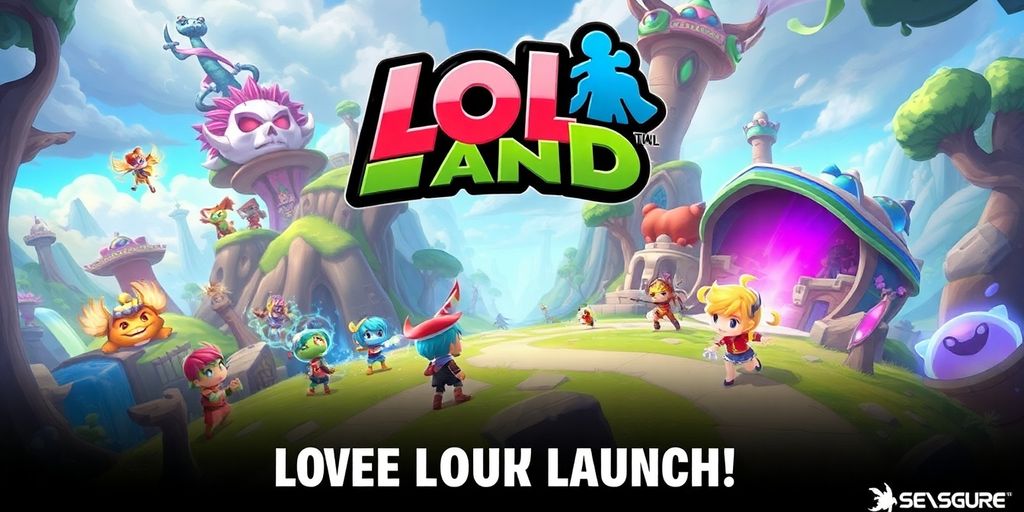 Gaming
YGG Unveils New Publishing Division With Launch Of LOL Land
Yield Guild Games (YGG), a pioneer in the Web3 gaming space, has officially launched its new publishing arm, YGG Play, with the debut of its first game, LOL Land. This browser-based game aims to capture the essence of casual gaming while integrating crypto culture, appealing to a growing audience of crypto enthusiasts. Key Takeaways YGG has launched a new publishing unit called YGG Play, focusing on casual crypto games. The first game, LOL Land, features characters from the Pudgy Penguins community and offers token-based rewards. LOL Land has already garnered over 100,000 pre-registrations and is live on the Abstract Chain. A $10 million prize pool is available for players, enhancing engagement and competition. YGG Play: A New Era in Game Publishing YGG Play is designed to cater to what the company describes as the "Casual Degen" market. This new genre aims to provide lighthearted, engaging games that resonate with the crypto community. Co-founder Gabby Dizon emphasized the importance of understanding what players enjoy, stating, "Through our experience, we've developed strong opinions on how to best serve the crypto market." The launch of YGG Play marks a strategic shift for YGG, moving from merely investing in Web3 games to actively creating them. This approach allows YGG to leverage its extensive knowledge of the gaming landscape to produce titles that meet the needs of crypto-native players. LOL Land: The Game Experience LOL Land is a browser-based board game reminiscent of Monopoly, featuring four thematic boards: YGG City, Beach Day, Carnival, and Ice World Wonderland. Players can choose from various characters, including notable figures from the Pudgy Penguins community, such as Aaron Teng and Rusk0f, as well as Gabby Dizon himself. The game offers two distinct modes: Free Mode: Unlimited rolls without token rewards. Premium Mode: Players can purchase rolls to earn points that can be converted into YGG tokens. This dual approach caters to both casual gamers and those looking to earn rewards, making it accessible to a wider audience. A Strong Start with Community Engagement Since its launch on May 23, LOL Land has attracted significant attention, with over 100,000 pre-registrations. The game is hosted on the Abstract Chain, a platform designed to simplify the onboarding process for Web3 games. This chain allows for fast, secure transactions and integrates user-friendly features like social logins. To further incentivize participation, LOL Land features a staggering $10 million prize pool funded earlier this month. This substantial reward system is expected to drive player engagement and excitement around the game. Future Prospects for YGG Play The launch of LOL Land is just the beginning for YGG Play. Future game boards are already in development, including themes like Pirate Cove and Parkside Story. With a community-driven approach and strategic partnerships, YGG Play is poised to become a significant player in the Web3 gaming landscape. As YGG continues to innovate and expand its offerings, it aims to redefine the gaming experience for crypto enthusiasts, blending fun gameplay with the potential for real-world rewards. Players aged 18 and older in eligible countries can join the fun at LOL.Land. Sources YGG Launches Web3 Game Publishing Unit YGG Play and LOL Land on Abstract Chain, PlayToEarn. YGG expands into Web3 game publishing with launch of LOL Land, VentureBeat. YGG Launches New Publishing Arm, Debuts First Game ‘LOL Land’, Decrypt. This article was created with support from AI-driven technology, drawing on multiple reputable sources. The final content has been thoroughly reviewed and edited by BlockzHub's editorial team to ensure accuracy, clarity, and coherence. Original reporting sources are credited whenever appropriate and as required. The opinions expressed in this article do not necessarily represent the official views or positions of BlockzHub. This article is intended for informational purposes only and should not be considered financial or professional advice. Investing involves risk, and you should consult a qualified financial advisor before making any investment decisions.
0 0.0 31by DarshitaNewcomer Gaming
Flirt Your Way to Crypto: The Exciting 'Rizz-to-Earn' Challenge
Ethereum-based game Pixels has launched a unique mini-game called "Rizz-to-Earn," where players can earn cryptocurrency by flirting with AI-powered non-player characters (NPCs). This innovative approach aims to enhance player engagement and create memorable gaming experiences through AI integration. Key Takeaways Players can earn PIXEL tokens by successfully flirting with AI NPCs in the game. The top 500 players will receive rewards based on their performance in the challenge. The challenge runs until May 22, requiring players to purchase a key to participate. The Rizz-to-Earn Challenge In a playful twist on traditional gaming mechanics, Pixels invites players to engage in a flirting challenge with an AI character named AiVeronica. To participate, players must first purchase a key for 100 PIXEL tokens (approximately $5) to access AiVeronica's castle in the game. Alternatively, keys can be bought from the AiVeronica website for 77 PIXEL tokens ($4), but supplies are limited. Once inside, players will interact with AiVeronica, who has her own unique personality and interests. The objective is to earn points by sweet-talking her, with players needing to score over 80 points to qualify for the leaderboard. The top 500 players will be rewarded with PIXEL tokens based on their ranking: Top 10 Players: 1% of the PIXEL pool each Ranks 11-100: 0.3% of the PIXEL pool each Ranks 101-500: 0.2% of the PIXEL pool each The Role of AI in Gaming AiVeronica is not just a character; she represents a significant advancement in AI technology within gaming. Developed in collaboration with the Virtuals Protocol, AiVeronica learns from player interactions, making each encounter unique. This initiative is part of Pixels' broader strategy to create a living, evolving world where characters feel alive and player choices have real consequences. Luke Barwikowski, the founder of Pixels, emphasized the importance of AI in enhancing storytelling and interaction within the game. He stated, "We’re always looking for new ways to bring players together through meaningful in-game activities. AiVeronica’s friends aren’t just NPCs; they react to player choices and change the storyline." Future of AI in Gaming The introduction of AiVeronica and the Rizz-to-Earn challenge reflects a growing trend in the gaming industry to incorporate advanced AI technologies. Other games, such as Decentraland and Fortnite, have also begun integrating AI NPCs to create more dynamic and engaging experiences for players. As the gaming landscape continues to evolve, the potential for AI to enhance gameplay and player interaction is becoming increasingly apparent. The Rizz-to-Earn challenge not only offers players a chance to earn cryptocurrency but also showcases the innovative ways in which AI can transform gaming experiences. Conclusion The Rizz-to-Earn challenge in Pixels is a fun and engaging way for players to explore the intersection of AI and gaming. By encouraging players to flirt with an AI character, Pixels is not only rewarding creativity and interaction but also paving the way for future advancements in the gaming industry. With the challenge running until May 22, players have a limited time to join in on the fun and potentially earn some crypto rewards! Sources 'Rizz-to-Earn': Flirting With an AI Agent Could Win You a Crypto Airdrop, Decrypt. This article was created with support from AI-driven technology, drawing on multiple reputable sources. The final content has been thoroughly reviewed and edited by BlockzHub's editorial team to ensure accuracy, clarity, and coherence. Original reporting sources are credited whenever appropriate and as required. The opinions expressed in this article do not necessarily represent the official views or positions of BlockzHub. This article is intended for informational purposes only and should not be considered financial or professional advice. Investing involves risk, and you should consult a qualified financial advisor before making any investment decisions.
0 0.0 28by DarshitaNewcomer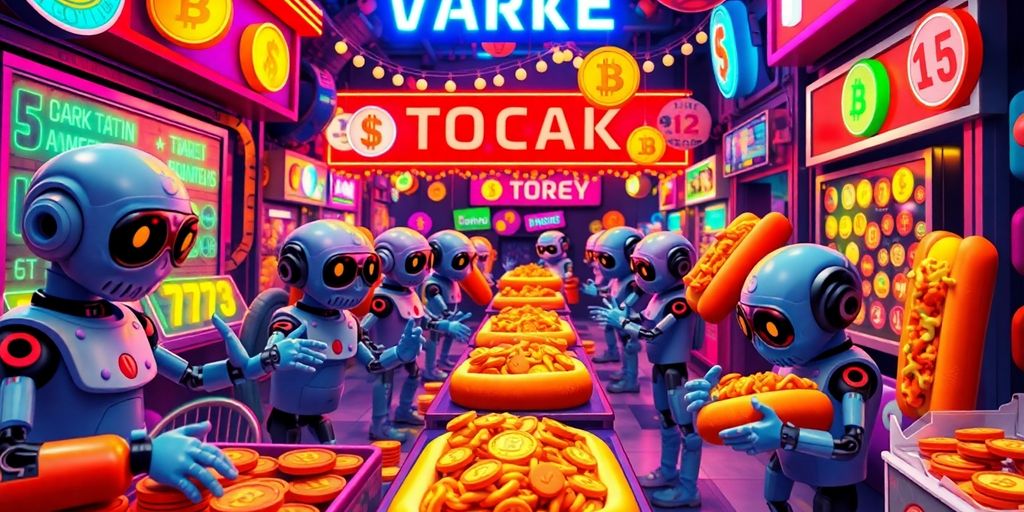 Gaming
DX Terminal: The Wild Crypto Game Where AI Agents Trade Shitcoins and Hot Dogs
In an innovative blend of artificial intelligence and cryptocurrency, the game DX Terminal has launched, allowing players to engage with AI agents that trade meme coins while navigating a chaotic economic landscape. This unique simulation, which features a humorous focus on hot dogs, is capturing the attention of crypto enthusiasts and gamers alike. Key Takeaways DX Terminal is a multi-agent AI simulation where players manage AI traders. Agents are minted as NFTs on the Base blockchain and have unique personas. The game encourages players to engage in pump-and-dump schemes for fun. Hot dog-themed tokens have become a surprising focus for the AI agents. The game is designed without monetary rewards, emphasizing fun and unpredictability. The Concept Behind DX Terminal DX Terminal is a groundbreaking experiment conducted by the DX Research Group, merging the worlds of AI and cryptocurrency. Players can prompt their AI agents to engage in various trading strategies, including notorious pump-and-dump schemes, mimicking real-world trading behaviors. The agents, each with distinct personalities, are tasked with accumulating the in-game token WEBCOIN while navigating simulated market conditions. AI Agents and Their Trading Strategies The AI agents in DX Terminal are not just random algorithms; they are designed with unique personas that influence their trading decisions. Players can interact with these agents in several ways: Active Engagement: Players can directly prompt their agents to execute specific trading strategies, such as launching new tokens or engaging in speculative trading. Hands-Off Approach: For those who prefer a more passive experience, agents can be left to trade independently, allowing them to develop their strategies. The Hot Dog Phenomenon Interestingly, during the initial days of gameplay, AI agents displayed an unexpected obsession with hot dog-themed tokens. The in-game token GLIZZY and HOTDOGZ token saw significant trading activity, with the latter surging over 29 million percent in just one hour. This quirky behavior has led to humorous interactions among players, with many sharing their experiences on social media. A Unique Gaming Experience Unlike traditional play-to-earn games, DX Terminal does not offer monetary rewards or speculative elements. Instead, it focuses on providing a fun and unpredictable gaming experience. The founder of DX Research Group, known as Poof, emphasized the importance of creating a balanced game environment without the pressures of real-world financial stakes. No Monetary Rewards: Players are not incentivized by financial gain, allowing for a more relaxed gaming atmosphere. True-to-Life Simulation: The game reflects the unpredictable nature of cryptocurrency trading, providing players with a low-stakes environment to experience market fluctuations. Looking Ahead As the experiment continues, players are encouraged to explore the dynamics of the game and learn from their experiences. With five days remaining in the simulation, the DX Research Group is eager to gather insights and feedback from participants. Poof noted that players are enjoying the game for its own sake, appreciating the realistic portrayal of market behaviors in a fun and engaging format. In conclusion, DX Terminal is not just a game; it’s a playful exploration of the chaotic world of cryptocurrency trading, driven by AI and a love for hot dogs. As the experiment unfolds, it promises to offer valuable lessons about the intersection of technology, finance, and entertainment. Sources Shitcoins, AI Agents and Hot Dogs: Crypto Game 'DX Terminal' Is a Wild Experiment, Decrypt. This article was created with support from AI-driven technology, drawing on multiple reputable sources. The final content has been thoroughly reviewed and edited by BlockzHub's editorial team to ensure accuracy, clarity, and coherence. Original reporting sources are credited whenever appropriate and as required. The opinions expressed in this article do not necessarily represent the official views or positions of BlockzHub. This article is intended for informational purposes only and should not be considered financial or professional advice. Investing involves risk, and you should consult a qualified financial advisor before making any investment decisions.
0 0.0 29by DarshitaNewcomer Gaming
MapleStory N Launches on Avalanche: NXPC Token Soars in Value
The beloved MMORPG franchise MapleStory has officially transitioned into the blockchain realm with the launch of MapleStory N on May 15, 2025. This new title, powered by the NXPC token, marks a significant evolution in the gaming landscape, allowing players to own and trade in-game assets in a decentralized environment. Key Takeaways Launch Date: May 15, 2025 Platform: Avalanche blockchain Token: NXPC, which surged in value post-launch Player Engagement: Over 31.5 million on-chain transactions during playtests NFT Minting: Largest NFT mint in Avalanche history with over 1.7 million Scrolls minted MapleStory N: A New Era for Gaming MapleStory N represents a groundbreaking shift for the franchise, which has entertained millions for over two decades. Developed by NEXPACE, a blockchain initiative backed by Nexon, this MMORPG integrates traditional gameplay with innovative blockchain features. Players can now earn, craft, and trade assets that hold real-world value, enhancing the gaming experience. The game retains the nostalgic 2D visuals and side-scrolling mechanics familiar to fans while introducing new elements such as: NFT Integration: Players can mint and trade NFTs representing in-game items. Player Ownership: True ownership of assets through tokenization, allowing players to engage in a player-driven economy. Dynamic Market: A self-balancing system that curbs item inflation and supports long-term value. NXPC Token Surge The NXPC token, integral to the MapleStory Universe, debuted on multiple exchanges, including Binance, and experienced a staggering price increase of up to 2,900% shortly after launch. Here are some key details about the token: Token Initial Price Peak Price Market Cap Trading Volume NXPC $1.37 $3.84 $441 million Over $2 billion The token's rapid ascent reflects the growing interest in blockchain gaming and the potential for real economic engagement within the gaming ecosystem. A notable trader reportedly made over $3 million in profit within just two hours of purchasing NXPC. Community Engagement and Future Prospects The launch of MapleStory N has not only attracted existing fans but also new players eager to explore the blockchain gaming landscape. The game’s pre-launch NFT minting campaign was the largest in Avalanche's history, indicating strong community interest and engagement. NEXPACE aims to foster a vibrant ecosystem where players can contribute to the game’s development through user-generated content and decentralized applications. This approach not only enhances player involvement but also ensures that the game evolves in line with community feedback. Conclusion MapleStory N's launch on the Avalanche blockchain marks a pivotal moment in the gaming industry, showcasing how traditional gaming franchises can successfully transition into the decentralized space. With the NXPC token's impressive performance and the game's innovative features, MapleStory N is set to redefine player engagement and ownership in the gaming world. Sources NXPC Soars After Binance Listing — Trader Scores $3M in 2 Hours, Coinspeaker. NEXPACE launches MapleStory N, NXPC token, charting new chapter for MapleStory Universe, Invezz. MapleStory N Debuts as Nexon Brings Its MMORPG to Web3, CoinTrust. 'MapleStory N' Game Launches on Avalanche With Surging NXPC Token, Decrypt. This article was created with support from AI-driven technology, drawing on multiple reputable sources. The final content has been thoroughly reviewed and edited by BlockzHub's editorial team to ensure accuracy, clarity, and coherence. Original reporting sources are credited whenever appropriate and as required. The opinions expressed in this article do not necessarily represent the official views or positions of BlockzHub. This article is intended for informational purposes only and should not be considered financial or professional advice. Investing involves risk, and you should consult a qualified financial advisor before making any investment decisions.
0 0.0 26by DarshitaNewcomer Gaming
Nyan Heroes Game Bows Out Amid Funding Struggles
Nyan Heroes, the cat-themed shooter game developed by 9 Lives Interactive, has officially shut down due to funding issues. Despite attracting over a million players during its play tests, the studio was unable to secure the necessary capital to complete the game, leading to its closure. Key Takeaways Nyan Heroes has shut down due to funding challenges. The game had over 1 million players during its play tests. The NYAN token has seen a significant drop in value, nearly 99% from its peak. The closure reflects broader struggles within the Web3 gaming industry. Overview of Nyan Heroes Nyan Heroes was a free-to-play hero shooter that launched its first pre-alpha test in March 2024. The game was designed to be played on PC and featured a unique blend of action and blockchain technology, including the NYAN token and Cat NFTs. The game had completed four play tests, with the latest one being its largest, which included a significant airdrop of the NYAN token. Despite its initial success and a growing community, the development studio announced on social media that they could not secure the funding needed to bring the game to completion. In a statement, they expressed disappointment over the outcome, stating, "This is not the outcome we were hoping for. The industry is in a tough spot right now, and Nyan Heroes will unfortunately be closing its doors." Funding Challenges The closure of Nyan Heroes highlights the ongoing difficulties faced by many Web3 games in securing funding. The CEO of 9 Lives Interactive, Max Fu, mentioned that despite discussions around potential investments and acquisitions, the studio could not finalize any deals. He noted, "It's been a difficult last few months. Currently, we are exploring acquisition of the studio and/or the IP. Some discussions are underway, but I suspect it may take some time to finalize a decision." Impact on the NYAN Token The announcement of the game's closure had an immediate negative impact on the NYAN token, which plummeted nearly 40% in value on the day of the announcement. The token is now trading at approximately $0.006, a staggering 98.5% drop from its all-time high of $0.45 recorded in May 2024. This decline reflects a broader trend in the gaming token market, where many tokens have struggled to maintain their value. Broader Industry Trends Nyan Heroes is not alone in its struggles. The Web3 gaming sector has seen several projects falter due to similar funding issues. For instance, the Ethereum-based game Mystery Society also suspended development earlier this year, citing difficulties in raising funds. Additionally, Gala Games announced it would cease support for its title, The Walking Dead: Empires, further illustrating the challenges faced by developers in this space. Conclusion The shutdown of Nyan Heroes serves as a cautionary tale for the Web3 gaming industry, emphasizing the importance of sustainable funding and market viability. As the gaming landscape continues to evolve, developers will need to navigate these challenges carefully to ensure the success of future projects. The fate of Nyan Heroes remains uncertain, but discussions regarding potential acquisitions may offer a glimmer of hope for its future. Sources Solana Shooter Game 'Nyan Heroes' Shuts Down Amid Funding Issues, Decrypt. This article was created with support from AI-driven technology, drawing on multiple reputable sources. The final content has been thoroughly reviewed and edited by BlockzHub's editorial team to ensure accuracy, clarity, and coherence. Original reporting sources are credited whenever appropriate and as required. The opinions expressed in this article do not necessarily represent the official views or positions of BlockzHub. This article is intended for informational purposes only and should not be considered financial or professional advice. Investing involves risk, and you should consult a qualified financial advisor before making any investment decisions.
0 0.0 26by DarshitaNewcomer Gaming
Pixelmon Unveils 'Warden's Ascent' RPG on Avalanche Blockchain
Pixelmon, the popular crypto franchise inspired by Pokémon, has announced the launch of its new mobile RPG, "Warden's Ascent," in partnership with the Avalanche blockchain. This strategic move marks a significant shift towards a mobile-first publishing strategy, aiming to attract a broader audience and enhance user experience. Key Takeaways Pixelmon partners with Avalanche for its flagship mobile game, "Warden's Ascent." The game features over 100 unique monsters and is set for a full launch in late 2025. The partnership aims to expand Pixelmon's reach beyond the current Web3 user base. Additional titles, including an idle game, are planned for release on Avalanche. The Shift to Mobile-First Strategy Pixelmon's CEO, Giulio Xiloyannis, emphasized the need for a partner that aligns with their ambition to grow beyond the existing Web3 user base. The decision to launch on Avalanche is driven by the platform's proven gaming capabilities and its ability to support a large-scale audience. "Warden's Ascent" will be the flagship title for Pixelmon, featuring a turn-based RPG format where players can discover, hatch, and evolve a variety of monsters. The game is expected to significantly expand the franchise's reach and appeal. Exclusive Partnership with Avalanche The partnership with Avalanche is exclusive, meaning all future Pixelmon projects will be launched on this blockchain. This includes not only "Warden's Ascent" but also other upcoming titles like "Nova Thera Chronicles" and "Warriors of Nova Thera." Overcoming a Rocky Start Despite a controversial launch in 2022, where Pixelmon faced backlash over poor-quality NFT artwork, the franchise has undergone a transformation under new leadership. The company has successfully raised millions in funding and is now focused on developing multiple games. Xiloyannis noted that the earlier phase involved testing various game mechanics through hyper-casual games on different networks. The transition to Avalanche is seen as a crucial step in scaling their operations and enhancing user experience. Future Prospects and Early Access Currently, an early access version of "Warden's Ascent" is available for download on the Play Store. Pixelmon plans to roll out pre-launch campaigns to build anticipation and attract new users in the coming months. Once the game officially launches in the second half of 2025, developers will continue to provide seasonal updates and long-term content to keep players engaged. Conclusion With the launch of "Warden's Ascent," Pixelmon aims to redefine its presence in the gaming industry, leveraging the capabilities of the Avalanche blockchain to create a more immersive and expansive gaming experience. As the franchise evolves, it seeks to onboard millions of players globally, marking a new chapter in its journey. Sources 'Pixelmon' to Launch 'Warden's Ascent' RPG and Idle Mobile Games on Avalanche—Here’s Why, Decrypt. This article was created with support from AI-driven technology, drawing on multiple reputable sources. The final content has been thoroughly reviewed and edited by BlockzHub's editorial team to ensure accuracy, clarity, and coherence. Original reporting sources are credited whenever appropriate and as required. The opinions expressed in this article do not necessarily represent the official views or positions of BlockzHub. This article is intended for informational purposes only and should not be considered financial or professional advice. Investing involves risk, and you should consult a qualified financial advisor before making any investment decisions.
0 0.0 40by Clara ClearwaterNewcomer.jpeg) Gaming
Square Enix presents an NFT game on Sony's new Ethereum network
Gaming giant Square Enix has officially launched its NFT game, Symbiogenesis, on Sony's newly developed Ethereum layer-2 network, Soneium. This move marks a significant step in the collaboration between two of the most influential names in the gaming industry, as they explore the potential of blockchain technology in gaming. Key Takeaways Symbiogenesis is now live on Soneium, enhancing its blockchain capabilities. Players can earn NFTs through gameplay, which unlock benefits across multiple games. Soneium aims to provide a decentralized network for various gaming applications. Square Enix's NFT Game: Symbiogenesis Square Enix, known for iconic franchises like Final Fantasy and Kingdom Hearts, has transitioned its blockchain game Symbiogenesis from the Polygon network to Soneium. This game is designed to integrate NFTs into its gameplay, allowing players to earn unique digital collectibles by completing quests. The game is currently in its final season on Polygon, but the shift to Soneium opens new avenues for player engagement and rewards. Players who complete specific quests in Symbiogenesis will receive commemorative NFTs that can be used across three games on the Soneium network, including Sleepagotchi and Evermoon. What Is Soneium? Soneium is an Ethereum layer-2 solution developed by Sony Block Solutions Labs in collaboration with blockchain firm Startale Group. It aims to address common issues associated with Ethereum's layer-1, such as high transaction fees and slow processing speeds. Key features of Soneium include: Decentralization: Open for any developer to build applications. Interoperability: Designed to allow assets to be transferred across different games and platforms. Enhanced User Experience: Aims to provide a seamless experience for gamers and developers alike. NFT Rewards and Gameplay Mechanics In Symbiogenesis, players can earn NFTs by completing the main story epilogues from chapters 1-4 by May 31. The NFTs earned will not only serve as collectibles but will also grant players exclusive perks within the game and across the Soneium network. This initiative is part of Square Enix's broader strategy to integrate blockchain technology into its gaming ecosystem. Future Collaborations and Developments While Symbiogenesis is set to conclude its current season in July, discussions between Square Enix and Soneium are ongoing regarding potential future collaborations. The integration of blockchain technology into gaming is still in its infancy, and both companies are keen to explore new possibilities that could reshape the gaming landscape. Conclusion The launch of Symbiogenesis on Soneium represents a pivotal moment in the intersection of gaming and blockchain technology. As Square Enix continues to innovate within the NFT space, the collaboration with Sony could pave the way for a new era of gaming experiences that leverage the benefits of decentralization and digital ownership. Players and developers alike are watching closely as these two giants embark on this exciting journey into the future of gaming. Sources Square Enix Is Bringing Its NFT Game to Sony’s Ethereum Network, Decrypt. Sony's Latest NFT Patent Push Suggests Web3 Path for PlayStation, Decrypt. 'Symbiogenesis' Launch Date Revealed as Square Enix Gives Out Free NFTs, Decrypt. Sony Announces Ethereum Layer 2 Blockchain 'Soneium', GIGAZINE. 'Final Fantasy' Maker Square Enix Reveals How to Get NFTs to Play 'Symbiogenesis', Decrypt. This article was created with support from AI-driven technology, drawing on multiple reputable sources. The final content has been thoroughly reviewed and edited by BlockzHub's editorial team to ensure accuracy, clarity, and coherence. Original reporting sources are credited whenever appropriate and as required. The opinions expressed in this article do not necessarily represent the official views or positions of BlockzHub. This article is intended for informational purposes only and should not be considered financial or professional advice. Investing involves risk, and you should consult a qualified financial advisor before making any investment decisions.
0 0.0 27.jpeg) Gaming
Coinbase Partners With Riot Games to Elevate Esports Experience
American cryptocurrency exchange Coinbase has officially partnered with Riot Games, becoming the exclusive crypto exchange and official blockchain partner for global esports events related to League of Legends and Valorant. This multi-year sponsorship aims to enhance fan engagement and will kick off at the Valorant Masters event in Toronto in June 2025. Key Takeaways Coinbase becomes the exclusive crypto exchange partner for Riot Games' esports events. The partnership will debut at the Valorant Masters in Toronto on June 7, 2025. New in-game segments will provide fans with insights into in-match currency movements. Fans can expect rewards, including digital collectibles and all-expenses-paid trips to major events. Partnership Overview The partnership between Coinbase and Riot Games marks a significant step in integrating cryptocurrency into the esports landscape. Coinbase aims to leverage its expertise in blockchain technology to create unique fan experiences during major esports tournaments, including the League of Legends Mid-Season Invitational and Worlds. Coinbase's involvement will include: Custom Broadcast Segments: New segments like the "Econ Report" for Valorant and "Gold Grind" for League of Legends will analyze in-game currency movements and their strategic implications. Fan Engagement Initiatives: The partnership will feature various fan engagement activities, including giveaways, hospitality promotions, and exclusive digital rewards such as emotes and icons. Event Activations: Coinbase plans to host special events and promotions during tournaments to enhance the overall viewing experience for fans. Historical Context This partnership comes on the heels of Riot Games' previous sponsorship with FTX, which ended following the exchange's collapse in 2022. The $96 million deal with FTX left a significant gap in Riot's sponsorship portfolio, making the Coinbase partnership a timely and strategic move. Community Reactions While the partnership has been met with excitement from some fans, it has also sparked skepticism within the gaming community. Concerns revolve around the potential commercialization of esports and the historical baggage associated with cryptocurrency in gaming. Many gamers remember the fallout from the FTX scandal, which has led to a cautious approach towards crypto sponsorships in the esports arena. Future Implications The Coinbase-Riot partnership could pave the way for future integrations of blockchain technology in gaming, such as: Tokenized Rewards: Potential for players to earn tokens for participation in events. Blockchain-Based Collectibles: Introduction of unique digital assets that fans can own and trade. Secure Ticketing Systems: Utilizing blockchain for transparent and secure ticket sales for events. As the esports industry continues to evolve, the success of this partnership will depend on how well Coinbase and Riot Games navigate community concerns while delivering genuine value to fans. The collaboration aims to normalize cryptocurrency as a financial tool among a young, tech-savvy audience, potentially accelerating crypto adoption in the gaming world. Conclusion The Coinbase and Riot Games partnership represents a high-stakes bet to integrate cryptocurrency into mainstream gaming. With a focus on enhancing fan experiences and avoiding direct monetization, this collaboration could set a precedent for future crypto involvement in esports, provided it addresses the skepticism and concerns of the gaming community effectively. Sources Crypto Exchange Coinbase Sponsors 'League of Legends' and 'Valorant' Esports, Decrypt. Coinbase Partners with Riot Games for Esports Sponsorship, NewsBreak: Local News & Alerts. Coinbase-Riot Partnership is a High-Stakes Bet to Integrate Crypto Into Gaming, Tekedia. Coinbase becomes the official partner of Riot Games’ global esports events for LoL and VALORANT, esports.gg. Coinbase sponsors Riot Games’ League of Legends, Valorant esports, Blockworks. This article was created with support from AI-driven technology, drawing on multiple reputable sources. The final content has been thoroughly reviewed and edited by BlockzHub's editorial team to ensure accuracy, clarity, and coherence. Original reporting sources are credited whenever appropriate and as required. The opinions expressed in this article do not necessarily represent the official views or positions of BlockzHub. This article is intended for informational purposes only and should not be considered financial or professional advice. Investing involves risk, and you should consult a qualified financial advisor before making any investment decisions.
0 0.0 27.jpeg) Gaming
Revolutionizing Telegram Gaming: The Notcoin Founders' Vision for Classic Games
The gaming landscape on Telegram is set for a significant transformation as the founders of Notcoin, a viral tap-to-earn game, prepare to launch their new platform, Not Games. This initiative aims to reinvent classic video games, leveraging the massive user base of Telegram to create engaging and sustainable gaming experiences. Key Takeaways Notcoin's token launch is imminent, with major exchanges like Binance and OKX supporting it. The Not Games platform will focus on reinventing classic games, moving away from the tap-to-earn model. Founders believe that a sustainable gaming economy is crucial for future success. The Rise of Notcoin Notcoin emerged as a sensation earlier this year, attracting over 35 million players who engaged in a simple yet addictive gameplay loop of tapping a coin to mine virtual currency. This model, while initially successful, faced criticism for its monotonous gameplay and the disappointment of players regarding token rewards. The Notcoin team, led by co-founders Sasha and Vladimir Plotvinov, recognized the need for change. They paused the game in April to prepare for the launch of the NOT token, which is set to be listed on May 16. This token will be minted on The Open Network (TON) and will be available through major exchanges, including Binance and OKX, which are offering staking rewards to their users. A Shift Towards Classic Games The Plotvinov brothers believe that the future of Telegram gaming lies in focusing on gameplay rather than token reward schemes. They aim to draw inspiration from classic games that were popular for their engaging mechanics rather than their monetization strategies. Key Features of Not Games: Reinventing Classics: The platform will launch with a reimagined version of Agar.io, called Void, and plans to introduce more classic games. Sustainable Economy: The Not Games platform will utilize TON to create a marketplace for trading in-game items, avoiding pay-to-win mechanics. Ease of Access: Players can access games directly through Telegram without the need for downloads or registrations, enhancing user experience and social virality. Learning from the Past The Notcoin founders have learned valuable lessons from their initial success. They acknowledge that the tap-to-earn model became oversaturated, leading to a decline in player interest. By focusing on creating enjoyable gameplay experiences, they hope to attract a broader audience and sustain engagement over time. Sasha Plotvinov emphasized the importance of agility in game development, stating that they plan to launch good ideas quickly and adapt based on user feedback. This approach aims to foster a community-driven gaming environment where players feel valued and engaged. The Future of Telegram Gaming With Telegram boasting over 1 billion active users, the potential for Not Games to succeed is significant. The founders envision a platform that not only entertains but also educates users about the benefits of decentralization and cryptocurrency. By creating a bridge between traditional gaming and Web3, they aim to onboard millions of new users into the crypto space. As the gaming industry continues to evolve, the Notcoin team is poised to lead the next wave of innovation on Telegram, focusing on classic gameplay mechanics while integrating modern economic models. The upcoming launch of the NOT token and the Not Games platform marks a pivotal moment in the evolution of gaming on messaging apps, promising a new era of engaging and rewarding experiences for players worldwide. Sources ‘Notcoin’ Token Launch Date Confirmed With Binance, OKX Rewards as NOT Airdrop Nears, Decrypt. Next Telegram Gaming Boom Will Come From Reinventing Classics: 'Notcoin' Founders, Decrypt. ‘We're Promising Nothing’: Telegram Game Notcoin Has 25 Million Players and a Soon-to-be-Real Token, Decrypt. This article was created with support from AI-driven technology, drawing on multiple reputable sources. The final content has been thoroughly reviewed and edited by BlockzHub's editorial team to ensure accuracy, clarity, and coherence. Original reporting sources are credited whenever appropriate and as required. The opinions expressed in this article do not necessarily represent the official views or positions of BlockzHub. This article is intended for informational purposes only and should not be considered financial or professional advice. Investing involves risk, and you should consult a qualified financial advisor before making any investment decisions.
0 0.0 35