Crypto News
Written and ranked by the community. A manipulation-resistant algorithm surfaces what matters.
.jpeg)
Trump Poised to Nominate Kevin Warsh as Next Federal Reserve Chair
President Donald Trump is reportedly set to announce his nominee for Federal Reserve chair on Friday, with former Fed Governor Kevin Warsh emerging as the leading candidate. The decision comes after months of deliberation and follows Trump's public desire for a Fed leader who would advocate for lower interest rates. Key Takeaways Kevin Warsh is the expected nominee for Federal Reserve chair. President Trump plans to announce his choice on Friday morning. Trump has expressed a preference for a Fed chair who would lower interest rates. Warsh previously served as a Fed governor and was considered for the role in 2017. The Nomination Process Sources familiar with the matter indicate that the Trump administration is preparing for the president to nominate Kevin Warsh to lead the Federal Reserve. Trump himself confirmed on Thursday evening that he had made his decision and would reveal his pick on Friday morning. He described the chosen individual as "outstanding," "very respected," and "known to everybody in the financial world." Warsh was among a group of finalists that included White House National Economic Council Director Kevin Hassett, BlackRock executive Rick Rieder, and Fed Governor Christopher Waller. Trump had reportedly narrowed the field to four candidates in recent weeks and conducted in-person interviews. Warsh met with Trump at the White House on Thursday, further fueling speculation about his impending nomination. Warsh's Background and Trump's Expectations Kevin Warsh served as a Federal Reserve governor for five years, having been nominated by President George W. Bush. He was also considered for the Fed chair position in 2017, a role ultimately given to Jerome Powell. Trump has previously expressed dissatisfaction with Fed Chair Jerome Powell's approach to interest rate policy, often criticizing the Fed for not lowering rates more aggressively. Trump has made it clear that he desires a Fed chair who is willing to reduce interest rates more rapidly, believing it would stimulate economic growth and lower borrowing costs. This stance has led to public clashes with Powell, whom Trump has labeled with various critical terms. The president's desire for a more dovish monetary policy appears to be a significant factor in his selection. Potential Impact and Considerations The nomination of a new Fed chair carries significant weight, as the central bank's monetary policy decisions have broad implications for the U.S. and global economies. If confirmed by the Senate, a Trump-appointed chair could significantly influence the Fed's direction. However, the Fed chair's power is not absolute, as interest rate decisions are made by a committee, and Fed governors are expected to act independently. The Senate confirmation process could also be influenced by recent events, including subpoenas issued to the Fed related to a renovation project, which some senators have viewed as an attempt to intimidate the institution. Sources Trump Administration Prepares for Warsh Fed Chair Nomination, Bloomberg.com. Trump says he's announcing new Fed chair nominee Friday morning, CBS News. Trump expected to nominate Kevin Warsh for Federal Reserve chair, CNN. This article was created with support from AI-driven technology, drawing on multiple reputable sources. The final content has been thoroughly reviewed and edited by BlockzHub's editorial team to ensure accuracy, clarity, and coherence. Original reporting sources are credited whenever appropriate and as required. The opinions expressed in this article do not necessarily represent the official views or positions of BlockzHub. This article is intended for informational purposes only and should not be considered financial or professional advice. Investing involves risk, and you should consult a qualified financial advisor before making any investment decisions.
 Policy
South Korea Finalizes Digital Asset Bill
South Korea's ruling Democratic Party has finalized the draft of its "Digital Asset Basic Act," a significant step towards regulating the country's burgeoning cryptocurrency market. The bill introduces stricter rules for stablecoin issuers, including a capital requirement of 5 billion won, while also signaling a broader embrace of digital assets. Key Takeaways Stablecoin Regulations: A 5 billion won capital requirement for stablecoin issuers is established. Broader Crypto Opening: The bill is part of a larger strategy to attract crypto businesses and capital. Regulatory Clarity: Aims to provide a clearer framework for tokenized products and service providers. Inter-Agency Disputes: While progress is made, underlying tensions between the Financial Services Commission (FSC) and the Bank of Korea regarding stablecoin oversight persist. Future Outlook: The legislation is set to be debated ahead of the Lunar New Year, with potential implementation following. Stablecoin Capitalization and Oversight The "Digital Asset Basic Act" mandates that stablecoin issuers must possess a paid-in capital of at least 5 billion won (approximately $3.5 million). This move aims to enhance the stability and reliability of stablecoins operating within South Korea. Despite this progress, lawmakers acknowledge that disputes between the Financial Services Commission (FSC) and the Bank of Korea over the ultimate authority for stablecoin regulation are not entirely resolved. A Pro-Crypto Regulatory Environment This legislative development is coupled with a series of other pro-crypto initiatives. South Korea has confirmed its intention to allow spot Bitcoin ETFs from 2026, and has already approved tokenized securities through amendments to the Capital Markets Act. Furthermore, a ban on venture capital investment in crypto firms has been lifted, indicating a strategic shift to foster crypto business and attract investment. Legislative Timeline and Internal Dynamics The ruling party intends to present the bill for debate before the upcoming Lunar New Year. While internal disagreements have been addressed on paper, the underlying institutional rivalry between the FSC and the Bank of Korea is expected to continue. The task force chair, Lee Jeong-mun, emphasized the move towards coordinated policy, with discussions planned between the party's policy committee and the government. Broader Market Implications The finalization of the Digital Asset Basic Act is seen as a crucial step in South Korea's efforts to establish a comprehensive regulatory framework for digital assets. By setting clear rules and fostering a more welcoming environment, the country aims to position itself as a competitive player in the global digital asset landscape, balancing innovation with investor protection. Sources South Korea finalizes draft of Digital Asset Bill, crypto.news. South Korea Finalizes its Digital Asset Bill Draft Amid Crypto Push, CoinGape. South Korea Crypto Regulation Delayed Until 2026 Over Stablecoin Disputes — Noticias de TradingView, TradingView. Korean stablecoin Framework Advances Digital Asset Basic Act, The Cryptonomist. This article was created with support from AI-driven technology, drawing on multiple reputable sources. The final content has been thoroughly reviewed and edited by BlockzHub's editorial team to ensure accuracy, clarity, and coherence. Original reporting sources are credited whenever appropriate and as required. The opinions expressed in this article do not necessarily represent the official views or positions of BlockzHub. This article is intended for informational purposes only and should not be considered financial or professional advice. Investing involves risk, and you should consult a qualified financial advisor before making any investment decisions.
0 0.0 0by BishopNewcomer.jpeg) Policy
PolicyWhite House Mulls Crypto Bill Support
The White House is reportedly considering withdrawing its support for a significant cryptocurrency bill following a public dispute with Coinbase. The dispute arose over specific language in the proposed legislation that Coinbase executives argued would be detrimental to the industry and potentially outlaw certain products. Key Takeaways Coinbase's public objection led to the cancellation of a crucial Senate committee vote on the crypto bill. The White House is now re-evaluating its backing of the legislation. The incident highlights the growing influence of major crypto players in Washington. The Clarity Act Faces Uncertainty A landmark cryptocurrency bill, known as the Clarity Act, was on the verge of a Senate committee vote after months of bipartisan negotiation. The nearly 300-page bill aimed to establish a comprehensive regulatory framework for the digital asset space, with input from industry stakeholders. However, the legislative process was abruptly halted when Brian Armstrong, CEO of Coinbase, publicly announced on social media that the company could not support the bill in its current form. Armstrong stated that the proposed language was "materially worse than the current status quo" and that Coinbase would "rather have no bill than a bad bill." Coinbase's Influence in Washington This last-minute objection from Coinbase, the largest cryptocurrency exchange in the United States, had immediate repercussions. Within hours of Armstrong's post, the scheduled Senate vote was canceled. The incident underscores the significant power that major cryptocurrency companies now wield in shaping policy in Washington, particularly during the current Trump administration. Concerns Over Regulatory Authority and Product Impact Sources indicate that Coinbase's primary objections centered on two key areas. Firstly, specific provisions within the bill were perceived as threatening to outlaw one of Coinbase's existing products. Secondly, the company expressed concerns that the bill would grant excessive authority to the Securities and Exchange Commission (SEC), the nation's top financial regulator. The White House's potential withdrawal of support signals a critical juncture for the Clarity Act, leaving its future uncertain and prompting further debate on the balance between innovation and regulation in the burgeoning crypto market. Sources Coinbase, the Biggest U.S. Crypto Company, Asserts Its Power in Washington, The New York Times. This article was created with support from AI-driven technology, drawing on multiple reputable sources. The final content has been thoroughly reviewed and edited by BlockzHub's editorial team to ensure accuracy, clarity, and coherence. Original reporting sources are credited whenever appropriate and as required. The opinions expressed in this article do not necessarily represent the official views or positions of BlockzHub. This article is intended for informational purposes only and should not be considered financial or professional advice. Investing involves risk, and you should consult a qualified financial advisor before making any investment decisions.
0 0.0 0by BishopNewcomer Policy
CFTC Launches Innovation Committee to Guide Crypto and AI Regulation
The Commodity Futures Trading Commission (CFTC) has established a new Innovation Advisory Committee, signaling a proactive approach to regulating emerging financial technologies. This committee, chaired by CFTC Chair Michael Selig, aims to provide expert guidance on the evolving landscape of digital assets, artificial intelligence, and blockchain technology. Key Takeaways The CFTC has rebranded its Technology Advisory Committee into the Innovation Advisory Committee. The committee will focus on financial innovation, including AI and blockchain. Industry leaders from crypto exchanges, prediction markets, and traditional finance will serve as initial members. The move comes as Congress considers expanding the CFTC's authority over digital assets. Adapting to Technological Advancements CFTC Chair Michael Selig announced the formation of the Innovation Advisory Committee, emphasizing its role in developing market structure regulations for new technologies. "Innovators are harnessing technologies such as artificial intelligence, blockchain, and cloud computing to modernize legacy financial systems and build entirely new ones," Selig stated. The committee will replace the former Technology Advisory Committee, reflecting a broader mandate to address digital assets, AI, and blockchain. Industry Leaders Join the Panel The committee's initial membership will be drawn from nominations by the CEO Innovation Council. This council includes prominent figures such as Tyler Winklevoss of Gemini, Tarek Mansour of Kalshi, Shayne Coplan of Polymarket, and Adena Friedman, Chair of Nasdaq. The CFTC is also accepting nominations for additional members, with a deadline of January 31. Congressional Scrutiny and Expanded Authority Selig's appointment coincides with congressional discussions about granting the CFTC greater authority over the digital asset industry. These deliberations follow significant developments in the crypto market, including the CFTC's approval of the first regulated spot crypto product on a U.S. exchange. The proposed expansion aims to enhance oversight of digital asset trading and compliance. Addressing Prediction Market Concerns Prediction markets are also under increased scrutiny due to concerns about insider trading and the misuse of sensitive information. Recent events, such as a large payout on a political bet, have prompted legislative action, including a bill proposed by Representative Ritchie Torres to restrict betting on political outcomes by elected officials. While past CFTC leadership expressed reservations about federal regulation of election contracts, several prediction platforms have previously received CFTC approval. Guiding Future Regulations The Innovation Advisory Committee will advise the CFTC on technological shifts impacting derivatives, commodities, and financial services. This initiative builds upon the work of former Acting Chair Caroline Pham's CEO Innovation Council, aiming to ensure regulatory frameworks keep pace with rapid innovation in financial markets. Sources CFTC Chair Selig Forms Innovation Committee As Crypto Oversight Expands, CoinCentral. This article was created with support from AI-driven technology, drawing on multiple reputable sources. The final content has been thoroughly reviewed and edited by BlockzHub's editorial team to ensure accuracy, clarity, and coherence. Original reporting sources are credited whenever appropriate and as required. The opinions expressed in this article do not necessarily represent the official views or positions of BlockzHub. This article is intended for informational purposes only and should not be considered financial or professional advice. Investing involves risk, and you should consult a qualified financial advisor before making any investment decisions.
0 0.0 0by dAppConNewcomer.jpeg) Policy
PolicyClarity Act Poised for Senate Markup in January, Signaling Major Crypto Regulatory Shift
The Digital Asset Market Clarity Act (CLARITY Act), a significant piece of bipartisan legislation aimed at establishing a clear regulatory framework for digital assets in the United States, is set to undergo markup in the Senate in January. This development, confirmed by White House AI and crypto czar David Sacks, marks a crucial step towards resolving jurisdictional ambiguities between the Securities and Exchange Commission (SEC) and the Commodity Futures Trading Commission (CFTC) regarding cryptocurrencies. Key Takeaways The CLARITY Act's markup is confirmed for January in the Senate. The bill aims to define digital assets as either securities or commodities, assigning regulatory oversight accordingly. Passage of the act is expected to bring regulatory clarity, potentially attracting more institutional investment. Senate Markup Confirmed for January David Sacks announced on social media platform X that Senate Banking Committee Chairman Tim Scott and Agriculture Committee Chairman John Boozman have confirmed that the markup session for the CLARITY Act will take place in January. Sacks expressed optimism, stating, "We are closer than ever to passing the landmark crypto market structure legislation that President Trump has called for." This confirmation indicates significant progress for the bill, which previously passed the House of Representatives with strong bipartisan support in July. Defining Digital Assets and Regulatory Oversight The CLARITY Act's primary objective is to create a clear distinction between digital assets that should be regulated as securities and those that should be treated as commodities. Under the proposed framework, assets like Bitcoin and Ethereum are expected to be classified as "digital commodities" under the purview of the CFTC, while other tokens deemed securities would remain under the SEC's jurisdiction. This clarification is seen as vital for reducing regulatory uncertainty for crypto firms and fostering innovation within the industry. Impact on Institutional Investment Industry observers and investors are closely monitoring the CLARITY Act's progress, viewing regulatory clarity as a prerequisite for increased institutional capital allocation into the digital asset space. Some prominent figures in the financial world have suggested that such clarity will lead to a concentration of institutional investment into major cryptocurrencies like Bitcoin and Ethereum. The bill's passage is anticipated to provide a more predictable environment for businesses operating in the crypto sector, potentially leading to enhanced investor protections and market stability. Path Forward and Potential Challenges Following the Senate markup, the bill will be debated and potentially amended by the committees before proceeding to a full Senate vote. If amendments are made, the bill would need to return to the House for final approval before it can be sent to the President's desk. While momentum appears strong, the process requires a supermajority vote in the Senate to avoid potential stalling. The delays in the bill's movement have been partly attributed to the extended US government shutdown, though discussions with industry leaders continued during that period to maintain progress. Sources 'We are closer than ever': US crypto czar David Sacks says Clarity Act markup confirmed for January, The Block. Bitcoin, Ethereum Stand To Gain As Crypto Czar David Sacks Signals CLARITY Act Markup In January, Stocktwits. CLARITY Act to Reach Senate Markup in January 2025, Aiming to Clarify Crypto Regulation, KuCoin. Sacks Says CLARITY Act Will Reach Senate Next Month, cointelegraph.com. This article was created with support from AI-driven technology, drawing on multiple reputable sources. The final content has been thoroughly reviewed and edited by BlockzHub's editorial team to ensure accuracy, clarity, and coherence. Original reporting sources are credited whenever appropriate and as required. The opinions expressed in this article do not necessarily represent the official views or positions of BlockzHub. This article is intended for informational purposes only and should not be considered financial or professional advice. Investing involves risk, and you should consult a qualified financial advisor before making any investment decisions.
0 0.0 0by Mini maNewcomer Policy
South Korea's Stablecoin Bill Stalled Amidst Regulatory Tug-of-War
South Korea's much-anticipated stablecoin bill has been delayed, missing its December 10th deadline. The postponement stems from significant disagreements between the Financial Services Commission (FSC) and the Bank of Korea (BOK) regarding issuer control and approval powers, leaving the regulatory framework for digital assets in limbo. Key Takeaways The FSC missed the deadline to submit the stablecoin bill to the National Assembly. A core dispute lies between the FSC and BOK over whether stablecoin issuers should be primarily bank-led. The BOK seeks significant control, including veto powers, while the FSC favors a more flexible, globally aligned approach. The delay impacts the "Basic Digital Asset Act (Phase 2)" which aims to establish licensing, capital, disclosure, and enforcement rules. Regulatory Roadblocks Emerge The Financial Services Commission (FSC) officially notified the National Assembly's Political Affairs Committee that it could not meet the December 10th deadline for submitting the government's proposed stablecoin bill. An FSC official cited the need for additional time to coordinate positions with relevant agencies, particularly the Bank of Korea (BOK). The ruling party plans to introduce the "Basic Digital Asset Act (Phase 2 Virtual Asset Act)" by January 2026 at the latest. The FSC intends to release the proposal publicly alongside its submission to lawmakers, ensuring transparency and public awareness. Clash Over Issuance and Control The primary point of contention between the FSC and the BOK revolves around who should be permitted to issue stablecoins. The BOK advocates for a stringent model where stablecoin issuers must be majority bank-owned, holding at least 51% of the company's shares. This approach, according to the BOK, is crucial for maintaining currency stability and safeguarding the broader financial system. Conversely, the FSC opposes this bank-led issuance requirement, pointing to limited global precedent. International frameworks like the EU's Markets in Crypto-Assets (MiCA) regulation show a majority of stablecoin issuers are digital currency firms, not traditional banks. Similarly, Japan's first yen-backed stablecoin was issued by a fintech company. Further disagreements exist regarding approval powers. The BOK desires unanimous approval from all relevant authorities, including inspectors, and seeks veto power. The FSC, however, believes its own approval should suffice, viewing additional oversight as potentially excessive. Broader Implications for Digital Assets The proposed stablecoin bill is designed to be comprehensive, encompassing licensing requirements, operational standards, capital and solvency rules, listing and disclosure obligations, and enforcement measures for South Korea's digital asset market. The ongoing inter-agency disputes highlight institutional tensions over control of monetary policy in the evolving digital asset landscape. While negotiations are reportedly ongoing, with potential compromises like partial bank stakes being discussed, the delay underscores the challenges in adapting traditional financial regulations to new digital technologies. Market participants await regulatory clarity as the FSC works to align differing agency viewpoints. Sources Korea stablecoin bill delay exposes FSC–BOK clash over bank-led issuance, crypto.news. FSC Delays Won-Stablecoin Rules Amid Inter-Agency Disputes, Live Bitcoin News. This article was created with support from AI-driven technology, drawing on multiple reputable sources. The final content has been thoroughly reviewed and edited by BlockzHub's editorial team to ensure accuracy, clarity, and coherence. Original reporting sources are credited whenever appropriate and as required. The opinions expressed in this article do not necessarily represent the official views or positions of BlockzHub. This article is intended for informational purposes only and should not be considered financial or professional advice. Investing involves risk, and you should consult a qualified financial advisor before making any investment decisions.
0 0.0 0by dAppConNewcomer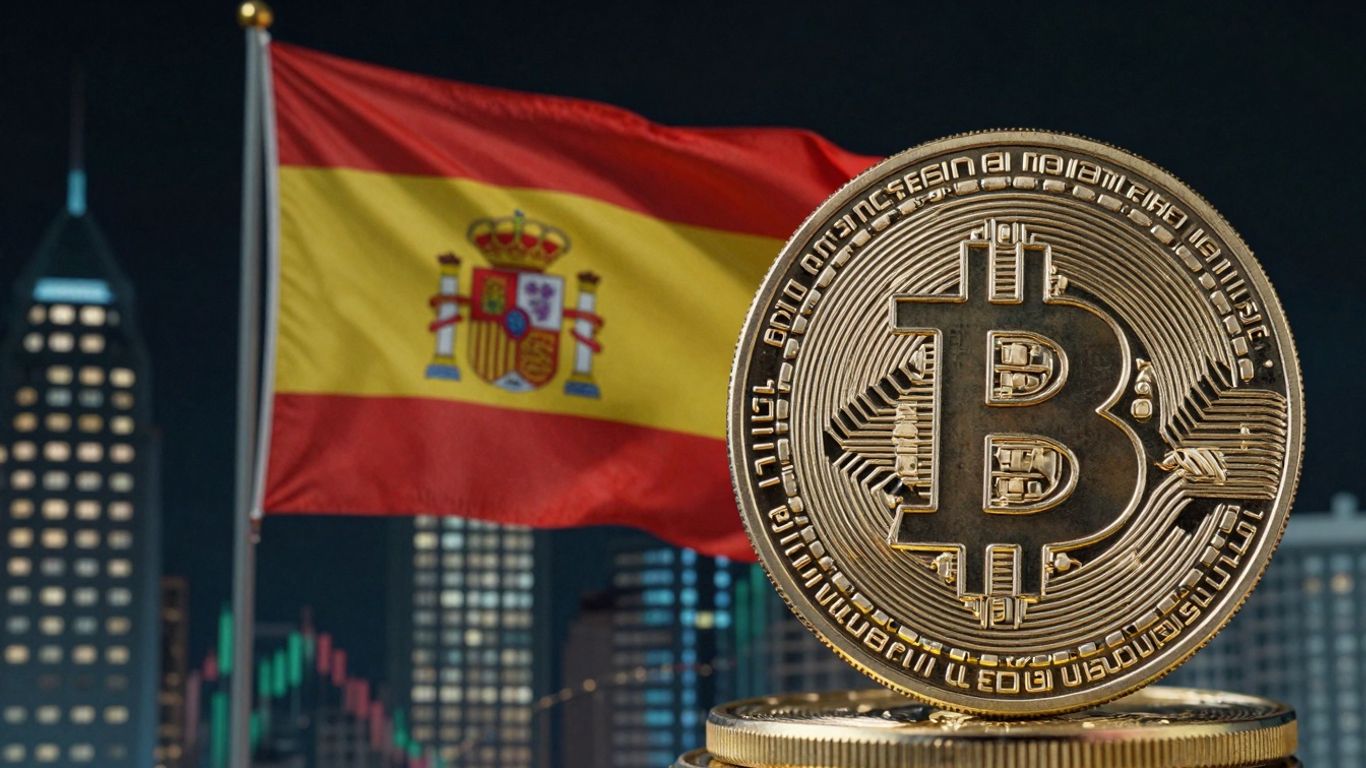 Policy
Spain Unveils MiCA Transition Rules, Urging Crypto Platforms to Comply or Exit
Spain's national securities regulator, the Comisión Nacional del Mercado de Valores (CNMV), has released detailed guidelines and a Q&A document outlining the implementation of the European Union's Markets in Crypto-Assets Regulation (MiCA). This move clarifies expectations for crypto platforms regarding authorizations, conduct, and the transitional period, pushing businesses towards a decisive "comply or quit" stance as the new regulatory framework takes effect across the EU. Key Takeaways Spain has opted for a shortened transitional period for MiCA implementation, ending on December 30, 2025. Crypto-asset service providers (CASPs) must obtain MiCA authorization by this deadline to continue operating in Spain. The CNMV's Q&A addresses authorization procedures, cross-border activities, and the interaction between MiCA and existing national rules. The new rules aim to enhance investor protection and provide legal certainty within the burgeoning crypto market. Navigating the MiCA Transition in Spain The CNMV's comprehensive Q&A document serves as a crucial guide for crypto-asset service providers (CASPs) seeking to operate within Spain under the new MiCA framework. It meticulously details the authorization process, clarifies which entities fall under the regulation's scope, and explains how MiCA integrates with existing national legislation. The guidance also addresses the procedures for notifications and cross-border operations during the transition period, emphasizing the critical importance of adhering to established deadlines. Operating Under the Transitional Regime While MiCA generally allows member states to permit existing providers to operate until July 1, 2026, or until their authorization is granted or denied, Spain has chosen a more accelerated path. The nation has established a shortened transitional period concluding on December 30, 2025. Consequently, any entity wishing to continue offering crypto-asset services in Spain must secure MiCA authorization by this date. Failure to comply will result in the cessation of operations, compelling businesses to either adapt their models or exit the Spanish market. Broader Regulatory Tightening and Scope Beyond the core rules for CASPs, the CNMV's initiative includes updated criteria for how MiCA applies to investment funds, venture capital vehicles, and MiFID II entities. Furthermore, new guidance clarifies when investment influencers are deemed to be engaging in client acquisition. These measures are presented as part of a wider effort to bolster investor protection as MiCA becomes operational. Notably, MiCA does not cover decentralized finance (DeFi) aspects like decentralized lending, and while certain crypto-assets like NFTs and decentrally generated assets (e.g., Bitcoin) are outside its direct scope, their trading on platforms will still be regulated under MiCA. Issuers of crypto-assets must be licensed legal entities and adhere to specific prudential, governance, and investor protection rules. Sources Spain’s regulator sets out MiCA transition rules for crypto platforms — TradingView News, TradingView — Track All Markets. La Moncloa. 26/10/2023. Spain brings forward the implementation of the world's first crypto-assets market regulation [News], La Moncloa. This article was created with support from AI-driven technology, drawing on multiple reputable sources. The final content has been thoroughly reviewed and edited by BlockzHub's editorial team to ensure accuracy, clarity, and coherence. Original reporting sources are credited whenever appropriate and as required. The opinions expressed in this article do not necessarily represent the official views or positions of BlockzHub. This article is intended for informational purposes only and should not be considered financial or professional advice. Investing involves risk, and you should consult a qualified financial advisor before making any investment decisions.
0 0.0 0by dAppConNewcomer Policy
UK FCA Targets 2026 for Sterling Stablecoin Payments, Unveiling Growth Initiatives
The UK's Financial Conduct Authority (FCA) has declared pound-denominated stablecoin payments a top priority for 2026, aiming to foster faster and more convenient transactions. This initiative is part of a broader strategy to bolster the UK's position as a global financial hub, with a dedicated regulatory sandbox to support prospective issuers. Key Takeaways The FCA aims to advance UK-issued sterling stablecoins as a payment method by 2026. A regulatory sandbox will be available for firms to test stablecoin solutions before new rules are finalized. This move is part of a larger package of "ambitious new growth measures" designed to enhance the UK's financial competitiveness. Advancing Stablecoin Payments The FCA's commitment to pound stablecoin payments by 2026 is a central milestone in its growth strategy. The regulator plans to finalize digital asset rules and progress UK-issued sterling stablecoins, as outlined in a letter to Prime Minister Sir Keir Starmer. This initiative seeks to leverage stablecoins for quicker and more efficient payment systems. Regulatory Sandbox for Innovation To facilitate experimentation, the FCA will open its regulatory sandbox for firms intending to issue pound stablecoins in the UK. Companies can apply by January 18, 2026, to pilot their stablecoin solutions in a controlled environment. This sandbox, operating under the existing digital sandbox framework, will offer regulatory guidance on compliance, stability, and consumer protection for sterling-backed digital currencies. Broader Growth Strategy The push for stablecoin payments is integrated into a wider set of "ambitious new growth measures" for 2026. These include initiatives to digitalize financial services, boost international trade competitiveness, expand lending to small businesses, and deepen US-UK market integration. The FCA aims to embrace a "bolder risk appetite" to support growth while maintaining consumer protection and market integrity. Global Competitiveness This strategic focus on stablecoins positions the UK to maintain its global competitive edge in financial services. By attracting international investment and leading in financial innovation, the UK aims to strengthen its standing against global competitors like the European Union, which are also advancing their own stablecoin regimes. The FCA's reforms are designed to support growth, enhance financial resilience for consumers, and provide greater investment choices. Other Growth Initiatives Beyond stablecoins, the FCA has delivered several flagship growth reforms, including unlocking capital investment, accelerating digital innovation through initiatives like the Supercharged Sandbox with Nvidia, reducing regulatory burden, and making it easier for firms to start and grow. The regulator is also working closely with the Bank of England to develop the regulatory regime for stablecoins. Sources UK FCA makes pound stablecoin payments 2026 priority — TradingView News, TradingView. UK financial watchdog declares sterling stablecoin payments ‘a priority’ for new year – DL News, DL News. Stablecoin payments a priority for 2026 as FCA outlines growth achievements, Wired Gov. Lloyds Bank pushes for blockchain in home buying, as FCA says stablecoin payments are a 2026 priority | Today's Conveyancer, Today's Conveyancer. This article was created with support from AI-driven technology, drawing on multiple reputable sources. The final content has been thoroughly reviewed and edited by BlockzHub's editorial team to ensure accuracy, clarity, and coherence. Original reporting sources are credited whenever appropriate and as required. The opinions expressed in this article do not necessarily represent the official views or positions of BlockzHub. This article is intended for informational purposes only and should not be considered financial or professional advice. Investing involves risk, and you should consult a qualified financial advisor before making any investment decisions.
0 0.0 0by dAppConNewcomer.jpg) Policy
PolicyTaiwan Aims for 2026 Stablecoin Launch
Taiwan is gearing up to introduce its first regulated stablecoin by the second half of 2026, a significant step forward as the island nation progresses with its cryptocurrency legislation. This development signals a more structured approach to digital assets within Taiwan's financial landscape. Key Takeaways Taiwan targets a regulated stablecoin launch for late 2026. The initiative is tied to the advancement of the Virtual Assets Service Act. Initially, only financial institutions will be permitted to issue stablecoins. The stablecoin's currency backing is yet to be determined. Regulatory Framework and Timeline Financial Supervisory Commission (FSC) Chair Peng Jin-lon announced the ambitious timeline, contingent on the successful passage of the Virtual Assets Service Act during the upcoming legislative session. Following the act's approval, a six-month buffer period is anticipated before the law takes full effect, paving the way for the stablecoin's market entry. The draft legislation for the Virtual Assets Service Act draws inspiration from Europe's Markets in Crypto-Assets (MiCA) regulation. While the bill doesn't explicitly mandate that only financial institutions can issue stablecoins, the FSC and the central bank have agreed on this restriction for the initial phase, prioritizing risk management. Stablecoin Issuance and Currency Backing In the initial stages, the issuance of Taiwan's stablecoin will be limited to regulated financial institutions. This cautious approach aims to ensure stability and compliance within the burgeoning digital asset market. However, the specific currency to which the stablecoin will be pegged remains undecided. Options include the U.S. dollar or the Taiwan dollar, with the final decision likely influenced by market demand and regulatory considerations. Pegging to the U.S. dollar might circumvent complexities associated with Taiwan's strict offshore currency export regulations. Broader Crypto Landscape in Taiwan Taiwan has adopted a cautious stance on cryptocurrencies, classifying them as "virtual commodities" rather than legal tender. While ownership and trading are permitted, their use for retail payments or government services is not allowed. The nation is also strengthening its Anti-Money Laundering (AML) regulations for Virtual Asset Service Providers (VASPs), with a compliance deadline set for September 2025. These measures align with global Financial Action Task Force (FATF) standards, including Know Your Customer (KYC) procedures and transaction monitoring. Furthermore, Taiwanese policymakers are reportedly exploring the possibility of adding Bitcoin to national reserves, a move that could signal a strategic shift in how the country manages its assets in the face of economic uncertainty. This consideration follows calls from lawmakers to diversify national reserves beyond traditional assets like U.S. Treasury bonds and gold. Sources Taiwan eyes 2026 stablecoin launch as crypto legislation advances: Report — TradingView News, TradingView. Taiwan Plans Regulated Stablecoin Launch in 2026, CryptoNewsZ. This article was created with support from AI-driven technology, drawing on multiple reputable sources. The final content has been thoroughly reviewed and edited by BlockzHub's editorial team to ensure accuracy, clarity, and coherence. Original reporting sources are credited whenever appropriate and as required. The opinions expressed in this article do not necessarily represent the official views or positions of BlockzHub. This article is intended for informational purposes only and should not be considered financial or professional advice. Investing involves risk, and you should consult a qualified financial advisor before making any investment decisions.
0 0.0 0by BishopNewcomer Policy
FDIC Poised to Unveil First Stablecoin Regulations Under GENIUS Act This Month
The Federal Deposit Insurance Corporation (FDIC) is set to propose its initial set of regulations for stablecoin issuers before the end of December, marking a significant step in implementing the Guiding and Establishing National Innovation for U.S. Stablecoins (GENIUS) Act. Acting FDIC Chief Travis Hill announced the upcoming proposals, which will first address the application framework for entities seeking federal oversight in the burgeoning stablecoin market. Key Takeaways FDIC to propose initial GENIUS Act rules for stablecoin issuer applications by month's end. Subsequent proposals for prudential requirements for FDIC-supervised issuers are expected early next year. The GENIUS Act establishes the first federal regulatory framework for USD-pegged stablecoins. Other agencies, including the Treasury Department and the Federal Reserve, are also actively developing their respective roles under the Act. FDIC is also developing guidance on the regulatory status of tokenized deposits. Implementing the GENIUS Act The FDIC's upcoming proposals are crucial for establishing how the agency will handle applications from stablecoin issuers seeking federal oversight. According to prepared testimony from Acting Chairman Travis Hill, the agency expects to issue a proposed rule for this application framework by the close of December. Following this, a separate proposed rule detailing the prudential requirements for payment stablecoin issuers supervised by the FDIC is anticipated in early next year. The GENIUS Act, which became law earlier this year, aims to create a comprehensive federal regulatory structure for stablecoins. It designates various federal and state entities to oversee the sector. Beyond the application process, the FDIC's responsibilities include developing rules for capital requirements, liquidity standards, and the quality of reserves held by banks that wish to issue stablecoins. Broader Regulatory Landscape Implementing new regulations involves a public comment period, typically lasting several months, before a final rule can be issued. This process ensures that stakeholders have an opportunity to provide feedback. The Treasury Department has also been actively involved, having initiated an "advance notice of proposed rulemaking" to gather industry input on various aspects of the GENIUS Act, including sanctions compliance, anti-money laundering measures, and the balance between state and federal oversight. The Federal Reserve is also contributing to the regulatory effort. Vice Chair for Supervision Michelle Bowman indicated that the central bank is developing its own capital, liquidity, and diversification regulations for stablecoin issuers as mandated by the GENIUS Act. Addressing Tokenized Deposits In addition to its work on stablecoins, the FDIC is also focusing on the evolving landscape of digital assets. In line with recommendations from the President’s Working Group on Digital Asset Markets, the agency is developing guidance to clarify the regulatory status of tokenized deposits. This initiative aims to provide greater clarity for banks engaging in activities related to the tokenization of assets and liabilities. Sources U.S. FDIC Chief Says First Stablecoin Regulations Heading for Proposal This Month, CoinDesk. U.S. Treasury Takes Next Step in Turning GENIUS Act Into Stablecoin Regulations, CoinDesk. FDIC to Propose First GENIUS Act Rules This Month, CryptoNewsZ. This article was created with support from AI-driven technology, drawing on multiple reputable sources. The final content has been thoroughly reviewed and edited by BlockzHub's editorial team to ensure accuracy, clarity, and coherence. Original reporting sources are credited whenever appropriate and as required. The opinions expressed in this article do not necessarily represent the official views or positions of BlockzHub. This article is intended for informational purposes only and should not be considered financial or professional advice. Investing involves risk, and you should consult a qualified financial advisor before making any investment decisions.
0 0.0 0by dAppConNewcomer Policy
Israel Bolsters Stablecoin Oversight as Digital Shekel Initiative Gains Momentum
Israel is implementing stricter regulations for stablecoins while simultaneously advancing its digital shekel project. This dual approach aims to secure the nation's payment infrastructure and adapt to the rapidly growing private cryptocurrency market, ensuring the central bank remains a key player in financial innovation. Key Takeaways The Bank of Israel is increasing oversight of stablecoins due to their significant global market capitalization and transaction volumes, which pose systemic risks. New regulations will mandate 1:1 reserves and high liquidity for stablecoin issuers. The digital shekel project has a 2026 roadmap, with key recommendations expected by the end of 2024. Intensified Stablecoin Regulation At a recent financial conference in Tel Aviv, Bank of Israel Governor Amir Yaron announced plans for enhanced regulatory requirements for stablecoins. This move comes as stablecoin usage expands beyond cryptocurrency trading into areas like remittances and everyday payments. The Bank of Israel highlighted the substantial scale of the global stablecoin market, exceeding $300 billion in market capitalization and $2 trillion in monthly transaction volumes. Officials noted that these figures rival the balance sheets of mid-sized international commercial banks. The growth is attributed to stablecoins' utility in trading, cross-border transfers, and their appeal as a less volatile digital asset compared to other cryptocurrencies. However, the market's concentration, with approximately 99% of activity dominated by Tether and Circle, raises concerns about systemic vulnerabilities. Policymakers stressed the importance of stringent reserve practices, requiring issuers to maintain full 1:1 backing with highly liquid assets to manage potential redemption demands. Digital Shekel Roadmap Concurrently, the Bank of Israel is progressing with its central bank digital currency (CBDC) initiative. Yoav Soffer, who leads the digital shekel project, presented a 2026 roadmap detailing the development stages for a digital currency intended for widespread public use. Official recommendations are anticipated by the end of 2024. This accelerated timeline for the digital shekel mirrors recent actions by the European Central Bank and reflects a broader global trend among central banks to modernize digital money strategies in response to competition from private digital currencies and the fast-evolving payments landscape. The digital shekel project is seen as a strategic effort to maintain state control over national payment infrastructure while fostering innovation within a regulated environment. Sources Israel tightens stablecoin rules as digital shekel advances, Crypto News. This article was created with support from AI-driven technology, drawing on multiple reputable sources. The final content has been thoroughly reviewed and edited by BlockzHub's editorial team to ensure accuracy, clarity, and coherence. Original reporting sources are credited whenever appropriate and as required. The opinions expressed in this article do not necessarily represent the official views or positions of BlockzHub. This article is intended for informational purposes only and should not be considered financial or professional advice. Investing involves risk, and you should consult a qualified financial advisor before making any investment decisions.
0 0.0 0by dAppConNewcomer.jpeg) Policy
PolicyWisdomTree Executive Predicts Crypto Index ETF Surge, Citing Diversified Appeal
Will Peck, WisdomTree's head of digital assets, anticipates a significant wave of adoption for cryptocurrency index exchange-traded funds (ETFs). He believes these diversified baskets will address a key market need, offering investors exposure to the broader digital asset sector while mitigating the risks associated with individual token investments. Key Takeaways Diversified crypto index ETFs are poised to be the next major wave of adoption in the digital asset space. These products offer a solution for investors struggling to navigate the vast array of cryptocurrencies beyond Bitcoin. The success of spot Bitcoin ETFs has surpassed expectations, indicating strong institutional and retail interest. The regulatory landscape and the role of ETFs in signaling credibility are evolving. The Appeal of Diversified Crypto Exposure Peck highlighted that while many new investors are familiar with Bitcoin, they often find it challenging to identify and evaluate other promising digital assets. Crypto index ETFs provide a straightforward way to gain exposure to the entire sector, effectively reducing the "idiosyncratic risk" tied to investing in single cryptocurrencies. He emphasized that cryptocurrencies are fundamentally technologies, and their underlying return drivers can differ significantly, even if they exhibit general correlation in market movements. Evolving ETF Landscape The launch of several crypto index ETFs this year, including recent offerings from 21Shares and Hashdex's expanded ETF, signals a growing trend. Peck acknowledged that predicting the exact timing of broader adoption is difficult but suggested it's likely inevitable due to the clear utility of such products. He also noted that the increasing number of ETF launches might diminish the perception that an ETF listing automatically confers institutional approval or credibility on a specific cryptocurrency. Bitcoin ETF Success and Future Outlook Peck expressed that the success of spot Bitcoin ETFs since their January 2024 launch has exceeded his expectations. He described the Bitcoin ETF category and the broader crypto market as highly competitive within the U.S. ETF landscape, with significant net inflows observed. Looking ahead, Peck believes the focus will shift towards clients making informed investment decisions, rather than relying solely on the ETF structure as a mark of approval. Sources WisdomTree Exec Foresees Crypto ETF Surge, Citing Diversified Basket Appeal, Markets.com. Crypto Index ETFs To Take Next Wave Of Adoption, Says Exec, Cointelegraph. This article was created with support from AI-driven technology, drawing on multiple reputable sources. The final content has been thoroughly reviewed and edited by BlockzHub's editorial team to ensure accuracy, clarity, and coherence. Original reporting sources are credited whenever appropriate and as required. The opinions expressed in this article do not necessarily represent the official views or positions of BlockzHub. This article is intended for informational purposes only and should not be considered financial or professional advice. Investing involves risk, and you should consult a qualified financial advisor before making any investment decisions.
0 0.0 0by Mini maNewcomer Policy
Internet Association's Influence Wanes, Leaving Tech Policy Landscape Shifting
The Internet Association (IA), once a dominant force in Washington D.C. for the tech industry, appears to be losing its clout. Once a unified voice for major tech companies, the IA is now facing internal turmoil and a diminished role in shaping crucial tech policy, particularly on antitrust issues. This shift leaves a void in the capital, with other groups and individual companies stepping up to fill the advocacy gap. Key Takeaways The Internet Association's influence in Washington D.C. has significantly declined. Internal leadership issues and a lack of consensus on key policy areas have contributed to its diminished stature. Major tech companies are increasingly relying on their own lobbying efforts rather than the IA. New advocacy groups and coalitions are emerging to represent specific interests within the tech sector. A Fading Powerhouse Once a prominent advocate for the internet industry, the Internet Association (IA) is experiencing a significant downturn in its influence. At its peak, the IA hosted high-profile events and played a key role in brokering deals on legislation like FOSTA-SESTA. However, recent leadership changes and internal dissatisfaction have led to a substantial loss of personnel and a perceived irrelevance among some policymakers. Democratic aides have noted the group's diminished capacity to weigh in on critical policy debates. Internal Strife and Leadership Challenges Much of the IA's decline is attributed to internal issues, particularly concerning CEO Dane Snowden, who took over in February 2021. Staffers have described a top-down, disrespectful leadership style that has led to widespread unhappiness and resignations. While Snowden acknowledges that "transitions are not easy" and aims to rebuild the IA's federal lobbying apparatus, a significant portion of the staff has departed since June. This personnel churn, coupled with a perceived disconnect between leadership and the tech policy landscape, has hampered the organization's productivity and effectiveness. Shifting Advocacy Landscape The IA's struggles come at a time when the tech industry faces intense scrutiny, especially regarding antitrust. The association's long-standing policy of not lobbying on competition-related issues has left a significant gap. In its place, other groups like NetChoice, the Computer & Communications Industry Association, and the newly formed Chamber of Progress, led by a former Google executive, are gaining prominence. Furthermore, major tech companies like Google, Amazon, and Facebook are bolstering their individual lobbying efforts, opting for direct engagement with lawmakers rather than relying on a unified industry voice. The Rise of Company-Driven Lobbying Industry experts note a broader trend towards a "company-driven" era of tech lobbying, contrasting with sectors like oil and gas that still rely on trade associations. The increasing competition among tech giants, such as Amazon, Google, and Facebook, makes a consensus-driven model for advocacy increasingly difficult. This fragmentation is evident in issues like Section 230 reform, where companies have divergent interests, leading some smaller members to form separate coalitions like Internet Works to advocate for their specific needs. The IA's diminished capacity means that when policymakers seek the perspective of major tech firms, they are more likely to approach the companies directly. Sources CTRL-ALT-Delete? The internet industry’s D.C. powerhouse vanishes., Politico. This article was created with support from AI-driven technology, drawing on multiple reputable sources. The final content has been thoroughly reviewed and edited by BlockzHub's editorial team to ensure accuracy, clarity, and coherence. Original reporting sources are credited whenever appropriate and as required. The opinions expressed in this article do not necessarily represent the official views or positions of BlockzHub. This article is intended for informational purposes only and should not be considered financial or professional advice. Investing involves risk, and you should consult a qualified financial advisor before making any investment decisions.
0 0.0 0by dAppConNewcomer.jpeg) Policy
PolicyKyrgyzstan halts mining amid energy crisis
Kyrgyzstan has taken decisive action to suspend all cryptocurrency mining operations until March 2026, citing critical energy shortages and power deficits. The move, announced by the Chairman of the State Committee for National Security, Kamchybek Tashiev, and coordinated with the Minister of Energy, Taalaibek Ibraev, aims to conserve electricity and stabilize the national power grid. Key Takeaways All cryptocurrency mining farms in Kyrgyzstan have been shut down. The suspension is in effect until March 2026. The primary reason is a severe electricity shortage due to low water levels in reservoirs. The government assures citizens that essential services like light and heat will be maintained. Illegal mining operations will face criminal liability. Energy Shortages Force Mining Halt The Central Asian nation, heavily reliant on hydropower, is experiencing a significant reduction in electricity generation due to critically low water levels in key reservoirs, particularly the Toktogul Reservoir. Water levels are reportedly nearly 2 billion cubic meters less than the previous year. This deficit puts immense strain on the energy system, especially with the onset of winter. Minister of Energy Taalaibek Ibraev stated that the decision to completely disconnect all mining farms was made to preserve water volumes until the end of the heating season and to prevent overloading generators. He emphasized that while the energy system is not in a state of crisis, it is operating under increased load conditions. The government has assured the public that rolling blackouts are not planned and that efforts are focused on managing limited power supplies efficiently to ensure homes have light and heat. Strict Measures and Future Outlook Kamchybek Tashiev warned that any attempt to restart mining operations would result in criminal liability, underscoring the government's firm stance against illegal energy consumption. The Ministry of Energy has released video footage showing specialists disconnecting and sealing mining equipment to prevent unauthorized reconnections. The government is also undertaking measures to bolster its energy infrastructure. This includes accelerating the construction and modernization of small and medium-sized hydropower plants, as well as the country's first solar power plant. Reconstruction of the Toktogul HPP has been completed, and other stations are undergoing upgrades, with new hydro- and thermal power plants under construction. Broader Economic Context Coinciding with the mining shutdown announcement, Kyrgyzstan's Ministry of Finance revealed the launch of the USDKG stablecoin. This asset, backed by gold and pegged to the US dollar, has a total issuance volume of $50.4 million. Officials described it as a new financial standard based on transparency and reliability, backed by real assets under state control. This development occurs against a backdrop of Kyrgyzstan's efforts to regulate its cryptocurrency market, following the parliamentary approval of a bill "On Virtual Assets" in September, which allows for the creation of a bitcoin reserve. Sources Kyrgyzstan Temporarily Shuts Down Crypto Mining Farms Amid Energy Shortages, Caspian Post. Kyrgyzstan Shuts Down All Mining Farms Amid Power Shortage, ForkLog. Kyrgyzstan cuts off all mining farms amid power deficit, winter strain, Caliber.Az. Energy Ministry of Kyrgyzstan releases video of mining farm shutdowns, 24.KG. All cryptocurrency mining farms in Kyrgyzstan shut down — Taalaibek Ibraev, 24.KG. This article was created with support from AI-driven technology, drawing on multiple reputable sources. The final content has been thoroughly reviewed and edited by BlockzHub's editorial team to ensure accuracy, clarity, and coherence. Original reporting sources are credited whenever appropriate and as required. The opinions expressed in this article do not necessarily represent the official views or positions of BlockzHub. This article is intended for informational purposes only and should not be considered financial or professional advice. Investing involves risk, and you should consult a qualified financial advisor before making any investment decisions.
0 0.0 0by ToTo BugelmanNewcomer.jpeg) Policy
PolicyArgentina Freezes Assets in Massive Libra Token Scandal Investigation
Argentina's judiciary has taken a significant step in the ongoing investigation into the collapsed Libra token scandal by ordering a freeze on the assets of key figures involved. This move targets US promoter Hayden Davis and two alleged intermediaries, Orlando Rodolfo Mellino and Favio Camilo Rodríguez Blanco, aiming to prevent the dissipation of funds potentially linked to a fraud estimated between $100 million and $120 million. The National Securities Commission has been directed to notify all virtual asset service providers to extend the freeze to local crypto platforms. Key Takeaways Argentina has frozen assets of individuals linked to the Libra token scandal. The investigation targets a potential fraud of $100-$120 million. The freeze extends to digital wallets, bank accounts, and real estate. The Libra token surged and crashed after a brief promotion by President Javier Milei. This action is a rare instance of cross-continental judicial coordination in crypto asset cases. The Libra Token Scandal Unfolds The Libra token scandal erupted in February when Argentine President Javier Milei briefly endorsed Hayden Davis, a promoter of meme-based tokens, as a blockchain and AI advisor. Following this endorsement, the Libra token experienced a rapid surge in value, only to crash shortly after, resulting in losses of approximately $250 million for over 40,000 retail investors. Davis is considered the central figure in this alleged memecoin scheme. International Legal Actions This development in Argentina follows a similar action in the United States, where a New York judge previously froze $57 million in USDC stablecoins linked to Davis and his associates at the now-defunct Meteora exchange. Although that freeze was later lifted, the lawsuit, brought by American and Latin-American investors, accuses Davis, former Meteora CEO Ben Chow, and others of orchestrating a "rug pull." Plaintiffs have invoked the RICO Act, alleging that Libra and another Davis project, M3M3, were part of a pattern of organized fraud. Political and Cross-Border Implications The investigation has drawn significant attention due to alleged connections between Davis's crypto transactions and high-level political meetings in Argentina. Court filings suggest that intermediaries converted tokens to cash during Davis's meetings with President Milei at the Casa Rosada, fueling the "Cryptogate" controversy. While President Milei faces no criminal charges, the coordinated asset freezes in Buenos Aires and New York highlight the increasing complexity of cross-border crypto investigations, where regulatory enforcement intersects with political entanglements. Despite the scandal's proximity to his administration, Milei's party recently won midterm elections, positioning him for a potential presidential run in 2027. Sources Argentina turns up the heat in Libra scandal with sweeping asset freeze, TradingView. This article was created with support from AI-driven technology, drawing on multiple reputable sources. The final content has been thoroughly reviewed and edited by BlockzHub's editorial team to ensure accuracy, clarity, and coherence. Original reporting sources are credited whenever appropriate and as required. The opinions expressed in this article do not necessarily represent the official views or positions of BlockzHub. This article is intended for informational purposes only and should not be considered financial or professional advice. Investing involves risk, and you should consult a qualified financial advisor before making any investment decisions.
0 0.0 0by ToTo BugelmanNewcomer.jpeg) Policy
PolicyUK and US Explore Joint Crypto Sandbox for 'Passporting' Licenses
Former UK MP Lisa Cameron has revealed that the United Kingdom and the United States are considering the creation of a joint regulatory "sandbox" to facilitate crypto 'passporting' between the two nations. This initiative aims to harmonize crypto market regulations and provide greater clarity for businesses operating across the Atlantic. Lisa Cameron at UN City in Copenhagen, Denmark: Cointelegraph Key Takeaways A joint UK-US crypto sandbox is reportedly under development. The sandbox aims to enable 'passporting' of crypto licenses between the UK and US. This move is seen as crucial for regulatory clarity and retaining businesses in the UK. Collaboration and Regulatory Clarity Lisa Cameron, founder of the UK-US Crypto Alliance, shared her insights with Cointelegraph, expressing optimism about a potential collaborative "sandbox" between the US and the UK. This initiative, she believes, stems from discussions with US Senators and members of the US Securities and Exchange Commission’s (SEC) Crypto Task Force. The primary objective of this sandbox would be to streamline the process of 'passporting' crypto licenses, allowing companies to operate more seamlessly in both jurisdictions. Cameron highlighted the strong desire within the industry for regulatory clarity that supports such cross-border operations. She also suggested that the European Union could potentially benefit from a similar framework. Momentum in UK Crypto Regulation The UK has been actively developing its crypto regulatory landscape. Recently, the Bank of England released a consultation paper outlining a proposed regulatory framework for stablecoins, focusing on those used in payments, akin to the US's GENIUS Act. These developments follow earlier reports of a transatlantic task force established by US and UK treasury authorities to foster collaboration on digital assets. Urgency for the UK Cameron voiced concerns that the UK might miss a critical window of opportunity if it does not act swiftly and strategically. She emphasized that crypto regulation needs to be a higher political priority. The departure of companies from the UK, seeking more supportive environments elsewhere, is a significant worry for the sector. With the US taking a clear and direct policy stance on emerging technologies, Cameron stressed that the UK has no time to lose in solidifying its own regulatory approach to remain competitive. Sources UK and US eye crypto passporting sandbox after talks: Ex-UK MP Lisa Cameron, TradingView. This article was created with support from AI-driven technology, drawing on multiple reputable sources. The final content has been thoroughly reviewed and edited by BlockzHub's editorial team to ensure accuracy, clarity, and coherence. Original reporting sources are credited whenever appropriate and as required. The opinions expressed in this article do not necessarily represent the official views or positions of BlockzHub. This article is intended for informational purposes only and should not be considered financial or professional advice. Investing involves risk, and you should consult a qualified financial advisor before making any investment decisions.
0 0.0 0by ToTo BugelmanNewcomer